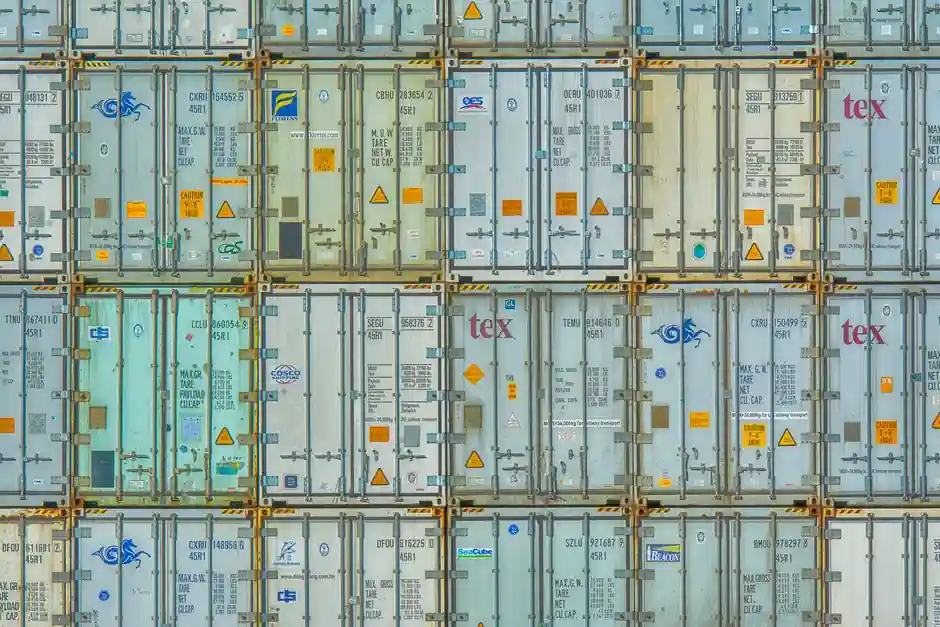
DEA-compliant wire cages for pharmaceutical distribution are governed by Title 21 CFR Sections 1301.72-1301.76, which set the physical-security bar for Schedule III through V controlled substances and push Schedule I-II handlers toward dedicated vault construction [S1][S2].
Selection in 2026 runs across four lines: DEA Schedule III-V welded wire cages, Schedule I-II vault rooms, climate-controlled API/finished-dose enclosures, and high-density evidence/quarantine lockers, each with its own panel, door, and hardware spec [S1][S2][S4].
Code Triggers: Which DEA Schedule Drives Which Enclosure
Title 21 CFR Sections 1301.72-1301.76 define the physical-security controls for DEA registrants handling Schedule III, IV, and V controlled substances, and a properly installed welded wire cage meeting those controls is the most common path for pharmacies, pharmaceutical manufacturers, medical facilities, drug distribution centers, and drug warehouses [S1][S2].
For higher-risk Schedule I and Schedule II controlled substances, the same regulatory framework pushes operators toward Schedule II vault solutions tailored to each facility, with welded wire partitions reserved for Schedule III-V materials and adjacent support rooms [S4]. The split matters operationally: a Schedule III-V cage is a code-compliant wire enclosure with a self-locking door, while a Schedule I-II vault is a constructed room with reinforced walls, a heavier lock set, and an alarm chain that the cage configuration does not satisfy [S1][S4].
Panel and Floor Geometry: Flush Mesh, Ceiling Closure, Hardware Pinning
A compliant cage is built from wire partition panels that mount flush to the floor; only the doors carry a small bottom clearance so the leaf can swing or slide without grinding [S1][S2]. Tubular post uprights must use welded base plates rather than floor sockets, with posts pre-drilled so panels seat flush, and all installation and assembly hardware is mounted on the inside of the cage so it is not reachable from outside [S1][S2].
Vertical closure is non-negotiable: cages must either carry a wire mesh ceiling or run all the way up to the existing roof structure, eliminating any top-of-cage gap an unauthorized person could climb through [S1][S2]. On the hardware side, every nut, bolt, and fastener must be brazed or pinned (most installers tack-weld the nuts) so the cage cannot be field-disassembled with hand tools, and a Schedule III-V specification should call this out explicitly in the purchase document [S1][S2].
Door Hardware: Self-Closing, Self-Locking, with Size-Based Operator Rules
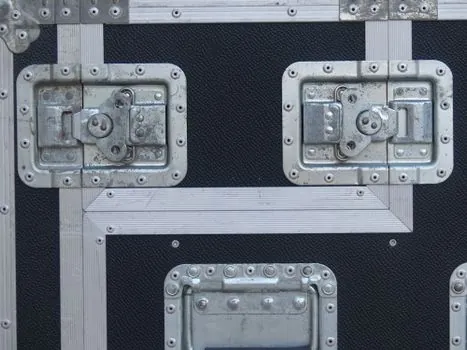
Every door on a DEA-approved cage must be self-closing and self-locking, and hinged leaves are outfitted with commercial hydraulic door closers to guarantee the close-and-latch cycle without operator action [S1][S2]. A standard mortise lock, fitted per DEA guidance, is the default; the lock cylinder and the self-latching bolt together produce the "self-locking" half of the requirement [S1][S2].
Sliding doors up to 80 square feet are counterbalanced with counterweights: the operator pulls the leaf open and the weights pull it back to the closed-and-locked position, with the same standard mortise lock fitted to the leaf [S1][S2]. For sliding doors over 80 square feet the spec steps up to an electric door opener with a timer and an electric eye for safety, sized so the opener can move the heavier leaf without defeating the self-close cycle [S1][S2].
Material and Construction Options for Pharmaceutical Environments
Welded wire is the default for pharmaceutical cages because open mesh preserves visibility, allows air circulation for temperature-mapped rooms, and lets fire-sprinkler coverage reach the floor without dead zones, which is critical in a controlled-substance storage room that also houses ambient APIs or finished doses [S4]. For DEA evidence storage, a flattened expanded diamond mesh pattern is often chosen so the weave is finger-proof, preventing evidence tampering while still allowing odor-venting airflow for packaged narcotics [S2].
When the room will hold Schedule III-V cages next to a Schedule II vault, the design typically pairs the welded wire cage with a heavier constructed vault room so each schedule sits in a code-appropriate enclosure and the line between them is visible to inspectors [S4]. The cage-vs-vault decision is also a material decision: welded wire and sheet-rock-on-steel-stud handle very different threat profiles, and choosing the wrong one is the single most common spec error on a new pharmaceutical build [S1][S4].
Adjacent Storage: Temperature Mapping, Cold Chain, and Clean Rooms
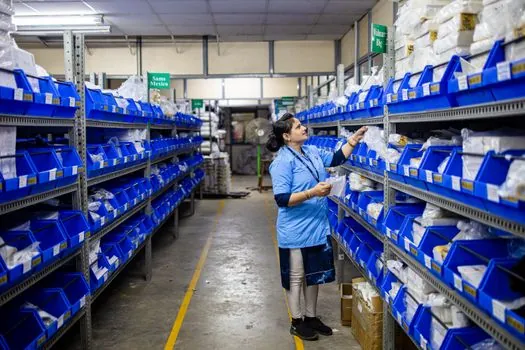
Cold chain and ambient pharmaceutical storage is not the same problem as controlled-substance security, and a pharmaceutical distribution cage has to coexist with both. Temperature-controlled pharmaceutical storage is required for APIs, finished drug products, biologics, vaccines, and any material with a validated storage profile, which is why life-sciences operators treat temperature mapping and segregation as a parallel workstream to the DEA cage spec [S7].
Inside a 2-8 °C cold room or a 15-25 °C ambient suite, the cage is just the security envelope around product that already has a validated temperature excursion budget, and a 100% open-mesh cage is preferred because it does not block HVAC return paths or fire-sprinkler coverage [S4][S7]. The same layout logic shows up in pharmaceutical warehouse cages, clean storage areas, and pharmaceutical production environments, where welded wire partitions and security rooms double as access-controlled zones for restricted inventory [S4].
Who a Welded Wire DEA Cage Is For, and Who It Is Not For
Welded wire DEA cages are the right enclosure for pharmacies, compounding pharmacies, pharmaceutical manufacturers, medical facilities, distribution centers, drug warehouses, and record storage areas handling Schedule III, IV, or V controlled substances, with a standard self-closing/self-locking hinged or sliding door and a mesh ceiling or full-height run to the existing roof [S1][S2][S4].
They are not the right enclosure for Schedule I or Schedule II controlled substances, where a constructed vault with reinforced walls, a heavier lock set, alarm integration, and the related physical-security controls of 21 CFR 1301.72 is the minimum acceptable enclosure [S1][S4]. They are also not a substitute for cold-chain infrastructure: APIs, biologics, and vaccines need a validated temperature-controlled room around the cage, not a cage alone [S7].
Decision Criteria: Cage, Vault, or Temperature-Controlled Suite
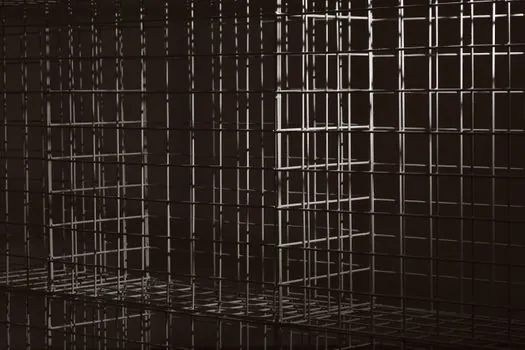
Specifiers should weigh four criteria side by side: the DEA schedule handled, the room's temperature class, the access-control model, and the inspection posture. The four-line matrix below is the way the 2026 market is actually being specified across pharmaceutical distribution builds, with the schedule driving enclosure type and the temperature class driving the room around it [S1][S4][S7].
For Schedule III-V at ambient (15-25 °C): welded wire cage with self-closing/self-locking hinged door, flush-to-floor panels, mesh ceiling, brazed hardware; standard mortise lock; common in pharmacies and wholesale distribution centers [S1][S2][S4]. For Schedule III-V with cold chain (2-8 °C or frozen): same welded wire cage spec, but the surrounding suite must be a validated temperature-controlled room with mapping probes and HVAC redundancy, and the open-mesh cage preserves sprinkler and airflow coverage inside the cold room [S4][S7]. For Schedule I-II at any temperature: constructed vault with reinforced walls, heavier lock set, alarm integration, separate access control; a cage alone does not satisfy 21 CFR 1301.72 physical security for these schedules [S1][S4]. For evidence, record storage, and return-goods quarantine: welded wire cage with flattened expanded diamond mesh for tamper resistance and airflow, sized smaller than a primary cage and often collocated with the main DEA enclosure [S2][S4].
Layout, Inspection, and Common Failure Modes
The most common reasons a pharmaceutical cage fails its first DEA inspection are geometry errors, not lock errors: a panel that does not sit flush to the floor, a missing mesh ceiling on a free-standing cage, a sliding door over 80 square feet without an electric operator, and exposed external hardware that a tamper crew can reach with hand tools [S1][S2][S4]. Each of these is a known failure mode that the 21 CFR 1301.72 framework calls out indirectly through the self-closing, self-locking, flush-to-floor, full-height, and tamper-resistant hardware requirements, and each is caught in a pre-occupancy walk before the regulator arrives [S1][S2].
A second failure mode is treating the cage as the only security layer. The same welded wire enclosure that passes DEA Schedule III-V physical security still needs to sit inside an access-controlled room with badge-controlled doors, CCTV coverage of the cage face, and an inventory control system that reconciles receipts and dispenses against the controlled-substance log, because 21 CFR 1301.75 requires recordkeeping that the cage itself cannot enforce [S1][S4]. For new pharmaceutical distribution builds, the practical move is to commission the cage, the access-control room, the alarm chain, and the recordkeeping system as one workstream so a cage passing physical security does not get undermined by an adjacent gap.
Sourcing, Standards, and 2026 Procurement Signals
The regulatory anchor is Title 21 CFR Sections 1301.72-1301.76, which is the only standard named across the dealer and manufacturer literature reviewed for this article, and the spec sheets from WireCrafters, Southwest Solutions Group, SafeRack, and LockersUSA all reference it as the binding physical-security document for Schedule III-V cages [S1][S2][S3][S4]. Distribution-side storage services from Cencora and Azenta add the temperature-controlled and cold-chain layer around the cage, but they do not redefine the cage spec; the cage remains a 21 CFR 1301.72-1301.76 enclosure sitting inside their validated suites [S5][S6].
Trackable signals for 2026 procurement: a tightening of the "inside-only hardware" rule in dealer quotes (a WireCrafters-versus-competition selling point that has surfaced in inspection feedback) [S1], continued growth of dedicated Schedule II vault solutions alongside Schedule III-V cages in multi-schedule facilities [S4], and a steady shift in life-sciences build-outs toward paired cold-chain and DEA-cage suites rather than separate rooms [S7]. For broader material selection across a pharmaceutical build, see this PTFE selection for general fabrication guide and this industrial solvent selection for construction guide, both of which cover adjacent non-metallic material decisions a cage project still has to make for seals, gaskets, and cleanroom finishes. For the storage handling side of the same facility, the storage cage and storage rack encyclopedia entries lay out the panel and frame conventions that align with the cage spec above.
The underlying component specifications are covered under storage handling.