
Air-cargo strapping operates under a stricter rule set than ground logistics: FAA TSO-C172 Cargo Restraint Strap Assemblies has been the Minimum Performance Standard for any strap used in U.S. air-cargo operations since 2011, and the IATA ULD Panel ruled that, from 1 January 2016, only TSO-approved straps are accepted on passenger and freighter aircraft in IATA-member operations [S3].
For palletized air cargo, strap selection is a primary-restraint decision only when no cargo net is present; where a net covers the load, straps sit underneath as secondary restraint, per the FAA position reproduced in IATA ULD Regulations [S3]. The four material families in current industrial use are polypropylene (PP), polyester (PET), steel, and woven/composite polyester, each with distinct breaking strength, tension retention, and elongation behaviour, and the same applies to strapping band selection in any pallet-build context.
Regulatory baseline: TSO-C172, FAA AC120-85A, and IATA ULDR
FAA TSO-C172 Cargo Restraint Strap Assemblies, published in 2011, is the first comprehensive Minimum Performance Standard covering air-cargo straps of any type, and the post-accident revision of FAA AC120-85A added Section 2.8 (Transport of Special Cargo) and Section 3.3.3.2 (Tie Down Strap Authorization) explicitly to govern strap-based restraint where the load cannot sit under a net [S3].
The investigation into the 2013 National Air Cargo flight 102 crash exposed a gap between strap usage and any prescribed practice, which drove both the AC120-85A revision and an overhaul of IATA ULDR section OS 6/07. That ULDR section now sets specific positioning and spacing rules for cargo-strap attachment points into a pallet, a rule that emerged after testing showed that clustered attachment points could overload the aircraft Cargo Loading System restraint latches, even when the pallet itself was strong enough [S3].
Procurement teams should treat strap selection as a regulatory activity, not a packaging one. U.S. ground freight falls under FMCSA cargo-securement rules requiring aggregate working load limit of all securement devices to reach at least one-half the weight of the article secured, and air-cargo rules layer stricter TSO-C172 evidence of compliance on top of that baseline [S4].
Material families and their break-strength envelope
Woven and composite straps use co-extruded high-tenacity polyester yarns as the load-bearing core: composite strap coats those yarns in polypropylene, hot-melt strap uses a hot-melt coating, and woven strap adds double-locked weaving with a cold-glue surface coating [S1]. All three eliminate the sharp-edge injury risk of steel and PET straps and will not fail from a single point of impact.
Steel strapping remains the highest tensile-strength option in the family and is the default where the cargo is hot, sharp-edged, or pointed, but its rigidity means tension is lost abruptly as soon as the strap yields, with no elastic recovery to absorb dynamic loads [S2][S5]. PET strapping has high tensile strength and low tension relaxation, making it the standard heavy-pallet choice in ground logistics; PP strapping has high tension relaxation and is therefore limited to light, short-duration loads such as cartons and parcels [S2].
Tensile, retention, and flexibility for the four families line up as: PET: high strength, low relaxation, high flexibility; PP: medium strength, high relaxation, high flexibility; textile/composite: high strength, low relaxation, high flexibility; steel: very high strength, low relaxation, low flexibility, with the flexibility gap driving most of the cargo-settlement failures seen in service [S2].
Selection criteria for air-cargo ULDs
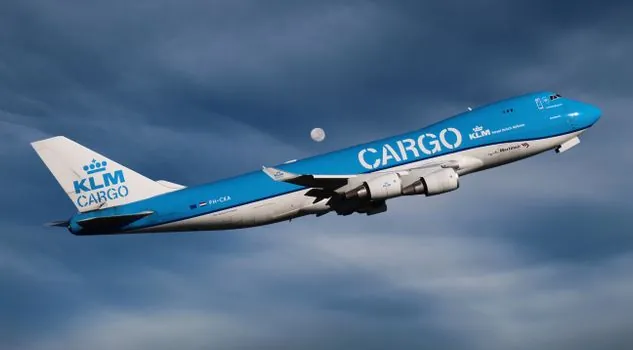
For an air-cargo ULD build, five criteria drive the right pick, and only the last one is purely mechanical: regulatory eligibility (TSO-C172 approval), aircraft compatibility (rated for the seat-track and CLS latch system), load profile (irregular, overhanging, or sharp-edged), environmental exposure (UV, moisture, temperature swing on the ramp), and tensile/elongation behaviour relative to the dynamic forces a ULD sees in flight [S3][S4][S5].
Composite and woven polyester straps absorb dynamic impact through their elongation ability and flexible memory, so a strap tensioned at build does not snap when the load settles mid-flight, a behaviour the steel alternative cannot replicate because steel behaves as a rigid band and loses system tension the moment the cargo compresses even slightly [S1][S5].
Buckles are not interchangeable across systems. Wire-buckle joints on woven/composite strap need a buckle matched to the strap width and wire thickness; the buckle joint efficiency outperforms traditional crimping and friction welding for textile systems, and standard phosphated or galvanized buckles are commonly offered in wire thicknesses from 2.90 mm to 7 mm and lengths from 13 mm to 40 mm [S1].
Comparison: composite vs steel for air-cargo ULDs
On a like-for-like air-cargo ULD build, the comparison lands as: composite/woven polyester wins on weight (roughly one-fifth the weight of steel at the same working load), on worker safety (no sharp edges, no rust), on dynamic-load handling (elastic recovery absorbs cargo settlement), and on tooling (tensioned with simple hand tools), while steel still wins on absolute breaking strength and on hot or sharp-edged cargo where polymer would melt or be cut through [S1][S2][S5].
System strength is what matters in service, not the strap alone, so the practical decision is: composite/woven polyester for vehicles, helicopters, and overhanging items built on a floating pallet where the strap is the primary restraint and the cargo is irregular; steel for steel coils, hot-rolled plate, and bundles of sharp-edged extrusions where polymer abrasion or heat would compromise the strap [S2][S3][S5]. Buckle and tensioner selection must be matched to the strap material, since a steel-buckle system on composite strap, or vice versa, will not deliver the rated joint efficiency [S1].
Use cases and limits in air-cargo operations
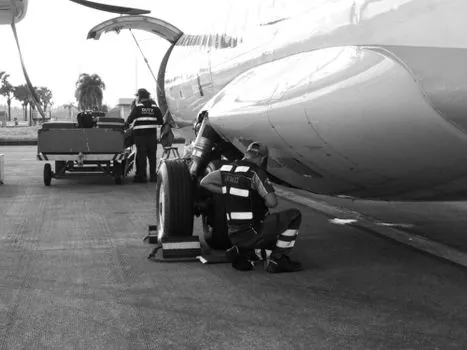
Primary-restraint strap-only ULDs are now the standard for vehicles, helicopters, and other large overhanging items that cannot fit under a net, and for floating-pallet builds where the load is tied directly to the aircraft floor, both of which depend on TSO-C172 straps and the AC120-85A special-cargo provisions [S3].
Strap-only builds hit their limit on very dense, sharp-edged, or hot cargo, where steel remains the only material that survives the load itself, and on loads whose restraint-latch demand on the aircraft CLS exceeds the rated capacity of the seat-track cluster, a configuration that the revised ULDR OS 6/07 now explicitly restricts by spacing and position [S3]. PP strapping is not appropriate for air-cargo ULD primary restraint because its high tension relaxation will not hold aircraft-rated dynamic loads over a multi-leg itinerary, even though it remains the dominant material for ground-shipment carton unitization [S2][S4].
Sourcing and operational signals to track
Buyers should require a TSO-C172 marking on every air-cargo strap and a buckle spec matching the strap family, since mixed systems quietly drop joint efficiency below the rated system strength, and they should anchor decisions to FAA AC120-85A and IATA ULDR OS 6/07 rather than to vendor literature alone [S3]. Sourcing from suppliers with broad inventory and same-day fulfillment prevents line stoppages when strap stock runs low on a ULD build, an operational risk that has grown as the global packaging strapping materials market heads toward a projected $15.7 billion by 2033 at a 6.0% CAGR [S4].
Two signals worth tracking into late 2026: any further revision of IATA ULDR OS 6/07 attachment-point spacing tables following additional CLS-latch testing, and any harmonization of FAA TSO-C172 acceptance with the EU EASA cargo-restraint framework, since mixed-fleet operators currently maintain two approval files per strap part number. Buyers comparing adjacent restraint hardware can also review FIBC bulk bag selection for ground-freight parallels and consult the air impact wrench page for tensioner-tooling duty cycles used in ramp-side ULD builds.