
Food and beverage carton selection is driven by three non-negotiables: board strength (Edge Crush Test and Bursting Strength), food-contact compliance of the inner layer, and closure geometry matched to the packing line [S1][S2].
Recycled corrugated board held 70% material share and regular slotted containers 50% of box share in 2024, while Asia-Pacific carried 38% of global volume in the same baseline year [S2]. A 2026-2035 forecast puts the segment at USD 67.56 billion in 2026 rising to USD 123.17 billion by 2035 at a 6.9% CAGR [S2].
Corrugated Construction: Flute, Board, ECT Targets
Corrugated board combines a fluted paper medium sandwiched between two linerboards, and this geometry is what gives the box its stacking strength and cushioning for produce, frozen, dry, and liquid categories [S2][S5]. Single-wall B-flute is the everyday workhorse for retail shipping; double-wall BC-flute is the common upgrade for heavier case packs and palletized loads where higher Edge Crush Test values are needed [S1].
For typical 30 lb/ft³ corrugated, Mullen (bursting strength) values run roughly 200-275 lb/in² for single-wall standard grades, while ECT-rated equivalents target 32-44 ECT; stacking performance (BCT) is computed from ECT, box dimensions, and load time, not read directly from the burst spec [S1][S2]. Recycled-content linerboard is the dominant material choice because it lowers cost and supports retailer sustainability scorecards, with coated corrugated identified as the fastest-growing coated grade in 2025-2034 [S2].
Folding Carton Closure Styles: Reverse Tuck, Snap Lock, Auto-Lock Bottom
Closure geometry is the second hard decision, because each style sets a different trade-off between assembly speed, base strength, and graphic panel area [S3][S4]. Reverse tuck end (RTE) ships flat, assembles quickly, and exposes large front and back panels for branding; it is the common starting point for individually wrapped bars, tea bags, and single-serve snacks [S4]. Straight tuck end (STE) is the symmetrical variant for small consumer goods where the same tuck direction on top and bottom is acceptable [S3].
Snap lock (1-2-3 bottom) and auto-lock bottom (ALB) cartons are the right answer when base load gets serious, for glass jars, bottled beverages, and heavier snack assortments [S3][S4]. ALB pre-glues the base so the carton self-locks when folded, cutting manual erecting time; snap lock offers comparable bottom strength but needs more hand assembly. Seal end cartons add a factory-sealed end and suit food items that need a tamper-evident, secure seal; dispenser boxes and gable tops are used where the box itself is part of the dispense or retail experience, like candy and frozen bakery packs [S3]. For facility-level picking and case handling of these packed units, PPR pipe selection for cleanroom water loops is unrelated, but the same spec-first logic applies when you size a turnover box for in-plant WIP rotation between packing and palletizing.
Compliance: FDA Food-Contact, AIB, cGMP, ISO 9001
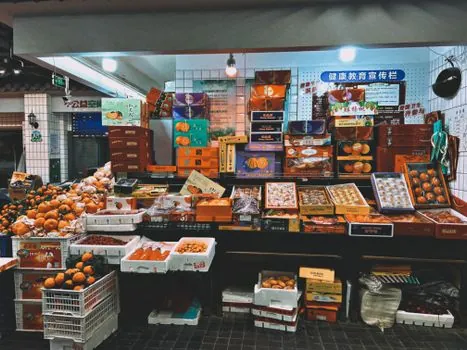
Secondary cartons are typically not rated for direct, unsealed food contact; the FDA food-contact requirement applies to the primary liner, pouch, or wrap inside the carton box, not the outer printed board [S4]. Where direct contact is unavoidable, the box maker should be able to document FDA registration, ISO 9001 quality systems, cGMP-compliant production, and where relevant, Organic certification, as one North American converter did for a 1.5 million-unit annual beef-pad program shipping 19 3/8" × 9 7/8" dividers in one-week turns to Moultrie, GA and Selinsgrove, PA [S3].
AIB (American Institute of Baking) certification is the third-party hygiene audit most retailers expect for plants that build primary or secondary food packaging, covering pest control, sanitation, and cross-contamination risk in the converting facility itself [S6]. For frozen and refrigerated SKUs, also confirm the plant's cold-chain tolerance: wax-impregnated or coated boards are the practical answer for high-humidity produce and ice cream, while standard kraft fails quickly under condensation [S5].
Application Map: Frozen, Fresh, Dry, Liquid
Processed foods took 35% of 2024 application share and retail/FMCG 55% of end-use channel share, with fresh produce and online grocery flagged as the two fastest-growing slices through 2034 [S2]. That mix is why RSC remains the volume king: it is the workhorse case for canned and jarred goods, and a printable billboard for retail shelf [S1][S2].
For dry goods like cereal, a folding carton box made from solid bleached sulfate (SBS) or coated chipboard is the default, picked for crush resistance, low moisture gain, and high-quality flexo or digital print surfaces [S8][S9]. For frozen foods, beverages, and bagged ice, coated or wax-alternative corrugated with sealed-end or auto-lock geometry is the more defensible choice, since wet-strength failure in standard kraft is the most common field return [S1][S5]. Premium and gift-able beverage packs often step up to rigid setup boxes with laminated wrap, used to protect glass and to carry a higher-end unboxing experience, but these are not the volume solution [S3][S9].
Primary vs Secondary Packaging Boundaries
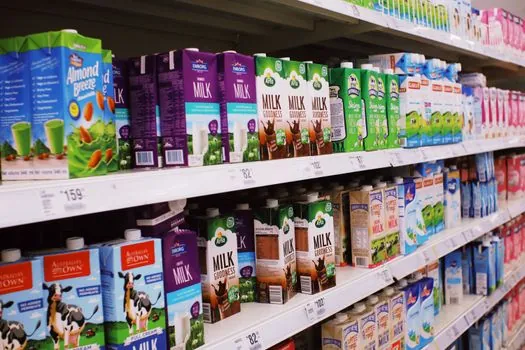
Primary packaging is the layer that holds or directly touches the food (pouch, bottle, jar, film liner, wrapper), and it must clear the food-contact rules of the destination market [S4]. Secondary packaging is everything outside the sealed primary pack, and the folding carton box used to group, display, or ship those units is generally treated as secondary even when the product inside is a loose dry good [S4][S1].
The split matters operationally: a brand that commissions a printed folding carton for retail display does not usually need the carton converter to also hold an FDA food-contact opinion, provided the primary pack is sealed before it enters the carton. The converter does still need food-grade ink, low-migration adhesives, and a documented allergen and migration-control program, especially in EU markets where printed-board migration limits are tighter [S1][S4].
Comparison of the Main Carton Options for Food and Beverage
Four structures cover most of the food and beverage SKU space, and the decision turns on stack load, line speed, and graphic area, not on aesthetics alone [S3][S4][S8].
Regular Slotted Container (RSC) corrugated: cheapest per cubic inch, highest 2024 box-type share at 50%, ideal for case packing of cans, jars, and bagged dry goods, limited retail graphics because of the split flap seams [S2][S1]. Reverse Tuck End (RTE) folding carton: ships flat, fastest hand assembly, large printable panels, best fit for individually wrapped bars, tea, and single-serve snacks, but base strength is the lowest of the four [S4]. Snap Lock / Auto-Lock Bottom (ALB) folding carton: pre-glued or interlocked base, erects in under two seconds on an auto-erector, the right pick for glass jars, bottled beverages, and heavier snack assortments where bottom sag is a real risk [S3][S4]. Rigid setup box: premium presentation, used for high-end beverage gifts and spirits, highest unit cost, not a volume shipping solution [S3][S9].
Two more structures close out the field: tray and sleeve boxes (inner tray plus printed outer sleeve) work for sealed bakery, packaged produce, and tea collections where a staged slide-out opening supports the brand moment, while gable tops and dispenser boxes remain niche, used for frozen bakery, candy, and store-display impulse SKUs [S3][S4].
Print, Sustainability, and Smart-Packaging Signals

Flexographic printing held 60% of 2024 printing-technology share, with digital flagged as the fast-growing alternative for short runs, versioning, and personalization in 2025-2034 [S2]. Coated corrugated is the fastest-growing coated grade because it accepts higher-LPI flexo and digital print while keeping the recyclability story intact, which matters for retailers with plastic-packaging reduction mandates [S2].
Smart-package signals worth tracking on new SKUs: QR codes printed directly on the case for traceability and consumer engagement, lightweight micro-flute constructions that cut basis weight without dropping ECT, and temperature-controlled corrugated liners (phase-change or insulated panels) for last-mile cold-chain grocery [S5]. Recycled content is now table stakes: most retailers expect a published recycled-fiber percentage, and the move toward a circular economy is the single biggest non-price driver behind coated and lightweight grades [S2][S5]. For a wider view on automated warehouse kit, see PET vs PP vs steel strapping band selection, which pairs with carton and carton erecting machine decisions on the same line.
Common Failure Modes and Selection Pitfalls
Three failures show up again and again in food and beverage carton programs. First, picking carton board on caliper rather than on ECT/BCT, which lets a box that looks thick crush on a pallet under sustained load [S1]. Second, using standard kraft for wet or cold-chain SKUs, where condensation collapses the flute and the box fails in the first 24 hours of the cold chain [S5]. Third, treating the outer printed carton as a primary food-contact layer, which forces a documentation gap when the retailer audits to FDA or EU food-contact rules [S4].
A defensible spec sets ECT (or burst) for stack load, picks a flute profile matched to the case weight and pallet pattern, names the food-contact compliance target on the inner layer, and locks the closure style to the line's erecting speed, whether that is a manual pack station, a semi-auto drop-in, or a fully automatic carton erecting machine running 60-120 cases per minute [S3][S4].
Trackable signals to watch over the next two reporting cycles: the published 2025-2034 share migration between RSC and die-cut boxes (die-cut is flagged as the fast-growing box style), the adoption rate of digital print on coated recycled board, and the rollout of temperature-controlled corrugated SKUs from the major converters as online grocery share keeps climbing past the 2024 baseline [S2][S5].