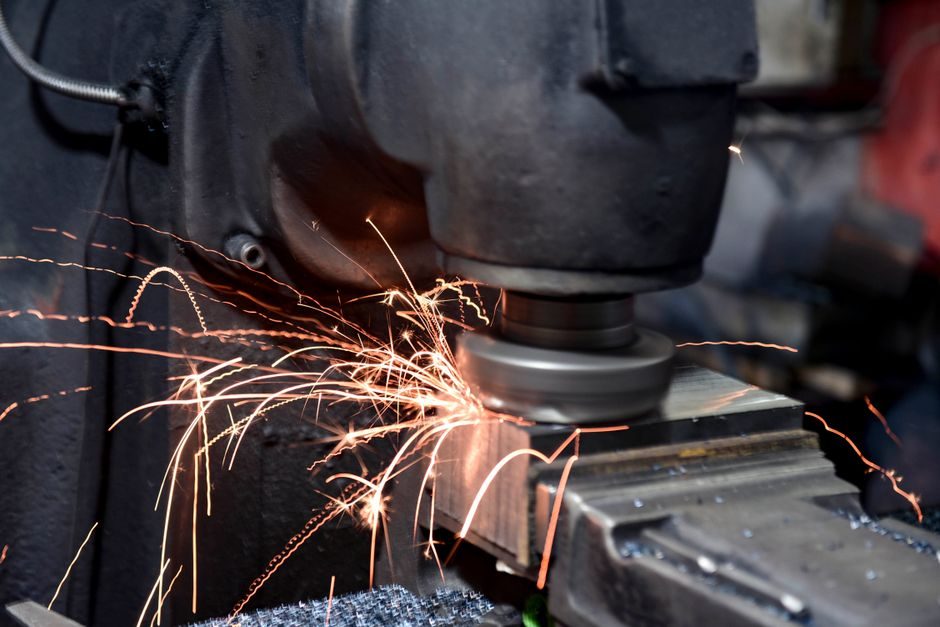
Specifying a deburring machine starts with the upstream cut: laser/plasma parts carry a recast oxide slag that needs a hammerhead or rotary brush head, while punched parts want a flexible edge-rounding abrasive setup, and milled or sawed cube edges go to a fixed cutter-head chamferer — three process families that do not substitute cleanly for one another [S1][S3][S4].
For sheet-metal shops in 2026, the working-width band 950–1650 mm and part thickness 0.5–50 mm is the practical envelope, with high-end wet-grind lines pushing to 1900 mm abrasive belt length and 400–600 l coolant capacity per LISSMAC's SMW 5 platform [S1][S3]. Off-the-shelf Chinese-built CNC deburr cells for laser/plasma cut parts are now listing in the US$3,999–12,000/set range, while premium European wide-belt edge-rounding lines sit an order of magnitude higher [S5].
Burr Source and the Three Process Families
Laser and plasma cut parts produce a hard, brittle oxide slag 0.05–0.20 mm thick that breaks off in service if not removed — a hammerhead + wide-belt + rotary brush configuration (LISSMAC's SBM-L G1S2 EVO class) is the standard answer, and the same head combination is offered by Dyyrent's DRS-1600 as brush roller, abrasive belt, and disc in a single frame [S1][S4].
Punched and sheared parts want edge rounding rather than slag removal, and the SBM-M S2 spec lists working width up to 1500 mm at 0.5–50 mm material thickness with 300 kg/rm conveyor load, drawing 28 A / 24 A at 400 V / 50 Hz with 3~ PEN or 3~ PE+N network structure for 15.2–15.5 kW total power [S1]. Wet-grinding for a true mirror-class Ra finish is a different machine class entirely: the SMW 5 runs 1–4 heads, 6.0 bar compressed air, 1900 mm abrasive belt length and 400–600 l coolant, with 950 / 1350 / 1650 mm working-width variants [S3].
What a Fixed Cutter-Head Chamferer Does and Does Not Do
The Assfalg FS 5 is a sturdy, cost-effective cutter-head chamferer for straight edges on cube-shaped workpieces, rated to a minimum workpiece thickness of 3 mm and a duty cycle of roughly 30% per hour, with a fold-down V-prism for insert change and a swarf drawer as standard delivery content [S2]. It is a chamfering and deburring machine by classification, not an edge-rounding or surface-finishing unit, and Assfalg keeps the same V-prism cutter-head approach across the ASO 850-K (milling, sheet metal) and the KSM 125/130 (electric desk) family [S2].
The FS 5's 30% duty cycle is the binding constraint for a production cell: at one chamfer per 2–3 seconds the head needs cool-down time, and for a continuous three-shift operation an ASO 850-K-class milling chamferer or a wide-belt SBM-M S2-class edge rounder is the correct move [S1][S2]. Assfalg exhibits the FS 5 line at AMB 2026 (15–19 Sep, Stuttgart, Hall 3 Stand D23) and EuroBLECH 2026 (20–23 Oct, Hannover) [S2].
Working Width, Thickness, and Throughput Math
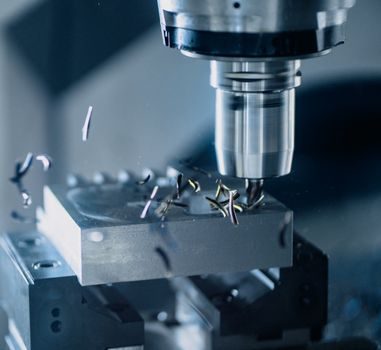
Working width is the single most expensive spec to change on a wide-belt line, and 2026 line-ups cluster at three stops: 950 mm (entry, small parts), 1350 mm (mid-volume job shop) and 1650 mm (full 4×8 ft sheet), with LISSMAC's SBM-M S2 stretching the format further to 1500 mm and SMW 5 wet-grind going to 1650 mm [S1][S3]. Material thickness 0.5–50 mm covers everything from micro-stamped electrical laminations to heavy plasma-cut structural plate on a single machine class [S1].
Conveyor load is the spec most often under-quoted: 300 kg/rm on the SBM-M S2 is comfortable for stacked blank handling, but heavier steel coil-edge parts need a reinforced transport bed such as LISSMAC's Transportband 1000/1500/2000 roller conveyor, which the same vendor offers as a matched line item [S1]. The 28 A / 24 A current draw (15.2 kW / 15.5 kW total) on the SBM-M S2 is also the realistic three-phase feeder spec, and a shop feeding that from a 32 A breaker will need a soft-start or a dedicated feed to avoid nuisance trips on cold mornings [S1].
Wet vs Dry: Coolant, Surface Finish and HSE
Wet grinding is the only realistic path to a consistent Ra ≤ 0.4 µm finish on stainless and aluminum, and the SMW 5's 400–600 l coolant reservoir is sized for a full shift of 1–4 head grinding at 6.0 bar compressed air supply with a 1900 mm abrasive belt [S3]. Coolant choice (synthetic vs emulsion) and the mandatory 6.0 bar clean-air feed for head tensioning are the two utilities a buyer most often misses at the layout stage [S3].
Dry edge-rounding with abrasive belt and brush roller (SBM-M S2 class) is the right call when the next stop is paint or powder coat, since wet grinding leaves a residue film that has to be washed off before coating [S1]. For laser/plasma parts heading to a visual or robotic-weld cell, the hammerhead + wide-belt + rotary brush combination (LISSMAC SBM-L G1S2 EVO, Dyyrent DRS-1600) gives a R0.3–R0.8 mm edge radius in a single pass without coolant logistics [S1][S4].
Selection Criteria vs Machine Class
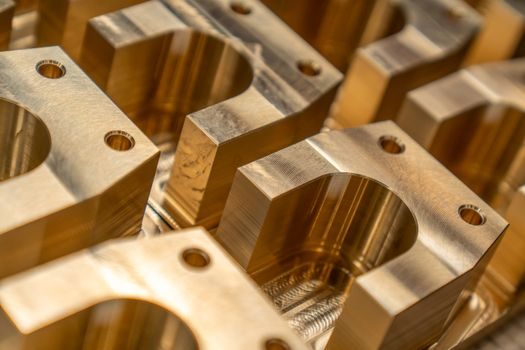
Three decision criteria separate the four mainstream classes in 2026 line-ups [S1][S2][S3][S4]:
— Burr type: laser/plasma slag → hammerhead + brush (SBM-L/SBM-M class); punched/sheared flash → wide-belt edge rounder (SBM-M S2); sawed/milled straight edges → cutter-head chamferer (FS 5, ASO 850-K); mirror-class surface finish → wet-grind (SMW 5).
— Working width: 950 mm entry, 1350 mm mid, 1500–1650 mm full 4×8 ft sheet, with wet-grind stretching to 1900 mm abrasive belt length on the SMW 5 [S1][S3].
— Duty cycle: cutter-head chamferers like the FS 5 cap at ~30%/h, wide-belt dry lines run continuous at 1–4 m/min typical, and wet-grind lines are limited by coolant thermal capacity and abrasive belt life [S2][S3].
— Budget tier: Chinese-built CNC deburr cells for laser/plasma cut parts sit at US$3,999–12,000/set as listed on Made-in-China, while European wide-belt edge-rounding platforms from LISSMAC and Assfalg typically run 5–10× that figure once options and conveyors are added [S5]. Jotun machinery's catalog also lists manual deburring, tube deburring, surface finishing, slag removal and edge rounding as separate product lines, useful for low-volume shops that cannot justify a wide-belt capex [S6].
Where Selection Goes Wrong
Three failure modes show up repeatedly in 2026 spec sheets. First, specifying a cutter-head chamferer for slag-encrusted laser parts: the FS 5's inserts will chip on oxide slag and the duty-cycle limit will throttle the line — that is a wide-belt + brush job [S2][S4]. Second, under-sizing coolant on a wet-grind cell: the SMW 5's 400–600 l reservoir assumes a 6.0 bar clean-air feed, and dropping to 200 l to save floor space forces thermal trips within a shift [S3].
Third, mixing through-feed orientation: a brush deburring machine like the SBM-M D2 handles oily, laser-cut, or punched small parts where a wide-belt cannot grip, but it does not produce an edge radius by itself, so a buyer expecting a single-pass R0.5 mm round will be disappointed unless a hammerhead or abrasive-belt head sits upstream [S1][S4]. For tube and square-tube deburring (a common Jotun catalog line), a purpose-built tube polishing head is required, since wide-belt sheet systems will not track a round cross-section [S6].
Standards, Sourcing Tiers, and Trackable Signals
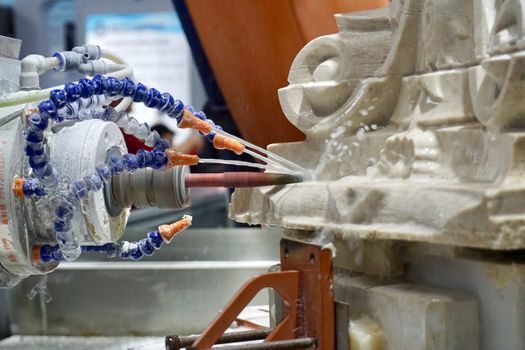
No universal ISO or DIN standard governs deburring-machine selection; vendor-published head-count, working-width, abrasive-belt-length, coolant-capacity and compressed-air-supply data are the binding specs (e.g. SMW 5: 1–4 heads, 6.0 bar, 1900 mm belt, 400–600 l coolant; SBM-M S2: 1500 mm width, 0.5–50 mm thickness, 300 kg/rm, 28/24 A, 15.2/15.5 kW) [S1][S3]. For CE-marked machinery exported to the EU, the Machinery Directive 2006/42/EC and EN ISO 12100 (safety of machinery) are the baseline conformity anchors a buyer should request in the vendor file, alongside the AMB and EuroBLECH 2026 exhibition cycles where Assfalg and the wider German mid-tier launch their 2026/2027 line updates [S2].
Two signals worth tracking into late 2026: the AMB Stuttgart show (15–19 Sep 2026, Hall 3 Stand D23 for Assfalg) and EuroBLECH Hannover (20–23 Oct 2026) for next-cycle deburr-platform releases [S2], and the Made-in-China catalog refresh pattern showing US$3,999–12,000/set CNC deburr cells for laser/plasma cut parts that is pulling entry-level pricing down roughly 20–30% year on year [S5]. Buyers comparing a wide-belt edge-rounding line against a wet-grind mirror-finish cell should also pull long-belt surface-grinding data from Anhui advanced grinding tools' 6K/8K mirror-polishing line, since the same conveyor and head architecture underpins both part families.
For related coverage, see Rubber Extrusion Profile Selection: A 2026 Buyer's Data Sheet.