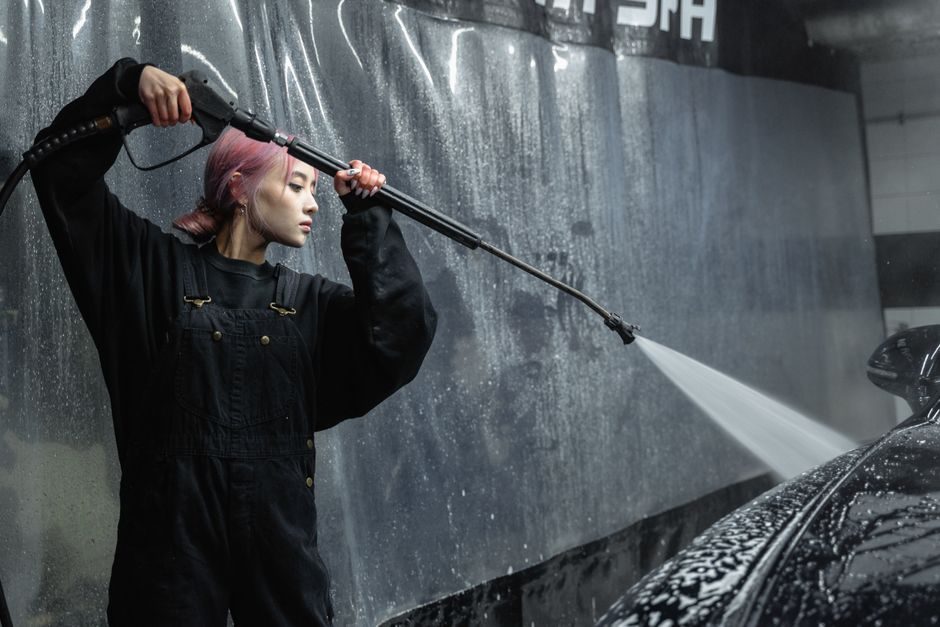
A 20-gallon (76 L) benchtop aqueous parts washer is listed on Made-in-China at a net weight of 31 kg, gross 34.5 kg, with a 180 LPH circulation pump rated 220 V / 50 Hz / 0.5 A (or 110 V / 60 Hz / 0.5 A in the 50 GPH export variant) and an installed footprint of 78 × 54 × 91 cm, packed one per carton at 79 × 56 × 34 cm [S2]. This spec set is the baseline unit a maintenance buyer or plant engineer should size quotations against when comparing import offers from Asia against North-American and European OEM list prices.
Total landed cost, however, is not just the FOB unit price. The line items that swing real budget are heater kilowatt rating, explosion-proof electrical classification, fluid capacity, and the consumable chemistry contract — all of which scale non-linearly with tank volume. The breakdown below uses the 20-gallon Chinese OEM dataset as the reference anchor and folds in the service-side cost data from a published nine-step industrial parts-washer maintenance protocol [S3].
Equipment Price Bands by Class and Capacity
New aqueous parts washers in the 20-gallon (76 L) benchtop class — the volume most commonly purchased for cell-level maintenance stations — typically list between USD 400 and USD 1,200 FOB for a Chinese OEM unit built around a 180 LPH pump and a 1–2 kW immersion heater, based on the Made-in-China 20 G reference build at 31 kg net [S2]. Mid-size 40–60 gallon (150–225 L) floor-standing aqueous models from established North-American brands commonly list in the USD 1,800–4,000 range, with 110 V/220 V dual-voltage pump packages of 200–340 LPH. Large 80–110 gallon aqueous units with 3–6 kW heaters and automatic oil-skim decks run USD 5,000–9,000 new.
Solvent-based (flammables) parts washers carry a premium of 30–80% over equivalent aqueous tanks because of the listed components: FM-approved immersion heater, fire-suppression lid interlock, ground-bonding strap, and NEMA-rated explosion-proof (EP) or non-sparking fan motor. A 30-gallon aqueous/solvent combination unit commonly lists USD 3,000–6,500 new; 40-gallon EP solvent models frequently land in the USD 7,000–14,000 band. Refurbished units from auction channels (used aqueous in good condition) typically transact between USD 500 and USD 2,500, while a refurbished 40-gallon EP solvent washer can still pull USD 3,000–6,000 because of the explosion-proof replacement parts on the bill of materials.
Operating-Cost Stack: Power, Chemistry, Disposal, Downtime
Operating cost is dominated by four line items, in this order for most cell-level applications: cleaning chemistry, electrical heating, fluid disposal, and the labour of total cleanouts [S3]. The published nine-step industrial washer cleaning protocol calls for 10–15% concentration descaling solution to attack hard-water salts, sludge, and scale, followed by 4–8 hours of heated pump circulation to dislodge caked soil — and notes that a full cleanout blocks the line for 4 to 12 hours per cycle [S3].
Electrical cost scales with heater wattage and duty cycle. A 1 kW immersion heater running 6 hours per shift at USD 0.10/kWh burns roughly USD 1.80 per shift in electricity; a 6 kW heater on the same schedule pushes that to about USD 10.80 per shift. Chemistry cost for an aqueous alkaline detergent typically tracks USD 8–25 per gallon of concentrate, with consumption of 1–4% by volume per week in light-duty cell service. Waste-fluid hauling, where the spent aqueous is classified as non-hazardous, runs USD 100–400 per drum in most US jurisdictions; solvent waste routed as a hazardous waste streams at USD 300–900 per 55-gallon drum, and the differential is the single largest line item that justifies aqueous retrofits.
Total Cost of Ownership: Five-Year Model
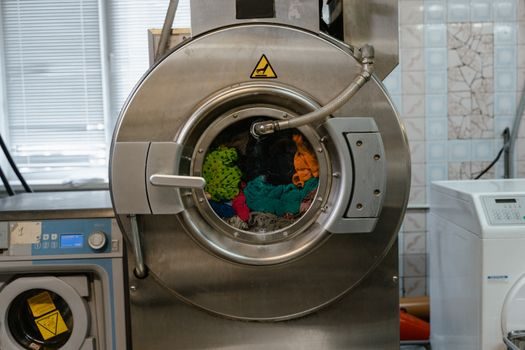
On a five-year horizon, an industrial buyer comparing three configurations — 20 G aqueous Chinese OEM, 40 G aqueous North-American OEM, and 40 G EP solvent North-American OEM — should expect the following rough cost split: equipment acquisition 25–35%, electrical heating 10–20%, chemistry 20–30%, waste disposal 10–25%, and labour for periodic total cleanouts 10–15%. The benchtop 20-gallon class lands at the low end of the equipment share but does not avoid chemistry and disposal costs, which scale with throughput rather than tank size. [S1]
The full nine-step cleanout described in the published protocol [S3] requires 4–12 hours of production downtime per event and a person or team willing to handle the dirtiest job in the plant, which is the single most underpriced line item in most procurement models. Add-on products — quick-fit quarter-turn nozzles, Victaulic/grooved manifold piping, in-process screen baskets, particulate filter bags, magnetic collection units, oil-water separators, and split-oil cleaning chemistries — extend the interval between total cleanouts and reduce labour hours, but they do not eliminate them. For a high-throughput cell, budgeting 6–10 full cleanouts per year at 8 hours each is a defensible starting assumption.
Selection Criteria: Aqueous vs Solvent, EP vs Non-EP
Choosing between the main options comes down to four decision criteria: flash point of the soil and cleaner, regulatory waste class, throughput, and floor footprint. Aqueous alkaline detergents with a flash point above 100 °C are the default for general automotive, MRO, and light-manufacturing cells; solvent units with a closed-loop fire-suppression lid remain the standard where the spec calls for petroleum-based clean on hydraulic or fuel-system components and the floor space supports the EP electrical package. [S2]
For decision-making, the practical comparison is: (1) Aqueous 20 G — lowest equipment cost, lowest disposal cost in most jurisdictions, 1–2 kW heater, 180 LPH pump [S2]; (2) Aqueous 40–60 G — mid equipment cost, mid disposal, 2–4 kW heater, 200–340 LPH pump, fits mid-volume cells; (3) EP solvent 30–40 G — highest equipment cost and highest disposal cost, but the only compliant path where the cleaner flash point is below 60 °C and the area is classified. Outside those three, ultrasonic and rotary-basket aqueous units are a separate category with their own premium of 40–120% over a standard aqueous tank of the same volume.
Component Stack and What Drives the BOM
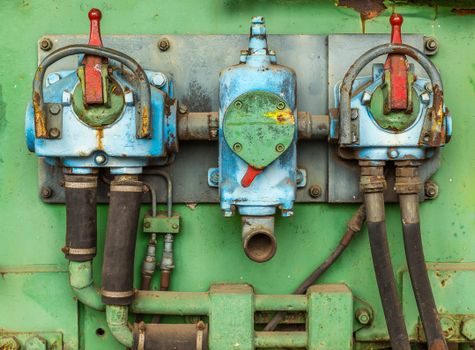
Inside a typical 20 G aqueous parts washer [S2], the bill of materials centres on a 180 LPH centrifugal pump, a 1–2 kW stainless-sheath immersion heater, a tank of 76 L capacity at 78 × 54 × 91 cm installed, a rigid lid or roll-cover, a 220 V/50 Hz (or 110 V/60 Hz) supply module at 0.5 A running, and a replaceable filter screen. The packing volume of 79 × 56 × 34 cm at 34.5 kg gross is a useful freight reference — the unit ships one per carton and slots into a standard LTL pallet pattern for export consolidation.
EP solvent units add a fire-suppression fusible-link lid, an FM-rated heater with thermal cut-out, a bonded-and-grounded frame, and a NEMA 7 or IEC 60079-x-rated junction enclosure at the pump and motor terminations. Buyers should note that HART-protocol instrumentation is not relevant to a parts washer; the controls in this class are discrete — a thermostat, a level switch, and a pump contactor — and any talk of 4–20 mA or Foundation Fieldbus on a parts washer is category confusion, often borrowed from pressure transmitter terminology. Likewise, pump and manifold seals on aqueous service are commonly sealing washer or spring washer stack-ups, not the linear-motion hardware referenced by linear guide or crossed-roller guide pages; mis-pinning the BOM is a recurring buyer mistake.
Sourcing Channels, Lead Times and Standards
Three channels dominate: (1) direct-from-factory Chinese OEM on Made-in-China and Alibaba, FOB lead time 25–45 days for standard 20 G builds, sample 7–10 days, MOQ often 5–20 units; (2) North-American OEM list price through industrial distributors, in-stock for 20–40 G aqueous, 2–6 weeks for EP solvent; (3) used/refurbished via auction and dealer networks, immediate to 2 weeks, with no warranty beyond 30 days typical. The current Made-in-China 20 G listing shows 1 PC/carton packing at 79 × 56 × 34 cm, which is the freight datum to push back to any forwarder quoting dimensional weight [S2].
Standards that actually govern this equipment class include NFPA 30 (Flammable and Combustible Liquids Code) and NFPA 33 (Spray Application) for solvent units, OSHA 29 CFR 1910.106 for flammable-liquid storage and handling, UL 122 for factory-built parts washers, FM Approval Standard 6920 for immersion heaters in flammable service, and the IEC 60079-x series for any explosion-protected motor or junction box on EP solvent units in IECEx jurisdictions.
For plants running process instruments alongside the parts washer, the flow meter selection for chemistry dosing is a separate decision tree and should not be conflated with the pump's circulation rating.
For related coverage, see UPS System Manufacturing Process: Bill of Materials, Line Stages and 2026 Audit Anchors.