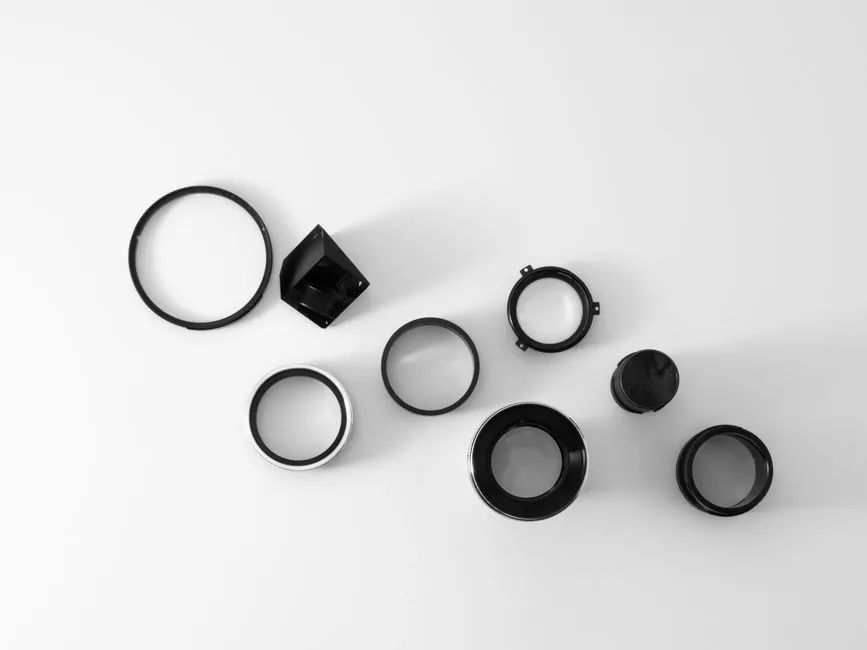
Defence optical glass selection in 2026 is a deliberate trade between spectral transmission band, mechanical durability, ballistic threat level, and platform weight budget, with no single material covering visible, MWIR, and LWIR simultaneously [S1][S2].
Engineers specify against EN 1063 and UL 752 for ballistic protection, against refractive index, Abbe number, and spectral cutoff for imaging optics, and against MIL-STD environmental test regimes for field survival, with sapphire, germanium, chalcogenide, fused silica, BK7/K9, ZnS, and ZnSe each occupying a defined niche [S1][S4][S7].
Ballistic and protective glazing: EN 1063 and UL 752 threat classes
Ballistic resistance is the first specification written into any defence glazing enquiry, and standards EN 1063 and UL 752 define protection levels by calibre, projectile velocity, and number of shots rather than by generic "bulletproof" claims [S1]. Generic supplier performance statements without a matched threat profile are commercially meaningless and create operational liability, which is why procurement teams must request independent third-party test reports tied to the exact ammunition and stand-off distance of the platform [S1].
Materials used in 2026 span traditional ballistic glass laminates, nanocrystalline spinel ceramics developed at the U.S. Naval Research Laboratory, and glass-polymer composites validated by SCHOTT, each with distinct thickness, weight, and no-spall certification profiles [S1]. Glass-polymer laminates can meet EN 1063 no-spall certification while reducing thickness and weight relative to monolithic constructions, a critical advantage for armoured vehicle windows where payload directly affects mobility [S3].
Imaging substrates by spectral band: visible through LWIR
Defence imaging requires materials that transmit across UV, visible (380 to 700 nm), near-infrared, MWIR (3 to 5 µm), and LWIR (8 to 12 µm) bands, and no single substrate covers all five windows equally well, so band-specific selection is mandatory [S2]. Germanium is the dominant LWIR crystalline material, peaking in transmission across 8 to 12 µm with a high refractive index that lets designers achieve wide fields of view with fewer lens elements, but its thermal runaway effect restricts use to systems operating below 100°C and its density of 5.33 g/cm³ penalises UAV and soldier-portable payloads [S2].
Chalcogenide glass, a compound of sulfur, selenium, or tellurium, transmits across both the 3 to 5 µm MWIR and 7 to 14 µm LWIR bands, can be precision-moulded into complex lens shapes in a single cycle unlike crystalline germanium, and carries a low thermo-optic coefficient that supports passively athermalised lens designs for airborne and ground surveillance [S2]. Sapphire, rated 9 on the Mohs hardness scale, transmits from UV through mid-infrared and withstands temperatures up to 1,000°C, which is why it remains the substrate of choice for missile nose domes and armoured vehicle periscopes exposed to rain, sand, and salt abrasion [S3]. Fused silica, BK7, and K9 borosilicate grades anchor the visible and near-infrared regime where they pair with optical glass refractive-index data for targeting and day-sight optics [S4].
Infrared window and dome materials: ZnS, ZnSe, and the sapphire alternative
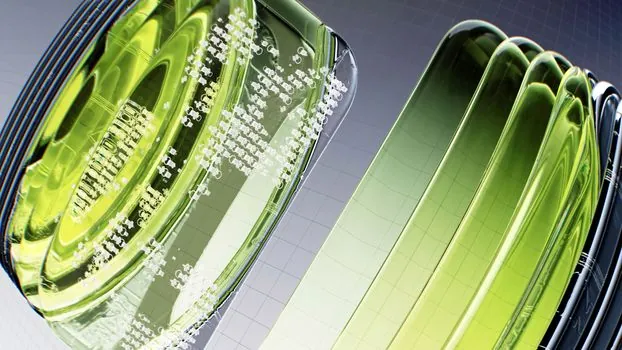
Zinc sulphide (ZnS) and zinc selenide (ZnSe) are the workhorses of multi-spectral and laser-hardened IR windows: ZnS covers visible through LWIR with higher mechanical hardness, while ZnSe is preferred for CO₂ laser optics at 10.6 µm because of its lower absorption at that wavelength [S4]. For UAV, naval surveillance, and missile-seeker domes, sapphire and ZnS are the primary candidates, with the trade-off running between sapphire's extreme hardness and broadband UV-to-MWIR transmission versus ZnS's broader spectral reach into LWIR at lower mass [S4][S7].
Engineers comparing dome candidates against the same four criteria get a clear structured answer: sapphire wins on hardness (Mohs 9) and thermal ceiling (1,000°C), ZnS wins on multi-spectral coverage and lower density, ZnSe wins on 10.6 µm laser transmission, and fused silica wins on UV transmission and thermal shock resistance but loses on hardness [S3][S4]. Felix Glass's defence EO/IR guide frames this trade as a decision between sight glass format flat windows for sensor protection versus glass dome form factors for wide-field airborne seekers, with MIL-STD environmental qualification applied uniformly across both [S7].
Coatings, durability, and MIL-STD environmental survival
Anti-reflective and diamond-like carbon (DLC) coatings extend operational service life by maintaining transmittance and surface integrity across thermal cycling, salt fog, humidity, UV, and abrasion exposures, and are now specified as standard on defence optical assemblies rather than as optional extras [S3]. Defence optics mounted on armoured vehicles, aircraft, and dismounted sighting systems must retain focus and transmission accuracy under mechanical shock, vibration, and abrupt temperature changes, so a low coefficient of thermal expansion and high compressive strength are weighted as heavily as raw transmission in material selection [S2][S3].
SCHOTT's published defence portfolio demonstrates the breadth of glass-component integration: IRG material for SWIR-to-LWIR thermal imaging and night-vision devices, flexible imaging bundles for remote viewing inside armoured vehicles, day/night periscopes with laser protective filters, and hermetic microelectronic packages for radar and laser warning sensor units [S5]. Felix Glass further extends the supply base with custom EO/IR assemblies, sapphire domes, IR windows and lenses, and military-grade coating services compliant with MIL-STD environmental testing for global defence and aerospace integrators [S6][S7].
Procurement specification: threat class, band, and third-party data
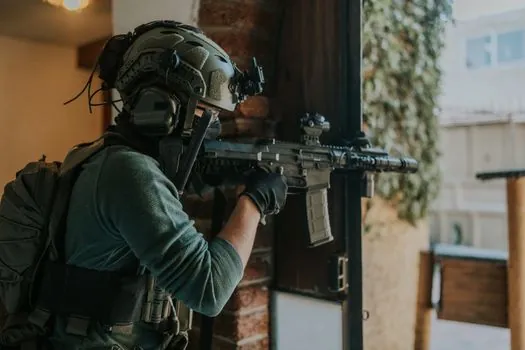
The 2026 procurement checklist, drawn directly from published engineering guidance, requires seven items on the datasheet before any supplier is approached: ballistic protection level tied to EN 1063 or UL 752 threat class, optical transmission range specified by band (visible 380 to 700 nm, NIR, MWIR, or LWIR), mechanical strength with flexural and impact values, thermal stability including operating range and thermal-shock rating, environmental resistance covering salt fog, humidity, UV, and abrasion, weight and thickness limits driven by platform integration, and full certification with third-party test reports plus supply-chain traceability [S1].
The single most expensive mistake in 2026 defence glass procurement is matching the wrong material to the wrong spectral band or specifying a protection rating without a defined test standard; both errors surface during field deployment, not during factory acceptance [S1][S2].
Material comparison summary: four substrates against four decision criteria
For a thermal-imaging window in a UAV seeker, the four-criterion comparison is concrete: sapphire scores high on hardness (Mohs 9) and thermal ceiling (1,000°C) but trades density and cost; ZnS scores high on multi-spectral coverage (visible through LWIR) and moderate density but drops on hardness; germanium scores highest on 8 to 12 µm LWIR transmission and refractive-index design flexibility but fails above 100°C and adds 5.33 g/cm³ of mass; chalcogenide scores high on dual MWIR/LWIR coverage and mouldability for athermal designs but is a specialty supply with longer lead times [S2][S3][S4].
The decision rule that falls out of the comparison: specify the threat and the band first, then eliminate substrates that fail either constraint, then apply weight and cost as tie-breakers, with sapphire, ZnS, germanium, and chalcogenide each winning in a different corner of the trade space rather than competing head-to-head [S1][S2]. For platform integrators evaluating broader material portfolios, the same spec-first discipline used for industrial ceramic selection for fabrication applies: anchor the choice to a verifiable standard or test report, not to a supplier's general capability claim.
Trackable signals for the next 6 to 12 months include further qualification of nanocrystalline spinel ceramic windows under expanded EN 1063 threat classes, broader adoption of chalcogenide glass in mass-produced athermal LWIR assemblies as moulding yields improve, and incremental MIL-STD revisions tightening salt-fog and thermal-shock cycle counts for sapphire dome suppliers. Engineers should also monitor published updates to MIL-STD-810 environmental test methods and to EN 1063 / UL 752 ballistic rating tables, since these revisions reset the qualification baseline for new supplier audits.
The underlying component specifications are covered under optical comparator.