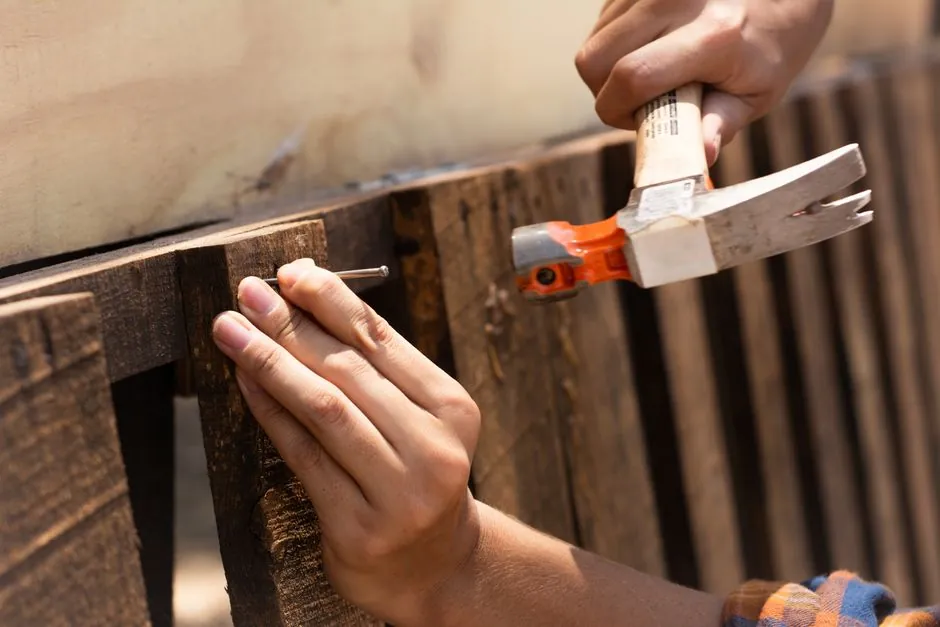
Demolition hammers in the 1500–2000 W input-power band with SDS-max or hex tool shanks are the workhorse class for masonry breaking, with impact-energy figures commonly published in the 15–75 ft-lb range and blow rates of 1100–1900 BPM [S5][S2].
For wall and floor masonry, the Hilti wall demolition line groups tools around four task profiles (wall correction, demolition, rebar exposure, surface removal, wall openings) and pairs them with AVR (active vibration reduction) and an optional DRS dust module rated to capture up to 95% of fine dust at source when paired with a matched Hilti vacuum [S3].
Demolition Hammer vs Rotary Hammer: Mechanism and Where Each Wins
A demolition hammer delivers pure percussive impact without rotation, which concentrates all motor output into breaking energy; a rotary hammer adds a rotating chuck for hammer-drilling clean holes in concrete, brick, and stone [S5]. The functional split drives selection: drilling anchor holes, conduit penetrations, and rebar placement pilots falls to rotary hammers (impact energy 1.5–20 ft-lb, drilling capacity 1/2–2 in. in concrete, 5–25 lb class); masonry demolition, slab removal, mortar-joint raking, and trenching through concrete floors falls to demolition hammers (15–75 ft-lb impact energy, no rotation) [S5].
For a masonry site that needs both drilling and breaking, common practice is to specify two tools, since a single tool cannot optimally cover both duties; using a demolition hammer with a drill bit is not a substitute, because the chuck and gear train are not designed to resist drilling torque [S5].
Key Specs to Lock Before Comparing Models
Key selection factors for demolition hammers include impact power, impact frequency, and tool weight, along with brand and quality. The widely published spec band for masonry demolition is 1500–2000 W input, 15–75 ft-lb (≈20–100 J) impact energy, 1100–1900 BPM, and a tool mass of roughly 20–35 lb for the corded mains class [S5][S2]. Corded models dominate the high-impact class because battery energy density still constrains sustained BPM at the upper impact-energy tier, a point Hilti addresses by offering Nuron cordless demolition in parallel to its corded wall demolition line rather than replacing it [S3].
Shank type is a hard gate: SDS-max and 1-1/8 in. hex are the two professional standards for this class, and shanks are not cross-compatible. The Bosch 14 Amp 1-9/16 in. SDS-max demolition hammer is among the most-reviewed corded models in the category, which signals SDS-max as the de-facto retrofit shank for replacement bits [S4]. Vibration and dust are the next two filters: AVR-style active reduction and a DRS dust port that captures up to 95% of fine dust with a matched vacuum are now standard differentiators on premium wall demolition models, not optional extras [S3].
Chisel and Bit Selection per Masonry Task
Point chisels concentrate impact for breaking and wall correction; flat chisels spread force for surface removal of tile, plaster, and mortar; wide spade and clay-spade attachments speed up floor and slab work; and special rebar-cutting chisels are used when the goal is to expose embedded rebar without over-breaking the surrounding concrete [S3]. Hilti's wall demolition work-flow explicitly enumerates these five task profiles (correction, demolition, rebar exposure, surface removal, openings) and maps a tool/bit pair to each, which is a useful template even for non-Hilti buyers [S3].
For a masonry crew, the practical minimum bit kit is one point chisel, one 1-1/2 in. flat chisel, and one narrow scaling chisel; adding a rebar-cutter and a 3 in. wide floor spatula covers the bulk of wall-to-floor masonry demolition without tool changes that cost cycle time [S3][S2].
Who Should (and Should Not) Specify a Demolition Hammer
Demolition hammers fit contractors and facilities crews doing repeated masonry breaking: slab and foundation removal, mortar-joint raking, brick or block wall takedown, tile and stone surface removal, and trenching in concrete floors. They do not fit crews whose primary task is drilling accurate anchor or conduit holes in concrete; for that work, a rotary hammer in the 1.5–20 ft-lb class is the right tool, and a demolition hammer is the wrong one [S5].
For occasional light masonry chipping (single tile removal, small plaster patches), a lower-cost chipping hammer or a rotary hammer in hammer-only mode is usually the better buy, because the 20–35 lb weight and high vibration of a wall-class demolition hammer slow light work and increase operator fatigue [S5][S3].
Comparison Table: Demolition Hammer Classes for Masonry

The three operating classes that matter for masonry buyers are summarised below; values come from the published spec bands in the research and apply to corded mains models, which still dominate this segment [S5][S2][S3].
Class A: Light wall demolition / surface removal. Input power roughly 1000–1300 W, impact energy 15–25 ft-lb (≈20–34 J), weight 12–20 lb. Best for tile, plaster, mortar joints, and wall correction; AVR and DRS are commonly available. Class B: Heavy wall demolition / rebar exposure. Input power 1500–1700 W, impact energy 30–60 ft-lb (≈40–80 J), weight 20–30 lb. This is the SDS-max mainstream class and the most common rental and contractor-spec tier, exemplified by the Bosch 14 Amp SDS-max and the Hilti TE 1000-AVR universal wall tool [S4][S3]. Class C: Floor and slab demolition. Input power 1700–2000+ W, impact energy 50–75 ft-lb (≈70–100 J), weight 30–40 lb. Uses 1-1/8 in. hex shank as often as SDS-max and pairs with wide spade, clay spade, and tamping shanks.
Power Source, Vibration, and Dust: Practical Constraints
Corded mains remains the default for the high-impact class because the 1500–2000 W input band is straightforward to deliver from a 120 V/15 A or 230 V supply, and runtime is not capped by battery state-of-charge. Cordless Nuron-class demolition hammers are now offered by Hilti for the wall demolition work-flow, and they pair with the same AVR and DRS modules; for sustained floor and slab breaking, the corded class is still the spec default [S3].
Vibration exposure is regulated and operator-fatigue-bound; AVR is the marketed differentiator on premium wall demolition tools and is the single most important comfort feature for production masonry work. Dust is the parallel issue: a DRS port that captures up to 95% of fine dust at source when paired with a matched vacuum is now specified on most wall demolition briefs where silica exposure is a concern, and it integrates with the same vacuum used for adjacent dry-cutting tools, which simplifies site setup [S3].
Sourcing, Standards, and Trackable Signals

Major OEM and rental channels (Hilti, Bosch, Makita, Hilti TE 1000-AVR universal wall tool, MKT HM1203C SDS-max at $999.95 list as a price reference in the SDS-max segment) give buyers a multi-brand short list at the Class B and Class C tiers, and Home Depot's "best rated" Demolition & Breaker Hammers list is a useful retail-side signal of what end-users actually buy in volume [S4][S6][S3]. Industrial distributors such as MannTools publish the SDS-max line at $999.95/Ea (MKT HM1203C, listed out of stock at time of indexing), confirming the SDS-max Class B price band sits in the high three-figure to low four-figure USD range [S6].
Trackable signals for the next buying cycle: cordless Nuron-class demolition hammers expanding into higher impact-energy tiers, broader DRS dust-module integration with non-OEM vacuums, and tightening of operator-vibration regulations, which is already pushing AVR from premium to baseline specification. For related tool selection, the rotary hammer selection for tunnel construction guide and the impact drill selection for bridge construction map cover the drilling side of the same job site, while the angle grinder spec map for steel construction covers the cutting and surface-prep tool that usually pairs with a demolition hammer on a masonry crew's kit list.
Spec-level background on the components involved: demolition hammer, and masonry insulation.