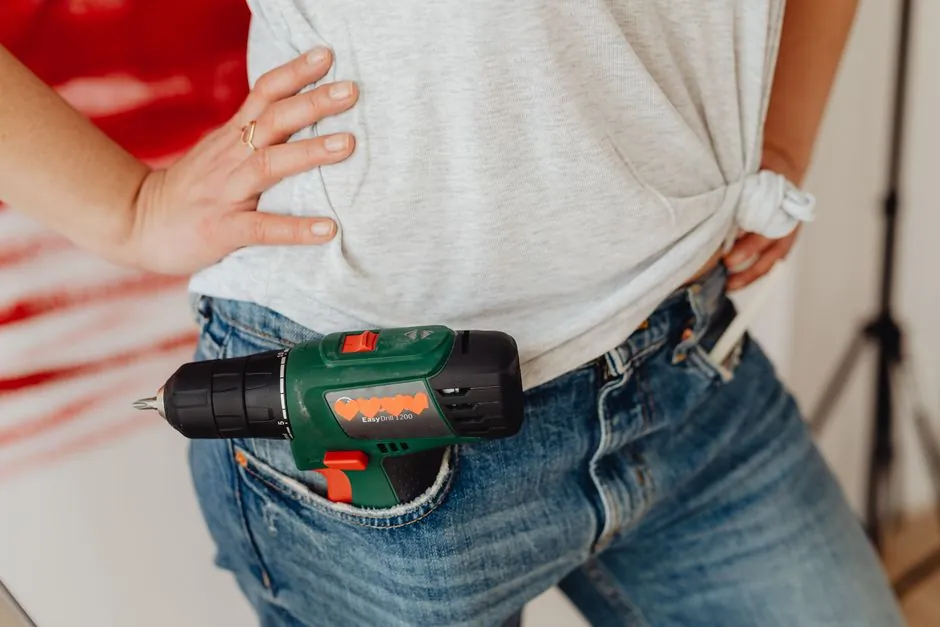
Bridge-site fastener and reaming work is mostly done in the 6-20 mm diameter range, which lines up with the 60-100 Nm hard-joint torque band common on 18V-class brushless impact drills; spade and hole-saw work above 20 mm belongs on a rotary hammer or a magnetic-base drill [S1].
Selection comes down to chuck system (keyless metal 13 mm vs SDS-Plus vs hex 1/4 in), torque and impact-rate envelope, duty-cycle cooling, and whether the tool will run corded on a 110/230 V site transformer or on a 18V/54V battery platform shared with the rest of the construction tools on the deck [S2][S4].
Bridge Workload: Where an Impact Drill Actually Earns Its Place
On a bridge deck the impact drill handles M8-M16 anchor bolts, formwork screws, sign-fixing brackets and the smaller-diameter reaming typical of field fabrication, with torque demand often sitting between 60 Nm and 100 Nm in hard-joint conditions [S2][S6]. Bridge reamers are routinely specified for hole finishing on structural steel, with the cutting diameter range centred around the 6-30 mm band that standard keyless metal chucks can grip [S6].
Heavy foundation work is out of scope for a hand-held impact drill: pile-driving and bored-pile techniques dominate substructure work, and Keller's bridge-construction techniques inventory lists driven precast piles, bored piles, micropiles and rapid impact compaction as the load-bearing methods, none of which a hand drill can substitute for [S5]. For the heavy-lift envelope, rail-mounted gantries run 40-900 t with twin-lift capacity of 50-65 t and 28-56 m/min hoist speeds, which is the actual mass class moving around the deck where the drill will be used [S1].
Torque, Impact Rate and Chuck: The Three Numbers That Decide the Tool
An 18V brushless impact drill typically delivers 60-80 Nm of maximum hard-joint torque, with impact rates in the 0-3500 bpm range and two-speed gearboxes of roughly 0-500 and 0-2000 rpm; the 1/4 in hex quick-change is now standard on most platforms and lets the operator swap between drill bits and driver sockets without re-chucking [S2][S4]. A 13 mm keyless metal chuck is the workhorse for round-shank twist drills and bridge reamers, while SDS-Plus is only worth specifying if the same tool is going to be used for repetitive 6-16 mm masonry anchor work [S4].
Impact-rated accessories matter: Bosch, DeWalt and Milwaukee all market impact-rated drill/driver bits and short stubby hex holders, and Tooled-Up's guide to drilling with impact drivers recommends sticking to impact-rated accessories because the impact mechanism concentrates the same torque in very short pulses, which destroys non-rated bit shanks fast [S7]. Brushless motors in the same class typically weigh 1.5-2.0 kg without battery, which keeps the tool usable overhead on formwork; once the bare-tool mass crosses 2.5 kg the operator fatigue profile changes and a top-handle or D-handle rotary hammer is the better pick [S2][S4].
Corded vs Cordless: Site Power vs Battery Logistics on a Bridge Deck
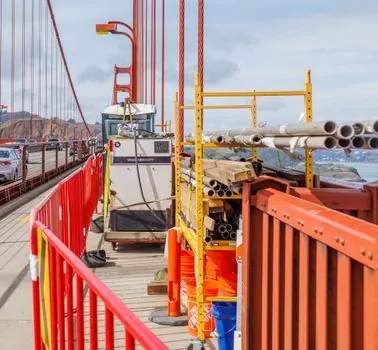
Corded 230 V impact drills in the 700-1000 W input class deliver roughly the same 60-100 Nm of torque as a top-tier 18V cordless, but sustain it across a full shift because there is no thermal cut-off from battery drain, which is the deciding factor for continuous anchor-bolt installation on large piers [S2]. The Home Depot comparison flags raw sustained power as the corded platform's main advantage, while cordless wins on access: inside a box girder, on a pier cap with no generator close, or 60 ft up on a hydro platform, a battery platform is the only practical option [S1][S2].
The trade is duty cycle: under continuous 50 Nm loading most 18V 5.0 Ah packs deliver roughly 30-45 minutes of drive time before the tool's thermal protection starts throttling back, which is why the spec sheet for any cordless impact drill needs to be checked for the amp-hour rating of the supplied pack, not just voltage [S2][S7].
Three Tool Options Compared Against Bridge-Site Criteria
For the deck-side fastener and reaming workload the practical shortlist is a corded 230 V 800 W keyless-chuck drill, an 18V brushless 1/4 in hex impact driver, and an SDS-Plus rotary hammer in the 2-3 kg class, and the table below lines them up against the four criteria that actually drive a bridge-site purchase [S2][S4][S7].
On hard-joint torque all three can reach 60-100 Nm, but the corded drill sustains it indefinitely while the impact driver delivers it in short pulses and the rotary hammer trades raw torque for impact energy per blow in the 2.0-2.5 J range. On chuck versatility the keyless metal chuck takes the widest accessory range including bridge reamers up to 13 mm shank, the 1/4 in hex is fastest for driver bits but limited to hex-shank accessories, and SDS-Plus is masonry-only without an SDS-to-round-shank adapter [S4][S6][S7]. On site access the corded drill needs a 110/230 V outlet and cable management, the impact driver is fully portable, and the rotary hammer is available in both corded and 18V cordless formats. On weight the corded drill lands at 1.8-2.3 kg, the impact driver at 1.4-1.8 kg bare, and the SDS-Plus rotary hammer at 2.5-3.5 kg, which is the boundary where one-handed overhead use stops being practical [S2][S4].
When an Impact Drill Is the Wrong Tool on a Bridge Site
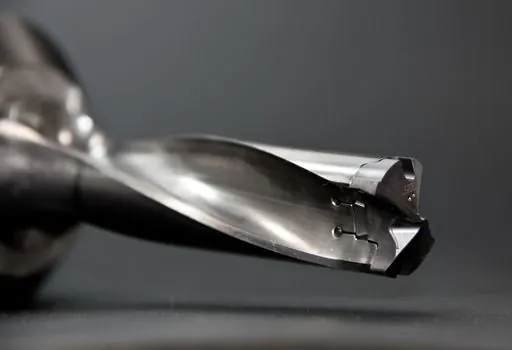
A hand-held impact drill is the wrong pick for pile cap dowels set into cured concrete, for 20 mm+ through-holes in rebar-bearing piers, and for any hole where the operator has to drill more than about 200 mm deep in a single pass, because the chuck and gearbox cannot dissipate the heat that continuous SDS-class work generates [S2][S3]. In a numerical simulation study of impact-drilling construction, the foundation hammer had a 5 t ram weight and 5 ms impact time, which puts the energy class three to four orders of magnitude above a hand drill and confirms that the term "impact drill" covers a very different machine in the foundation-engineering world [S3].
Other exclusions: stainless or galvanised structural bolts above M16 should be driven with a pneumatic impact wrench or a cordless 1/2 in impact wrench, not a 1/4 in hex drill driver, because the clutch range of a drill driver is designed for fastener-driving protection rather than the sustained torque a structural bolt needs. Formwork panel work that needs hundreds of #8 x 50 mm screws per shift also goes to a collated screw system, not a hand impact drill, both for cycle time and for operator fatigue on a long pour day [S2][S4].
Spec Checklist Before You Sign the PO
Before committing, verify the tool's max hard-joint torque (Nm), impact rate (bpm), no-load speed per gear (rpm), chuck type and capacity (mm), bare-tool mass (kg), vibration value (m/s², triaxial) and sound power (dB(A)), and check that the figure printed on the data sheet is the continuous-duty figure, not the short-burst peak that drops after the thermal cut-off kicks in [S2][S4][S7]. Cross-check the battery platform: a 5.0 Ah pack at 18 V nominal supplies roughly 90 Wh, and a deck gang that expects to install 200+ M12 anchor bolts per shift should plan on two packs per drill plus a charger on a 30 A site ring main [S2][S7].
Confirm the chuck accepts impact-rated 1/4 in hex bits if the same tool will be used for sign-fixing and bracket work, and confirm SDS-Plus compatibility if the tool is going to double on 6-12 mm concrete anchor holes; mixing non-impact-rated accessories with an impact mechanism is the most common cause of shank failures on bridge sites [S7]. For a fuller spec-by-application view of impact-drill types and mechanisms, the impact drill selection guide walks through the same chuck and torque trade-offs in more detail, and the rotary hammer spec map is the natural reference point for the 6-16 mm masonry anchor workload that bridges the gap between a hand drill and a rotary hammer.