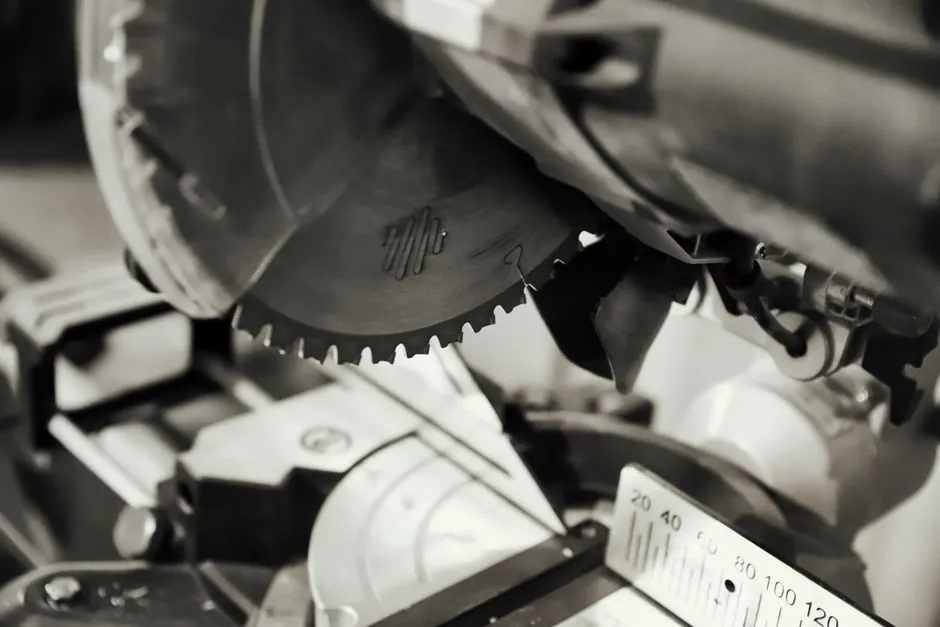
A standard 7-1/4 inch corded circular saw running near 5,800 RPM no-load will cut concrete block, paver, brick and cured slab cleanly when paired with a diamond masonry blade, but only if the arbor size, max RPM rating and rim type all line up with the host saw [S1][S2].
The 2025-2026 masonry-blade catalog on the US market clusters around four rim geometries (segmented, continuous, turbo, abrasive) in 4.5, 7 and 12 inch diameters, with diamond concentration and bond hardness as the two engineering levers that drive life and cut quality [S1][S4].
Why a Wood-Rated Saw Can Still Cut Masonry
Most 7-1/4 inch corded circular saws (Skilsaw, DeWalt, Makita, Bosch) accept either abrasive masonry or diamond masonry blades as long as the arbor matches and the blade's marked maximum RPM meets or exceeds the saw's no-load speed; the same physical saw therefore serves wood, metal and concrete duty with a blade swap [S2][S5].
What changes between wood and masonry duty is not the motor but the rim: diamond or abrasive segments replace carbide teeth, gullets handle dust instead of chips, and continuous or turbo rims replace the open tooth pattern that evacuates sawdust [S1][S5].
Cutting depth tracks diameter: a 7 inch blade reaches roughly 2.5 inches per pass, while a 12 inch blade clears over 4 inches, which is the main reason contractors step up to a dedicated 12 inch cutoff saw for slab and rebar work [S1][S3].
Rim Type Decision Map: Segmented vs Continuous vs Turbo vs Abrasive
Segmented diamond rims use open gullets between each diamond segment, so they cut aggressively and stay cool under dry-cutting loads, making them the default for outdoor concrete, patio pavers and driveway repair [S1][S4].
Continuous-rim diamond blades have no segments, produce a smoother kerf with minimal chipping, and are biased toward wet cutting of tile, ceramic and finish concrete where edge quality matters more than feed rate [S1][S4].
Turbo rims sit between the two: a serrated continuous profile gives faster cut than a smooth rim while preserving acceptable edge quality, and most turbo blades are rated for either wet or dry duty, which is why they show up as a hybrid general-purpose pick for cured concrete and pavers [S1][S4].
Abrasive masonry blades (fiberglass-reinforced resin, no diamonds) are the cheapest option and tolerate occasional DIY cuts in soft brick or cinder block, but they wear fast and generate more heat than diamond rims of the same diameter [S1].
Spec Checks Before You Mount a Masonry Blade

Arbor match is non-negotiable: the bore in the blade must equal the saw spindle, otherwise the blade wobbles, vibrates or fails to seat; this is the single most common cause of poor cut quality reported when users retrofit a wood saw for masonry [S2].
Maximum RPM rating on the blade must meet or exceed the saw's no-load speed. Typical 7 inch diamond masonry blades are rated around 8,500 RPM, well above the 5,800 RPM of a stock 7-1/4 inch corded circular saw, so headroom is comfortable on standard corded platforms [S4].
Bond hardness is the second engineering lever: a softer bond releases fresh diamonds on hard, dense aggregate (granite, cured concrete with hard stone) while a harder bond is needed on soft, abrasive material (green concrete, asphalt, soft brick) to keep the diamonds from dropping out early [S1].
For a deeper dive on what drives total cutting cost beyond the sticker price, the circular saw TCO breakdown maps blade consumption, dust extraction and downtime against the tool itself.
Wet vs Dry Cutting in the Field
Wet cutting with a continuous-rim or turbo blade runs cooler, suppresses airborne silica dust, and extends blade life, but it requires a water feed, GFCI-protected power and a saw rated for wet duty; most corded wood-rated circular saws are not wet-rated, so water is usually paired with a dedicated masonry saw instead [S1][S7].
Dry cutting with a segmented or turbo blade is the practical default on a jobsite when water and slurry management are not feasible; the operator relies on segment gullets and intermittent cuts to shed heat, and dust collection or respirator-grade PPE becomes mandatory rather than optional [S1][S2].
Specialty 4-3/8 inch masonry circular saws (for example the Makita 4-3/8 inch masonry and tile saw) spin at 12,000-13,000 RPM no-load and are purpose-built for dry tile and paver work, which is why contractors keep them in the truck alongside a full-size 7-1/4 inch saw rather than treating one as a substitute for the other [S6].
Comparison Table: Picking the Right Blade for the Job
Material on top, blade on the bottom: cured concrete slab or rebar-reinforced pour pairs with a segmented diamond blade, dry or wet, in 7-12 inch diameter; clay brick and paver pairs with a turbo diamond blade, 7 inch, dry; ceramic tile or porcelain pairs with a continuous-rim diamond blade, 4.5-7 inch, wet preferred; soft block or one-off DIY repair pairs with an abrasive masonry blade, 7 inch, dry only [S1][S4].
Decision criteria lined up across the four rim types: cut speed (segmented fastest, abrasive slowest), edge quality (continuous-rim best, abrasive worst), heat tolerance (segmented best with airflow, continuous-rim worst without water), and cost per cut (abrasive lowest upfront, diamond lower over blade life on hard material) [S1][S4].
For wider cuts in cured concrete and slab, stepping up to a dedicated 12 inch cutoff saw paired with a 4-3/8 inch tile saw for finish work is the typical two-tool setup; users report that 14 inch cutoff saws handle cinder block, paver and adobe cleanly when the head is detached from the base for handheld cuts [S3].
Who Should and Should Not Use a Circular Saw for Masonry
A standard 7-1/4 inch corded circular saw with a diamond masonry blade is the right tool for finish cuts on pavers, brick veneers, expansion joints in sidewalks, and small wall openings where cut depth stays under about 2.5 inches [S1][S7].
It is the wrong tool for deep slab cuts, structural concrete demolition, prolonged rebar cutting, or production-volume paver work; those jobs belong on a dedicated 12-14 inch concrete cutoff saw, a walk-behind concrete saw, or a rotary hammer paired with a demolition bit once the cut line is in place [S3][S7].
DIY users working on a single paver patio or one bathroom tile replacement get acceptable results from an abrasive or turbo blade on a stock corded saw; a crew cutting expansion joints every day should be on segmented diamond rims with proper dust extraction, because the per-cut cost difference between abrasive and diamond flips once you cross a few dozen linear feet [S1][S4].
2025-2026 Market Picks Worth Specifying

On the 7 inch dry-cut segmented tier, the Diablo 7 inch diamond segmented masonry blade shows up as a benchmark for life and dust clearance in patio and paver duty, and DeWalt's DW4725 4.5-7 inch continuous-rim blade is the common pick when edge chipping on brick and block matters more than feed rate [S4].
For a hybrid 7 inch turbo rim, Makita's A-94552 lists a maximum speed of 8,500 RPM and is the default recommendation for cured concrete and paver work where both speed and finish quality are required from one blade [S4].
For heavy 12-14 inch slab and rebar work, the Husqvarna Vari-Cut S35 is a professional segmented diamond blade aimed at high-hour production cutting, and that tier is the right step up once a 7 inch saw can no longer reach the required depth in a single pass [S4].
Safety, Dust and Standards Worth Naming
Respirator-grade dust protection, safety glasses and gloves are baseline whenever a circular saw runs a masonry blade; airborne silica from concrete and brick cutting is a regulated respiratory hazard, and dry cutting concentrates that load at the operator's breathing zone [S2].
Wet cutting, where the saw and blade are both rated for it, is the most effective dust control method because water suppresses respirable dust at the kerf; this is one of the reasons dedicated masonry saws rather than repurposed wood saws are specified for indoor tile and stone work [S1][S7].
Blade guarding and lower-guard retraction behavior do not change between wood and masonry blades, so the saw's existing guard and riving-knife assembly must be intact and functional before any retrofit to a diamond or abrasive rim; users retrofitting a 7-1/4 inch corded saw for masonry should re-read the host saw's manual for blade mass limits and maximum recommended blade diameter, because oversize diamond rims can exceed the saw's designed guard envelope [S2][S5].
Trackable signals to watch next: cordless 18V-54V circular saws paired with 7 inch diamond masonry blades are now common on US jobsites, and the next spec to confirm on any new cordless platform is sustained RPM under load rather than no-load RPM, since diamond blade life drops sharply when the saw bogs down in cured concrete.
Spec-level background on the components involved: circular saw, masonry insulation, and pressure transmitter.