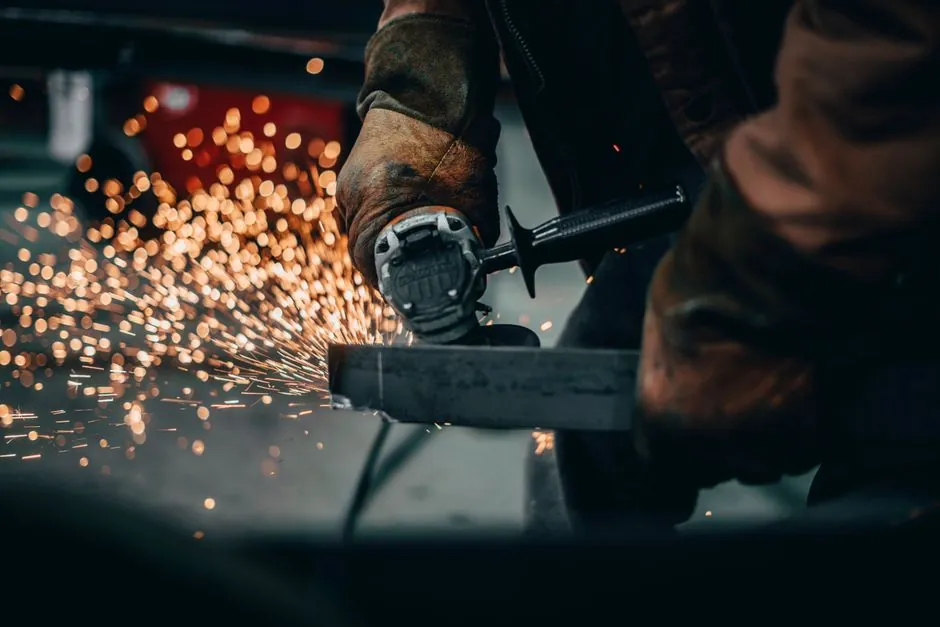
Steel-fabrication shops and structural crews overwhelmingly standardise on 7-inch (180 mm) corded angle grinders rated 2000–2600 W with a no-load speed near 6600 RPM, because that size balances cut depth, weight, and disc availability for the bulk of rebar, plate, and structural section work [S1][S2][S6].
A 9-inch (230 mm) machine pushes cut depth to 2-3/4 inches and is the dedicated choice on construction jobsites for thick metal, brick, and masonry [S1], while a 4.5–5-inch (115–125 mm) brushless cordless unit is the everyday fit-up and weld-prep tool on steel erection sites where cables snag or overhead work dominates [S2][S3].
Disc Diameter vs Cutting Depth: The Real Selection Driver
Disc diameter is the primary sizing variable, not motor power: a 4.5–5-inch (115–125 mm) grinder handles the majority of metal-cutting tasks when paired with a proper metal-cutting disc [S3], while a 7-inch model cuts deeper and is stronger on construction work, heavy metal cutting, and concrete [S2].
For steel construction specifically, the practical cut-depth window is roughly 25–35 mm with a 4.5-inch disc, 35–50 mm with a 7-inch disc, and up to 70 mm (2-3/4 in) with a 9-inch disc, which is why the 9-inch format is described as the construction jobsite choice for heavy section, rebar bundles, and masonry [S1].
Operating speed is the second axis: a 4.5-inch grinder typically runs at 11,000 RPM, a 7-inch at 8000 RPM, and a 9-inch at 6600 RPM, because peripheral disc speed has to stay below roughly 80 m/s to keep abrasive wheels within rated limits [S1][S2].
Power Source: Corded AC vs Brushless Cordless vs Pneumatic
Corded electric grinders draw 6–9 A continuously and deliver steady torque with no battery swap, which makes them the default for workshop benches, fabrication bays, and any stationary cutting station [S3]; a steel-fabrication buyer should treat 2000 W and above as the minimum for a 7-inch machine on structural steel.
Cordless brushless platforms (18 V, 40 V max, 60 V max) now match corded performance in the 4.5–6-inch class and have made the cordless 4.5–5-inch grinder a credible steel-construction tool for fit-up, weld prep, and overhead grinding where cable management and trip hazards are a problem on site [S3][S4].
Pneumatic angle grinders run on 90–120 PSI at 4–8 CFM, weigh 2–4 lb, and reach 3000–12,000 RPM in disc sizes from 4 to 7 inches, which makes them the preferred tool in shipyard and offshore steel work where electrical sparking or wet environments rule out AC motors [S3].
Motor, Gearbox, and Torque: What Actually Matters on Steel
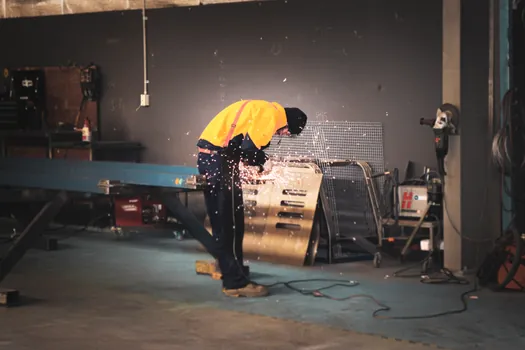
A grinder should be selected on torque, gearbox quality, airflow path, disc quality, and cutting frequency, not on peak wattage or marketing claims, because it is sustained torque under load that keeps an abrasive wheel from bogging down on heavy steel [S5].
Brushless motors have become the norm in professional cordless grinders because they shed less heat, extend runtime per amp-hour, and keep RPM stable under load [S3][S4]; the trade-off is tool cost and reliance on proprietary battery packs.
Steel-cutting generates more heat than wood or masonry, so airflow through the motor housing and a robust gearbox (metal vs plastic, helical-cut vs straight-cut gears) is what separates a 200-hour grinder from a 2000-hour grinder on a steel-erection gang box [S5].
Disc and Accessory Compatibility for Steel
Disc diameter must match the rated guard and spindle of the grinder, which is why fitting a 7-inch disc on a 5-inch grinder is unsafe and against manufacturer guidance: the higher peripheral speed exceeds the wheel's rated maximum and the guard cannot contain a shattered wheel [S2].
For steel construction the working disc set is thin (1.0–1.6 mm) Type 41 metal-cutting wheels for plate and rebar, Type 27 depressed-centre grinding wheels (4–8 mm) for weld seam cleanup, Type 29 flap discs (40–120 grit) for finishing, and strip discs for paint and rust removal without loading on hot-rolled steel [S2][S6].
The abrasive specification matters on structural steel: aluminium-oxide grains suit mild and structural steel, while zirconia alumina and ceramic alumina flap discs last longer on alloy and stainless members and run cooler, which reduces heat tint on stainless [S2][S6].
Brand, Switch Type, and Safety Electronics
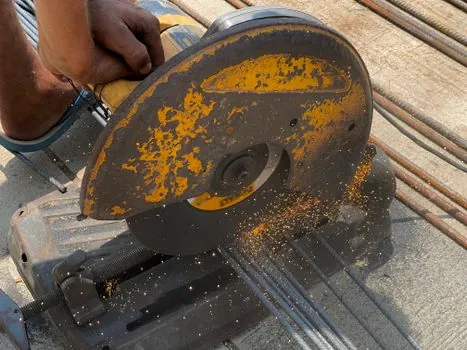
The major professional angle-grinder brands competing in steel construction are DeWalt, Makita, Metabo, and Milwaukee, with Hilti positioned in the premium safety-electronics tier and Ridgid/Ryobi filling the value segment [S4].
Safety electronics now differentiate professional steel-construction tools: 360° Active Torque Control (kickback sensing in any direction), handle-presence sensors (SensTech) that cut power when the hand leaves the tool, electronic brakes, and restart protection are increasingly standard on top-tier 4.5–6-inch cordless models [S4].
For steel erection in cold weather, on scaffolds, or around rebar, paddle-switch (dead-man) activation remains preferred over slide switches on jobsites because it cuts power the instant the operator loses grip [S4].
Decision Matrix: 4.5-inch vs 7-inch vs 9-inch for Steel Tasks
On a typical steel-fabrication floor the spec split is clean: a 4.5-inch brushless cordless (18–40 V) for fit-up tack grinding, weld-prep, and overhead work; a 7-inch corded 2000–2600 W grinder for cutting plate up to 25 mm, rebar, and structural sections; a 9-inch corded machine reserved for plate over 25 mm, heavy section demolition, and masonry openings [S1][S2][S3][S6].
Pneumatic 4–7-inch grinders at 90–120 PSI replace electric units only where ignition risk, wet conditions, or sustained duty in a fabrication cell rule out AC motors, such as shipyard and offshore work [S3].
For sourcing, a structural steel contractor buying for a multi-trade site should standardise on a 7-inch corded platform as the workhorse, a 4.5-inch brushless cordless for mobility, and a 9-inch corded only where the cut-depth or material thickness justifies the extra weight and guard [S1][S2][S3][S6].
Standards, Guarding, and Sourcing References
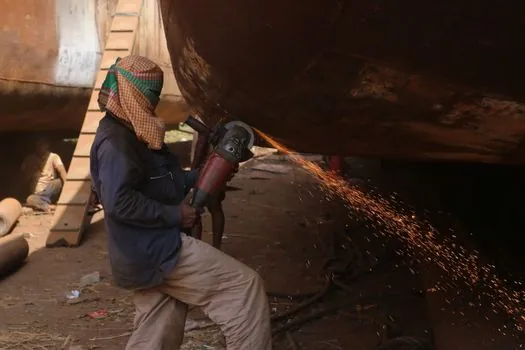
Angle grinders used in steel construction in the EU must carry a CE mark and meet the requirements of EN 60745 (hand-held motor-operated electric tools, including abrasive-wheel safety), with guarding, wheel RPM marking, and type-test data on the nameplate; in North America, look for CSA or UL listing to the equivalent UL 60745 / CSA C22.2 series. [S3]
For personal protection, abrasive-wheel cutting on steel typically requires, at minimum, Z87.1-rated safety glasses, ANSI/ISEA Z89.1 hard hat, hearing protection above 85 dB, leather gloves, and an FFR rating appropriate to dust load (P2/P3 for stainless to control hexavalent chromium exposure) [S2].
Buyer-side reference data and tool comparisons across brands are aggregated on Pro Tool Reviews' angle grinder buyer guide (Jan 2026) [S4], while spec-side context for grinder families used in construction is catalogued at the construction tools and angle grinder reference pages.
Track these three signals before next procurement: brushless 60 V class cordless grinders reaching 7-inch cut capacity (DeWalt DCG460 class) replacing corded on more steel-erection crews [S4], wider adoption of kickback and presence sensors (Hilti AG 6D-22 class) on the 4.5–6-inch cordless tier [S4], and tighter jobsite enforcement of paddle-switch-only policies on rebar and structural work per EN 60745 guidance. For a related welding-adjacent spec map covering electrode selection and TCO on steel, see TIG vs Arc Welding: Electrode, Cost, and Spec Decision Map.
For component-level specifications, see construction machinery and equipment.