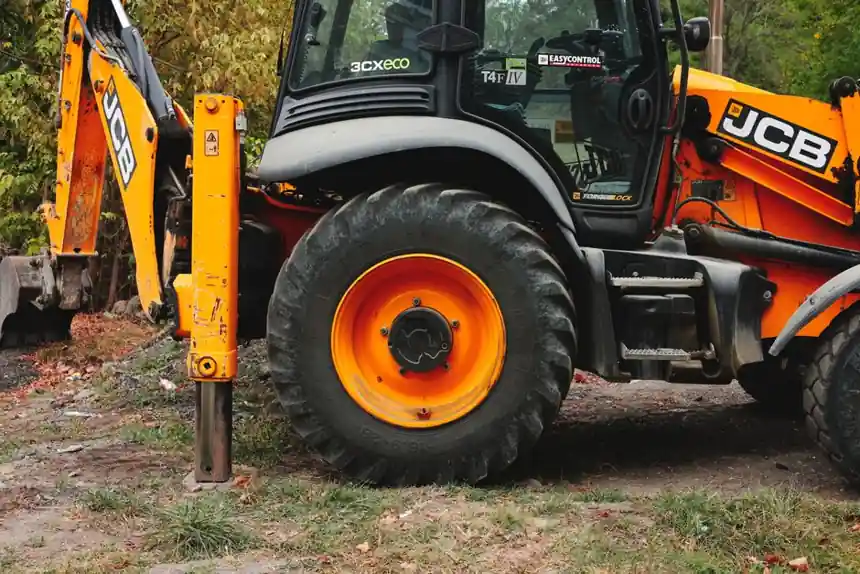
A hydraulic rock splitter cuts rocks and demolishes concrete by inserting a wedge set into a drilled hole and applying hydraulic pressure, while a demolition hammer breaks rock by repeated impact from the outside [S3][S6].
The correct choice depends on boulder size, rock strength, access, allowable vibration, and whether a separate hydraulic power source and drilled holes are practical.
Decision Criteria: Force Method, Rock Size and Site Constraints
A demolition hammer attacks rock from the outside with repeated impact, whereas a hydraulic rock splitter inserts wedges into drilled holes and opens the rock from within [S6]. The splitter applies steady hydraulic force through one center wedge and two reversing wedges, with the rock separating along a predetermined direction within seconds [S1].
For a small, accessible boulder, a demolition hammer can remove material directly and avoid drilling.
Rock Strength and Production Rate
Rock strength is a better selection threshold than the word “boulder.” A rental supplier states that hydraulic-hammer performance drops sharply above 15,000 psi compressive strength and that many formations exceed 35,000 psi, where confined rock may be 3–5 times harder than surface rock [S3].
That same supplier identifies a 15,000–70,000 psi working range as the favorable domain for hydraulic splitters [S3]. These figures are supplier engineering guidance rather than a universal acceptance test, so they should be checked against site-specific rock tests and the splitter manufacturer’s limits.
Impact is less effective against large, rounded obstructions because the energy is dissipated locally rather than driving a controlled fracture. A splitter is more suitable where the boulder is too large for handling, the rock is hard and confined, or a precise reduction is required before excavation [S3].
Hydraulic Splitter Types and Power Requirements
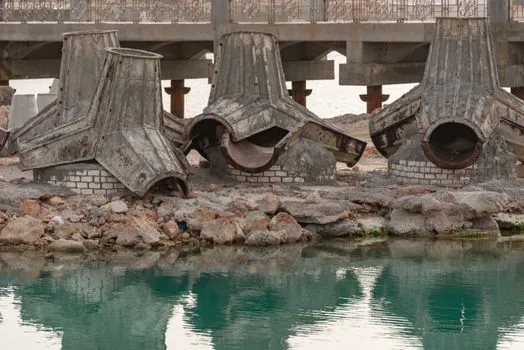
Handheld hydraulic splitters use a cylinder and wedge set in a pre-drilled hole; the center wedge advances between two reversing wedges until the rock cracks [S1].
The available configuration range includes external-hydraulic, heavy-duty splitters for large rock and quarry work, plus compact electric plug-in splitters for smaller, controlled environments where mobility and precision outweigh production capacity [S4].
A carrier-mounted splitter also changes site logistics: it requires suitable machine access, hydraulic connection capacity, transport arrangements, and an operator with excavator or carrier experience. A handheld system may be easier to transport but still needs an external hydraulic power unit, suitable hoses, and a controlled work area.
Impact, Vibration, Access and Safety
A hydraulic splitter is a non-explosive method that produces controlled cracking with minimal disruption [S4]. The principal operational advantage is reduced vibration: splitters avoid the ground tremors associated with blasting and can be used near roads, buildings, foundations, utilities, windows, and other sensitive assets [S3].
The split does not remove all site risks. Pre-drilling introduces dust, noise, bit wear, and the risk of misaligned or insufficient holes, while wedge placement can create pinch and kickback hazards. Keep personnel outside the expected fracture path and follow the equipment manufacturer’s exclusion zone and lifting instructions. Do not treat the absence of blast effects as proof that splitting is harmless.
Electric plug-in splitters are suitable for confined work where surrounding structures must remain stable [S4].
Comparison of the Two Splitting Methods
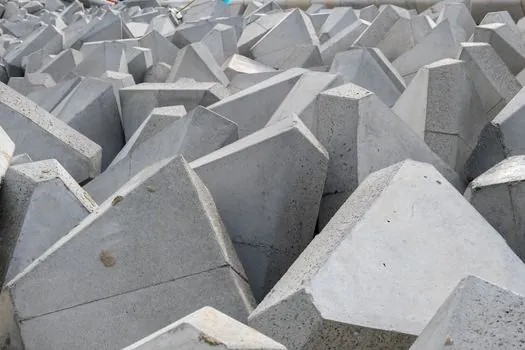
A demolition hammer breaks rock by repeated impact from the outside, whereas a hydraulic rock splitter opens rock from drilled holes by applying steady force through a wedge-and-cylinder system [S6].
On vibration and control, the splitter has the stronger case near structures and utilities because it opens the rock internally rather than transmitting repeated impact [S6].
On versatility, the hammer can attack irregular edges, protrusions, and thin fragments where there is no practical hole axis. The splitter requires a straight, sufficiently deep hole and a defined splitting direction.
Recommended Method by Work Scenario
For a hand-sized to small-garden-boulder task, use a rotary hammer with a carbide-tipped bit and point chisel for drilling, then split with mechanical wedges and feathers. A field account describes a hammer drill plus wedges and feathers as sufficient for a large-rock job completed in about 45 minutes, although the actual result depends on the rock [S5].
For a 3 ft by 3 ft or larger boulder, dense basalt, hard confined rock, or rock exceeding the site’s practical impact-hammer capacity, specify a hydraulic splitter package rather than increasing hand-tool effort. For controlled demolition near foundations, utilities, or occupied structures, the splitter’s low-vibration operating principle makes it the default option [S3][S4].
For quarrying, dimensional-stone extraction, trenching, foundations, and mass excavation, use a carrier-mounted or integrated drill-and-split arrangement. The all-in-one configuration reduces transfers between drilling and splitting, while a 5–40 ton excavator-mounted splitter covers larger production demands [S1][S3].
Pre-Work Checks for Splitting Systems
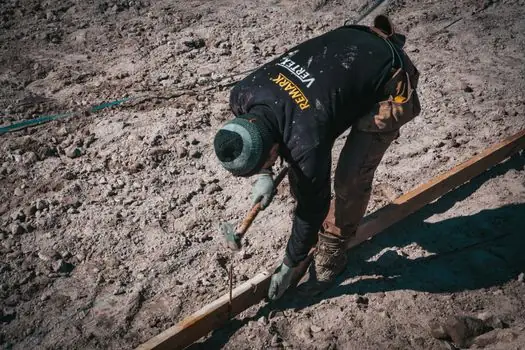
Record the approximate boulder dimensions, mass, rock type, visible fractures, likely compressive strength, access width, and required fragment size before selecting equipment. A 500 lb dense basalt example demonstrates why weight alone is a poor proxy for splitability: the rock lacked nearby joints and had horizontal banding, so a vertical attack did not align with a natural fracture [S5].
Confirm that a splitter’s hole diameter and depth are compatible with the available drill and bit. Verify the power source, hose pressure and flow, wedge size, carrier class, and manufacturer-rated operating range. For a demolition hammer, match the bit to the SDS-Plus rotary hammer or larger system rather than forcing an incompatible shank, and wear the correct eye, hearing, hand, and respiratory protection.
The clean procurement record is the equipment decision, measured production time per boulder, drilling time, fragment recovery time, and total site disruption. Split the job into accessible fragments, not equal pieces, and use the hydraulic method when the required hole pattern and site conditions are confirmed.