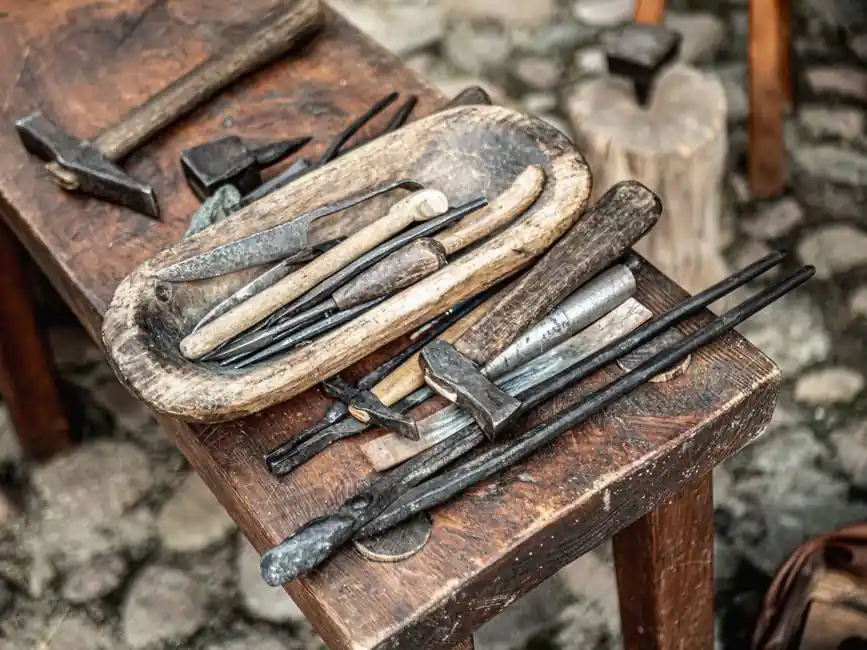
A pointed chisel concentrates impact on a small working area for concrete breaking, while a flat chisel spreads force across a defined edge and a spade uses a broad blade for soil removal [S1][S3].
The decision starts with the material, required result, and machine interface: Both SDS-Plus and SDS-Max use chuck mechanisms that accept drill bits with slotted shanks [S4].
Working-end geometry changes the demolition result
A point chisel concentrates impact into a narrow tip, making it suitable for starting fractures, breaking concrete and masonry, removing mortar, and creating openings in walls [S1][S2][S3]. The cited pointed chisel has an overall length of about 17 5/16 inches and a width of 5 5/16 inches [S2].
A flat chisel has a wide, flat working end. It concentrates less impact at one point and provides a controlled cutting action for trimming concrete, removing tile, shaping masonry, and preparing renovation surfaces [S1][S2][S3].
A spade is differentiated by its broad, shovel-like blade and is principally used to remove soil, clay, and roots or to open trenches for pipes and cables [S2][S3].
For a deeper comparison of point and flat working ends, including material and geometry, see Moil Point vs Flat Chisel Bit: Material, Geometry, and Field Selection.
Point, flat and spade chisels compared
Point, flat and spade chisels can be compared across impact concentration, cutting control, material suitability and typical service. The point option wins where fracture initiation matters, the flat option wins where a defined edge improves control, and the spade option wins where excavation geometry matters more than concrete fracture control. [S4]
Point chisels deliver concentrated impact and offer high penetration into hard concrete, brick, block, mortar, and grout. They are less suitable when the objective is a broad, controlled surface cut because the small contact area concentrates stress rather than distributing it [S1][S2][S3].
Flat chisels distribute load over a wider edge, making them more suitable for directional breaking, trimming concrete, lifting tile, and working on large slabs [S1][S3].
Spades provide a broad digging surface for soil and clay, including trench excavation around utilities. They are not the normal first choice for dense reinforced concrete because the broad blade does not concentrate the same fracture energy as a point [S1][S2].
Match the chisel to the actual work

Use a pointed chisel when the job requires localized concrete fracture, wall openings, or removal of hard mortar and plaster [S2][S3]. For directional trimming and cleaner cuts through concrete, masonry, brickwork, or tile, use a flat chisel with an edge width matched to the cut [S1][S3].
Use a flat or wide chisel for controlled cutting, separation of rock slabs, and additional cutting action during asphalt demolition [S5]. A dedicated asphalt cutter is the more specific choice when the work is pavement cutting rather than general concrete breaking [S2][S5].
Use a spade for digging trenches, holes, compacted soil, and clay, rather than for primary fracture of thick concrete [S2][S3]. A straight tile chisel may be more practical where the tool must get beneath tile and lift bedding mortar, while an angled tile chisel provides clearance near a floor or wall [S1].
These tools are complements rather than substitutes. A common crew kit covers point, flat, and spade working ends, while larger breaker fleets may also need wide, moil-point, asphalt-cutter, ramming, and tamping tools [S1][S5].
Machine fit and size outrank the generic shape label
The working-end shape does not make a chisel compatible with a breaker. Specify the machine interface, overall length, body section, retaining dimensions, and working-end dimensions before ordering [S1]. Chisel catalogs list SDS-Plus, SDS-Max, hex, and OEM interfaces as distinct families [S1].
Both SDS-Plus and SDS-Max drills use chuck mechanisms that accept drill bits with slotted shanks [S4]. Neither interface can be selected solely from the visible working end.
Length also affects handling. The available selection includes conventional, profiled, and self-sharpening demolition chisels, with the shank and dimensions matched to the selected machine [S1]. The cited pointed chisel measures about 17 5/16 inches overall and 5 5/16 inches wide [S2].
For exact chuck and chisel matching, compare the SDS-Plus versus SDS-Max selection criteria in SDS-Plus vs SDS-Max Rotary Hammer Selection by Hole Diameter and Chisel Duty.
Flat chisels trade penetration for control

Flat chisels reduce impact concentration relative to points, so they deliver more cutting control but may require repeated passes and greater operator guidance [S1][S6]. Point chisels are faster for opening a fracture; flat chisels are normally easier to control once the edge is presented to the work surface [S2][S6].
Self-sharpening flat chisels add longitudinal grooves to the cutting edge and are specified for repeated breaking, directional trimming, and concrete work. The cited SDS-Max version is 25 × 400 mm, but edge width, overall length, hammer model, and quantity remain required procurement fields [S1].
The main failure mode is using a flat chisel as though it were a point. Off-angle loading, inadequate clearance, or repeated striking against reinforcement can produce poor cutting, edge wear, and tool damage [S1][S3]. A point chisel can wander when the objective is a straight edge; a wide flat or spade can produce excessive surface contact for a narrow fracture line [S5][S6].
Service life and cost depend on the working event
Self-sharpening geometry is intended for repeated concrete breaking, while conventional flat and point chisels cover general demolition duties [S1]. The working-end profile, material, edge width, and machine class therefore determine both productive life and hourly cost more reliably than purchase price alone.
A 400 mm self-sharpening flat chisel is specified with a matching SDS-Max configuration, whereas conventional flat chisels are offered across broader machine families [S1]. A point chisel with a 1 1/8-inch shank and 7 7/8-inch blade, as in the cited product example, illustrates the dimensional spread within one named type [S2].
For heavy, repeated breaking, specify the machine interface, overall length, body section, and retaining dimensions, then select a profiled or self-sharpening working end where available [S1]. For occasional tile removal or surface preparation, a narrower flat or angled tile chisel can reduce unnecessary impact energy and improve access [S1].
Procurement checklist for demolition chisels
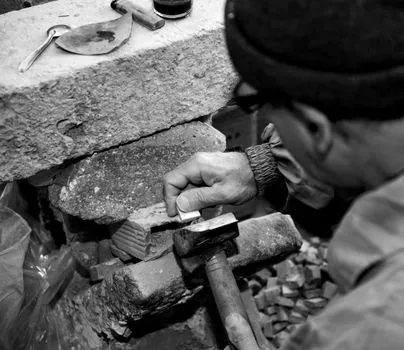
Record four facts before selecting: material, desired result, machine interface, and available working clearance. Point requires a fracture location, flat requires a defined edge and access, and spade requires soil conditions and trench dimensions [S1][S2][S3].
Request the shank system rather than accepting a diameter alone. The catalog categories include SDS-Plus, SDS-Max, hex, and OEM interfaces, and the selected working end must retain compatible assembly dimensions [S1]. The SDS-Plus and SDS-Max distinction is also covered in the SDS-Plus rotary hammer and SDS-Max rotary hammer component guides.
For breaker-class tools, use the demolition hammer specifications to establish shank format and energy class before ordering the working end. Where a hydraulic breaker is involved, verify the manufacturer-specific shank, retention method, length, and working-end dimensions; generic names such as flat, point and spade do not establish compatibility [S1][S5].
Record the exact bit designation, overall length, blade width, shank type, working-end profile, and quantity on the purchase order. Verify availability of the matching angle grinder only when a cutting alternative is genuinely part of the scope, rather than substituting an abrasive wheel for a controlled demolition chisel.
Track two signals after the first production run: fracture rate against the tool geometry and edge wear after a defined number of working hours. These observations establish whether the point is concentrating energy correctly, the flat is delivering the required cut, or the spade is performing outside its intended soil-removal duty.