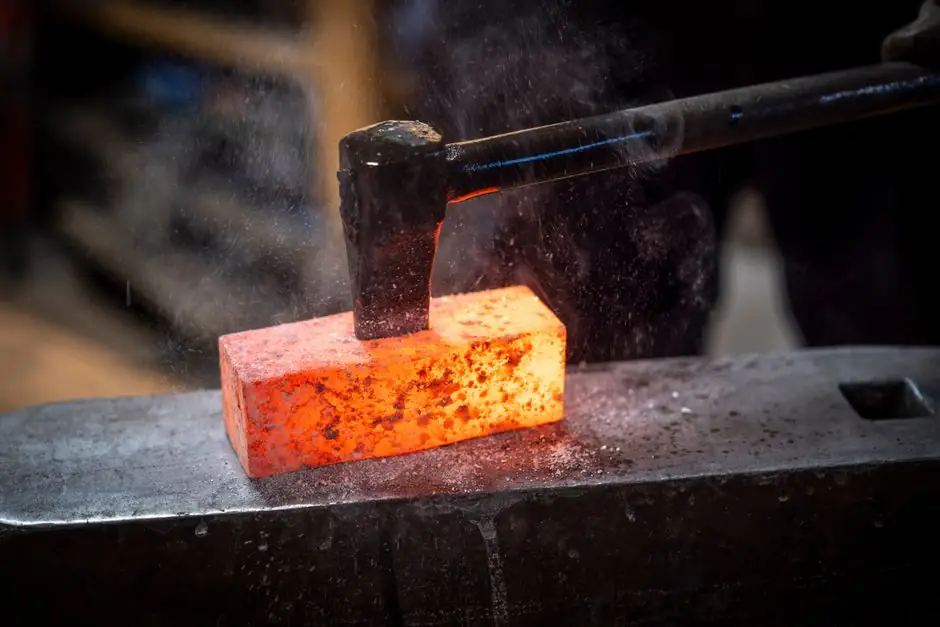
A demolition hammer specified at 7.1 J and 5.6 kg sits at the light end of the market, while professional heavy-concrete guidance points toward 20–40 J or more for demanding work [S4][S7].
Impact energy and weight class should be evaluated together because they define much of the purchase price, operator burden, productivity, and service cost of a demolition hammer.
Impact Energy and Weight Define the Tool Class
Impact energy is the force generated with each blow, and a higher impact rate indicates faster material removal [S2]. One equipment reference describes electric demolition hammers in classes spanning approximately 10–75 lb, with electrical-trade tools commonly found in the plus-or-minus 20 lb range [S3].
For heavy concrete and professional demolition, choose a hammer rated at 20–40+ joules for thick concrete, masonry, and continuous daily jobsite use [S7]. These figures establish different working envelopes: the 7.1 J unit favors surface work and manageable handling, whereas the 20–40 J class targets thicker material and sustained production.
Rotary hammers excel at drilling precise holes in concrete and masonry with hammer-drill action, while demolition hammers deliver straight percussive blows for breaking up concrete and masonry [S5]. A rotary hammer rotates while hammering and is suited to precise holes; a demolition hammer strikes without rotation and is intended to chip or break material.
Cost Drivers Behind Higher-Priced Models
Impact energy is one of several price drivers, not a stand-alone quality metric. The hammer mechanism must deliver more energy per blow, while the heavier piston, housing, and drive train needed to contain that load add material and assembly cost.
Input power is a second driver because higher-energy tools generally require a more substantial motor and electrical system. A 1500 W demolition hammer offers a balance between portability and performance and can handle most medium- to heavy-duty demolition tasks [S2]. Corded operation removes battery-pack and charger costs but restricts movement around the work area; cordless operation adds battery cost but can improve handling and setup flexibility [S2].
A SDS-plus rotary hammer is a different tool class and should not be substituted for a demolition hammer based on shared terminology.
Impact Energy, Weight, and Duty Cycle Compared
For specification, compare at least four criteria: impact energy, operating mass, rated input power, and continuous-duty suitability. A compact 5.6 kg, 7.1 J hammer supports controlled handling, but it is less suited to extremely heavy concrete than a 20–40 J or higher class [S4][S7]. A higher-energy tool improves breaking capability but raises fatigue, handling, and often transport costs.
The correct choice is the lowest class that meets the material thickness, production rate, and operating interval, with weight judged against the operator and transport system rather than by specification alone.
Weight also affects total cost. A 5.6 kg unit can be moved between locations more easily, while heavier classes may require dedicated transport and trained operators. Corded electric demolition hammers are available from several manufacturers in sizes of approximately 10 to 75 pounds [S3]. Below the general class, the cited rotary-hammer range of 5–25 lb provides a useful lower-end benchmark, not an equivalence between tool functions [S5].
Applications That Justify Higher Energy
A high-energy demolition hammer is appropriate for thick concrete, masonry, continuous daily work, slabs, foundations, pavement, and large structural elements [S5][S7]. Tools in the plus-or-minus 20-pound range are commonly used for electrical work [S3]. These are localized tasks, so a lower-energy class may provide better operating economics than maximum-force equipment.
Standard-duty work such as tile removal or light surface preparation can justify a compact unit, whereas full-depth slab demolition may require 20–40 J or more [S4][S7]. Choosing by application prevents paying for excess impact energy, mass, and consumables that the task does not consume.
Attachments must match both the material and the tool. Attachment system compatibility is a purchasing constraint as well as a cost driver, because incompatible tips create replacement expense and downtime.
Total Cost Extends Beyond Purchase Price
Total cost of ownership includes the hammer, chisels, power supply, transport, operator time, maintenance, and downtime. A lower purchase price can still cost more if a 7.1 J tool must be moved to multiple locations or repeatedly lifted to reach elevated concrete [S4]. A heavier, higher-energy hammer can reduce cycle time and operator fatigue enough to offset its premium in production demolition.
Maintenance exposure rises with duty severity and mass. Chisel wear, lubrication, carbon-brush service on corded machines, battery replacement on cordless models, and inspection of the housing and impact mechanism affect ownership cost [S2]. Published examples of a 94 dB(A) pressure level and 8.5 m/s² chiseling vibration also show that a nominally compact 5.6 kg tool remains a managed exposure rather than a harmless hand tool [S4].
Electric demolition hammers commonly use an electropneumatic mechanism: an electric motor reciprocates a piston, compresses an air pocket, and produces the chisel impact [S3]. That architecture explains why energy, piston mass, control system, and mechanical retention belong in one specification rather than being evaluated independently.
Comparable Ratings Need a Common Test Method
Published impact-energy figures are not automatically comparable because no industry-wide method has been established for measuring them [S3]. One manufacturer may measure at the piston, while another measures at the working end of the chisel, producing different values for tools of similar size [S3]. A procurement file should therefore request the test location, chisel configuration, impact rate, and the number of blows used for the measurement.
A useful data sheet should state impact energy in joules, weight in kilograms or pounds, input watts, blows per minute, tool type, and retention system. It should also disclose whether the figure follows a named manufacturer test protocol, such as the EPTA 05/2009 value cited for the 7.1 J example [S4]. A direct field comparison against the competing model is more meaningful when catalog ratings use inconsistent methods [S3].
For attachment planning, Hex vs Spline Demolition Hammer Bit Compatibility provides the interface distinction that determines which replacement points and accessories can be used with the selected model.
Procurement Specification and Trackable Signals
A defensible purchase specification defines the substrate, minimum useful impact energy, operating mass, input power, retention system, duty cycle, noise and vibration data, warranty, and expected accessory consumption. Require the supplier to document the impact-energy measurement method and provide a total-cost comparison at the intended production rate [S1][S3].
Track two signals before ordering: the supplier’s impact-energy test method and the quoted operating mass with vibration data. If the seller cannot distinguish the test location or supplies energy without blows per minute, treat the value as incomplete and request a comparative field demonstration [S3][S4].