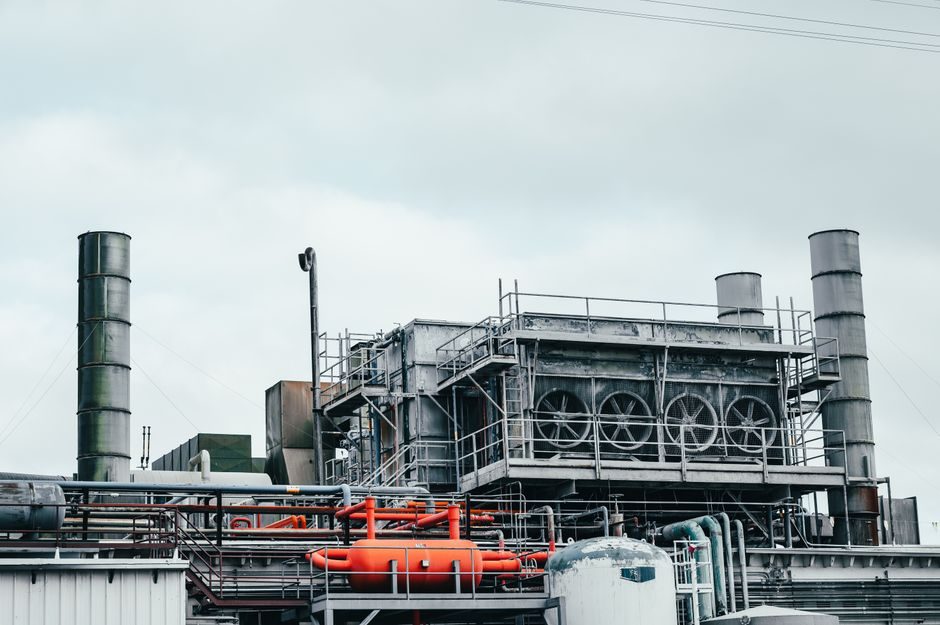
Energy-sector die castings — EV inverter and motor housings, photovoltaic inverter heat sinks, wind-turbine pitch and yaw housings, and battery tray cross-members — are predominantly specified in ADC12 / A383-class aluminum and AZ91D magnesium, which forces a cold-chamber die casting machine rather than a hot-chamber zinc unit because the molten metal sits well above the iron-pot safe limit [S1][S2].
The mainstream machine size band for this work runs from 160 t clamp force up to 1300 t, with the bulk of energy-equipment components landing in the 350-800 t window [S2]. Selecting outside that window — for example, forcing a sub-160 t hot-chamber zinc unit onto an aluminum inverter lid, or over-sizing a 1300 t machine onto a 3 kg heat sink — wastes energy, cycle time, and steel-shot sleeve life.
Cold-Chamber vs Hot-Chamber for Aluminum and Magnesium Energy Parts
Aluminum alloys (A383, ADC12, A380) and magnesium alloys (AZ91D, AM60) require a cold-chamber die casting machine because their melt temperatures (660 °C for Al, 575-635 °C for Mg) sit above the safe operating window of the iron gooseneck and pot used in hot-chamber machines, which is why the dominant product listing for energy-grade castings in current supplier catalogs is the cold-chamber LH-series in the 120-1300 t range [S2].
Hot-chamber machines remain the right pick only when the energy-equipment part is genuinely a zinc or Zamak component — small connector bodies, low-voltage busbar shields, sensor housings where the 0.5-1.5 kg shot weight and faster cycle (typically 30-50% shorter than cold-chamber aluminum) outweigh the alloy-property trade-off [S3]. A magnesium part of similar size can also be run hot-chamber, but only with proper SF6 / SO2 cover-gas management on the gooseneck.
Tonnage and Shot-Weight Sizing Bands for Typical Energy Parts
Clamp force is sized from the projected area of the part at the parting line multiplied by the specific injection pressure — for cold-chamber aluminum that working pressure is commonly 60-100 MPa at intensification, and a practical rule is roughly 4-6 t per cm² of projected area for thin-wall housings and 6-8 t/cm² for thicker ribbed heat sinks [S1].
Typical energy-equipment sizing bands in the current market look like this: small connector and sensor bodies 120-280 t with 1-3 kg shot; EV inverter covers, PDU housings, and PV inverter heat sinks 350-800 t with 4-12 kg shot; large battery tray cross-members and wind-pitch housings 800-1300 t with 12-25 kg shot [S2]. The 350-800 t window is where most EV/PV inverter OEMs cluster, which is why the LH-350T and LH-550T are common line-list items at Chinese cold-chamber builders [S2].
Machine Class Comparison: Small, Medium, Large, Ultra-Large for Energy Work
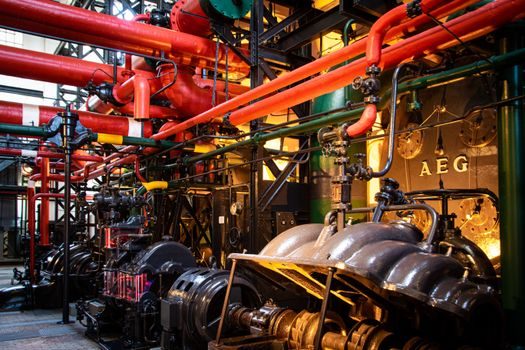
Suppliers currently segment cold-chamber offerings into four practical classes — small, medium, large, ultra-large — and the segmentation maps cleanly onto energy-equipment work [S1].
Small (under ~350 t) suits low-mass aluminum sensor and connector bodies where cycle time matters more than shot weight; medium (350-800 t) is the workhorse band for EV inverter housings and PV heat sinks; large (800-1300 t) covers battery-tray structural members and wind-pitch housings; ultra-large (above 1300 t) is reserved for multi-cavity structural castings or parts with very large projected area where the 6-8 t/cm² rule would otherwise require splitting the part. Used-machine inventory is the most common route into the small and medium bands [S3], and 3-platen, 2-platen, multi-slide, and IMA (Injected Metal Assembly) configurations are all actively traded in the second-hand market [S3].
Real Use Cases Across EV, PV, and Wind Sub-Segments
In the EV traction-inverter and motor-housing sub-segment, the typical part is an aluminum die casting in the 4-8 kg range with wall sections of 2.5-4 mm and integrated cooling channels, which lands directly in the 500-800 t cold-chamber window with a shot weight comfortably under 10 kg [S2]. PV inverter heat sinks are usually heavier per part (often 6-15 kg) because of the finned heat-exchange surface, pushing the requirement into the 550-900 t range with longer die-heat dissipation cycles.
Wind-turbine pitch and yaw housings are the classic large-format case: 12-25 kg shot weight, projected area often above 2000 cm², which is where 900-1300 t machines with platen sizes above 1400 mm become mandatory. For a closer look at how the same tonnage logic plays out in aerospace components, the cold-chamber die casting machine sizing for aerospace alloys spec map is a useful parallel. The energy band and the aerospace band share the 6-8 t/cm² intensification rule but diverge on vacuum assist and on radiographic acceptance thresholds.
Selection Criteria, Limitations, and Failure Modes Specific to Energy Parts
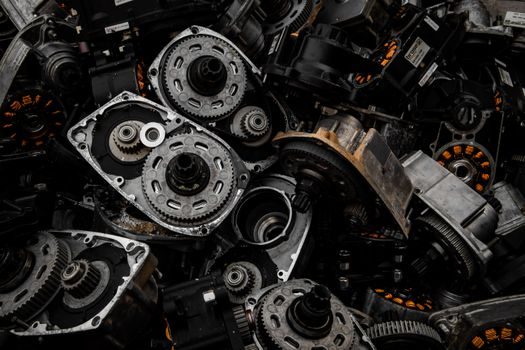
Three spec-driven criteria dominate the decision: (1) the alloy (Al / Mg vs Zn), which fixes cold-chamber vs hot-chamber; (2) the projected area and required specific pressure, which fixes tonnage; (3) the shot weight including biscuit and runner, which fixes the platen and shot-cylinder size [S1][S2]. A common error is sizing only by part mass and ignoring projected area — an aluminum heat sink with thin fins can demand a higher tonnage than a heavier but more compact housing because the fin area inflates the projected figure.
Vacuum die casting and oxygen-assisted HPDC are commonly specified for EV inverter housings because porosity in the high-pressure dielectric region causes partial discharge; the LH-350T-class machine is available with an oxygen-vacuum option for exactly this use case [S2]. The principal failure modes to design around are soldering (Al sticking to the die steel), cold shuts in thin fins, and flash at the parting line when clamp force is undersized — which is why the 4-6 t/cm² thin-wall and 6-8 t/cm² ribbed rules above are conservative starting points, not optimistic ones. For an adjacent part family that shares the tonnage math but lives in a different alloy window, see the die casting machine selection for pump and valve bodies spec map, which covers the brass and copper cold-chamber sub-segment in the same 160-550 t band.
Standards, Sourcing Routes, and Sizing Verification
No single ISO or ASTM standard sets the tonnage per cm² rule; the 4-8 t/cm² band is an engineering convention derived from working pressures of 60-100 MPa on cold-chamber machines, not a written clause of an international standard. What you do specify to is the alloy designation itself — A383 / ADC12 / A380 for aluminum and AZ91D / AM60 for magnesium — and the part-level acceptance criteria (radiographic, dimensional, mechanical) carried in the OEM drawing [S2].
Sourcing routes in 2026 split cleanly into three: (1) new cold-chamber builds from Chinese OEMs offering the full 120-1300 t LH-series, with FOB/CIF terms and a 15-working-day off-season lead time, sample availability, and OEM/ODM service [S2]; (2) domestic Lanson-class builders offering small/medium/large/ultra-large segmentation alongside their injection-molding lines for turn-key integration [S1]; (3) the global used-machine market, which is the fastest path to 60-800 t cold-chamber aluminum units and is the channel of choice for plants consolidating EV-adjacent capacity [S3]. To verify a sizing decision before placing the order, run the part's projected area and shot weight against the four-class segmentation in this article — if the part needs more than 1300 t or a shot above ~25 kg, the project is no longer in standard die casting and is a candidate for a gravity die casting machine or low-pressure alternative rather than a bigger HPDC.
Trackable next signals: (a) whether 800-1300 t cold-chamber lead times from Anhui / Foshan builders stretch past the 15-working-day off-season baseline quoted on current listings [S2]; (b) whether the used-machine channel continues to clear 350-800 t aluminum units in volume, since that is the live indicator of EV-inverter capacity additions in second-tier Tier-1s [S3].
Component reference pages worth checking: die casting machine, and aluminum die casting machine.