Aerospace die casting is built around cold-chamber machines because the aluminium, magnesium, and copper-bearing alloys used in structural housings, electronic enclosures, and actuator bodies cannot be processed in a hot-chamber pot [S1].
For aerospace programmes the working tonnage band is 350-1300 t, with 350 t units such as the LH-350T configured for copper and oxygen-vacuum duty, and 1300 t units reserved for larger structural castings — both produced by established Chinese OEMs like Bengbu Long Hua [S3].
Cold-Chamber vs Hot-Chamber: Why the Alloys Decide the Machine
Cold-chamber die casting machines transfer molten metal from a separate furnace into an unheated shot cylinder, then drive it into the die with a hydraulic or mechanical piston — a slower cycle, but mandatory when the alloy attacks a hot-chamber pot [S1].
Aircraft-grade aluminium A380 and A360, magnesium AZ-series, zinc-aluminium ZA-27, and copper-bearing alloys all fall into the cold-chamber category, with Al A380 and A360 dominating aerospace non-structural housings because of the recycled-material feedstock chain and RoHS 3 / REACH compliance envelope [S2].
Cycle-time penalty of the cold-chamber transfer is the price paid for alloy range; aerospace buyers typically accept a 15-25% slower cycle in exchange for the wider material window [S1].
Selection Criteria: Tonnage, Clamp Force, and Shot Geometry
Locking force selection follows projected casting area and injection pressure: a 350 t clamp frames a typical aluminium aerospace bracket or avionics housing, while a 1300 t clamp is reserved for wing-fittage-size components and large gearbox cases. [S1]
Standard aerospace tolerances sit at ±0.002 in./in. on the drawing, with an additional ±0.001 in. to ±0.015 in. across the parting line depending on size — so machine repeatability and die-temperature control drive the spec more than raw tonnage [S2].
Draft angle on aluminium aerospace parts is 1° to 3°, and minimum section thickness runs 0.060 in. for small features and 0.090 in. for medium parts; machines that cannot hold a stable die-temperature map will struggle to meet those minimums without hot shorts [S2].
Vacuum and Magnesium Variants: Where the 2026 Sourcing List Narrows
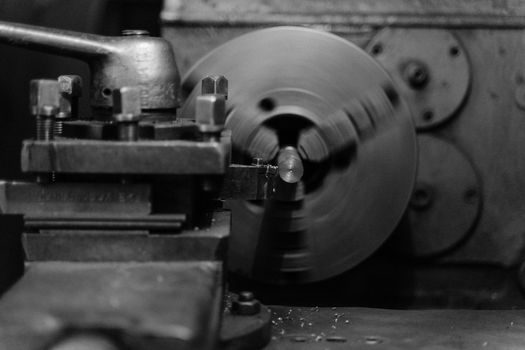
Vacuum-assisted cold-chamber die casting is now a standing option on mainstream 350 t Chinese-built platforms, marketed as "Oxygen Vacuum Die Casting Machine" for aerospace-tier density and reduced porosity on aluminium and magnesium castings [S3].
For magnesium aerospace bracket programmes, dedicated magnesium-capable cold-chamber machines are specified because molten magnesium reacts with the water cooling and ferrous shot sleeves used in aluminium cells; the magnesium die casting machine class typically adds inert-gas cover and specialised shot-sleeve metallurgy.
Buyers comparing platforms should also evaluate the supporting machine family — aluminum die casting machine lines, zinc die casting machine lines for ZA-27 hybrid housings, and vacuum die casting machine variants for sealed aerospace electronics — because the same tonnage rating covers very different shot-end and atmospheric-control hardware [S1][S3].
Standards, Compliance, and the Recycled-Alloy Reality
Aerospace programmes must still clear RoHS 3 and REACH chemical-restriction envelopes even on non-electrical castings, and die-casting alloys routinely hold below the 0.1% SVHC threshold for REACH-listed substances [S2].
Aluminium die casting feedstock is dominantly recycled — wheels, cans, and process scrap — which keeps raw-material cost down but pushes the spec toward A380 / A360 grades that tolerate wider melt-chemistry bands than A356 or other primary-alloy structural grades [S2].
Buyers handling both structural and electronics-housing work should understand that the die casting machine family spans hot-chamber, cold-chamber, gravity, and vacuum variants, and the wrong class for the alloy family is the most common root cause of a rejected aerospace audit, not a tonnage under-spec.
Process Limits and Failure Modes Specific to Aerospace Work

Die life is set by two wear mechanisms: abrasion from the molten alloy and thermal fatigue from repeated heating and expansion cycles — water-cooled dies are used to steer solidification direction, but each cold-chamber cycle still adds to cumulative die fatigue [S1].
Section-thickness range for permanent-mould die casting is 0.02-0.5 in. (0.5-12 mm); aerospace castings that try to push below 0.060 in. on aluminium or below 0.040 in. on magnesium will misfill or porosity-fail, regardless of machine tonnage [S1][S2].
Part-weight envelope for standard cold-chamber cells runs 0.05-75 lb (20 g - 34 kg) per shot, with aerospace bracket and housing work sitting in the 0.5-10 lb sweet spot where 350-500 t machines cycle most efficiently [S1][S2].
Lead Time, Tooling Cost, and Supplier Sourcing Map
Tooling lead time on a new aerospace die is 4-12 weeks depending on complexity, with first samples usually pulled the week the die is available and production ramping inside two weeks of part approval [S2].
For OEM sourcing, Chinese suppliers such as Bengbu Long Hua Die Casting Machine Co., Ltd. (Anhui) list peak-season lead time around one month and off-season within 15 workdays across their full LH-120T to LH-1300T cold-chamber range, with FOB and CIF Incoterms and LC / T / T payment terms [S3].
When a programme needs bracket-and-housing volume at controlled cost, the gravity die casting machine route remains a fallback for low-volume structural parts where the higher porosity of gravity fill is acceptable; for high-density sealed aerospace electronics, the vacuum die casting machine variant is the only credible option on the 2026 short list [S1][S3].
Trackable signals for the next sourcing cycle: 2026 Q3 RFQs out of Tier-1 airframe suppliers for 500-800 t vacuum cold-chamber cells, and a tightening of REACH SVHC declarations on Chinese-built aerospace-grade 350 t platforms.
Related analysis: Belt Conveyor Selection for Warehouse Automation: 2026 Spec Map.