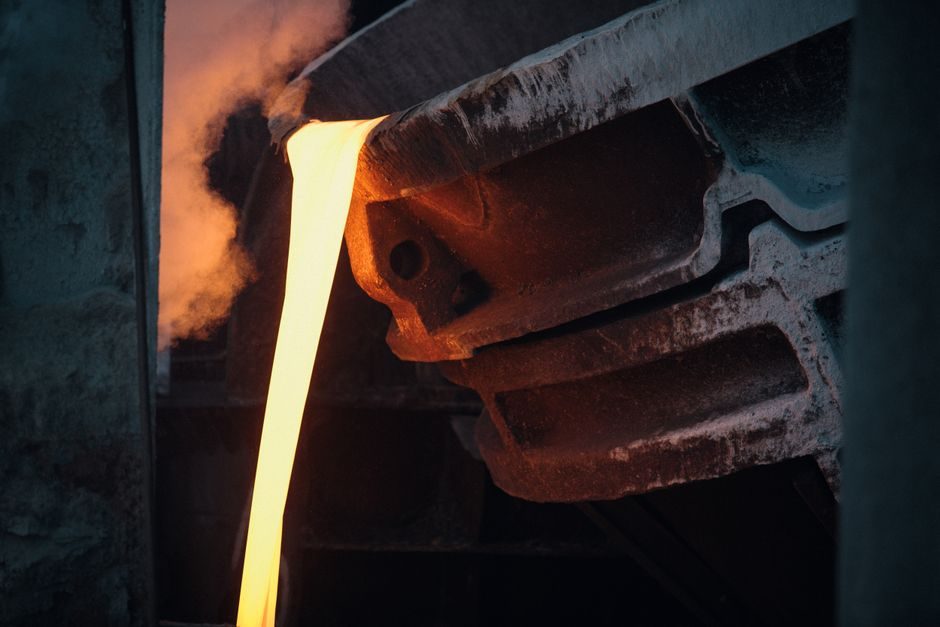
The global die casting machines market was valued at US$2,664.7 million in 2020 and is projected to reach US$4,864.6 million by 2030, a 6.1% CAGR from 2021 to 2030 — a number that lumps both high-pressure die casting machines and gravity die casting machines into one segment [S5]. That aggregate hides the real selection problem: a buyer who treats the two as interchangeable wastes capex on the wrong machine class.
In current Alibaba and Made-in-China listings, a Delin-supplied "Brass Aluminium Die Casting Machine / Mini Door Handle / Sanitary Ware Faucet / Gravity Die Casting Machine" is quoted at US$8,000-35,000 per set, 1-set MOQ, and is described as suitable for brass, aluminium and zinc gravity mould work plus low-pressure die casting of small hardware [S1]. A separate Delin SKU explicitly markets a "Zinc Gravity Die Casting Machine Foundry Automatic Sand Core Molten Metal Die Casting Machine for Faucet Casting Production Line" at the same US$8,000-35,000 band [S4]. The price overlap is the first signal that the two machine families overlap in low-end hardware but diverge sharply once you push the tonnage, injection pressure, or alloy melting point.
For a process engineer, the question is not "die casting vs gravity" as a brand choice — both are dies filled with molten metal — but which pressure regime, clamping force, and shot profile match the part geometry and alloy on the table. The rest of this article lines them up against four selection gates: injection/casting pressure, alloy suitability, cycle economics, and the tooling/automation envelope they each fit.
Pressure Regime and Clamping Force: Where the Two Machine Families Diverge
A high-pressure die casting machine injects molten metal into a closed die at intensification pressures typically in the 30-100 MPa range for cold-chamber aluminium/magnesium work, with hot-chamber zinc and magnesium machines running lower intensification pressures (roughly 10-35 MPa) because the melt stays inside a gooseneck submerged in the furnace. The cold-chamber process forces the operator to ladle melt into a shot sleeve each cycle, which is why cold-chamber shot weights are sized in kilograms, not grams. [S1]
A gravity die casting machine does not inject. The die is filled by tilting the mould or by hand-pouring melt through a sprue, with cavity pressure close to the metallostatic head — typically below 0.1 MPa. PLC-controlled hydraulic tilting tables (servo or proportional valve) are the standard architecture for brass and zinc gravity work, with imported hydraulic packs and touch-screen recipe storage now common even on entry-level units [S2]. The lack of high-pressure intensification is exactly why gravity dies can be cast iron, copper-beryllium or graphite-block inserts rather than the through-hardened H13 tool steel that HPDC demands.
The clamping force required follows the same logic: a 160-tonne locking-force cold-chamber HPDC cell is a normal mid-range specification, while a gravity table sized for a 5-10 kg brass faucet body rarely needs more than the hydraulic clamp force needed to keep the cope and drag sealed against the metalostatic head. That difference in die stress is what lets gravity cells run on lighter, cheaper cast-iron tooling — and what limits GDC to thicker wall sections (generally above 2.5-3 mm on aluminium, above 1.5 mm on brass) and longer fill times.
Alloy Suitability: Aluminium, Zinc, Magnesium and Brass
For aluminium die casting machine work — the largest single alloy segment in the 2020-2030 market trajectory [S5] — HPDC is the default process for thin-wall automotive structural castings, electronics housings, and 2-3 mm wall heat-sink geometries. GDC aluminium is used where you want a coarser microstructure, weldable porosity-free bodies, or a heavier section than HPDC can fill without cold-shut — tractor housings, pump bodies, large lighting columns, and architectural hardware are typical gravity-cast aluminium parts [S6].
For zinc die casting machine work, hot-chamber HPDC is dominant because zinc's low melting point (≈420 °C) and low reactivity let the melt sit in a submerged gooseneck. Alibaba's supplier index lists 1,246 hot-chamber die casting machine suppliers, the majority of them Chinese OEMs, with 13% of one polled supplier's revenue coming from Africa and 10% each from Eastern Asia and South America [S7]. GDC zinc is a niche used for plumbing fittings and heavy hardware where you want the corrosion behaviour of gravity-cast zinc over hot-chamber porosity concerns.
Magnesium die casting machine cells are almost exclusively hot-chamber HPDC (small parts) or cold-chamber HPDC (larger structural parts) because magnesium's high reactivity and heat-of-combustion make a tilting gravity pour unsafe. Magnesium die casting machine design specifically emphasises SF6 cover-gas shrouding, shot-sleeve evacuation, and intensified clamping — none of which exist on a GDC table.
Brass sits at the other end: brass gravity die casting is the default process for faucet bodies, valve bodies and door hardware, which is why the Delin SKU and WXMAC's PLC-controlled gravity cell both pitch brass-and-zinc gravity model casting as the headline use case [S1][S2]. Brass is rarely die cast under high pressure because the high pouring temperature (≈900-950 °C) destroys H13 tooling economics; GDC brass uses cast-iron or copper-alloy dies that survive the thermal cycle cheaply.
Cycle Time, Surface Finish and Tolerance Envelope
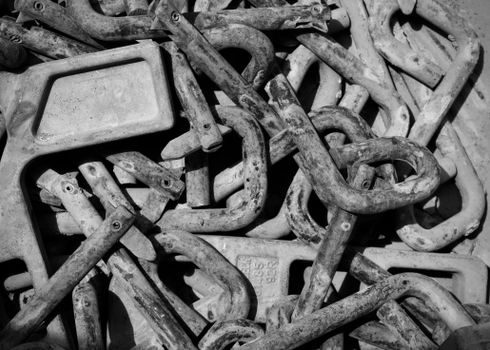
HPDC cycle times for thin-wall zinc or aluminium parts commonly run 30-90 seconds including spray, close, inject, cool and ejection, with cast surface finishes in the 2-4 µm Ra range on a well-polished die. Dimensional repeatability is typically ±0.05 mm on small features and ±0.1-0.2 mm on larger ones, depending on the die temperature-control loop. The combination of high intensification pressure and fast fill is what gives HPDC its signature thin-wall capability and net-shape surface. [S2]
GDC cycles are longer and more operator-driven: 2-6 minutes per cycle is typical for a brass faucet body, depending on section thickness, cooling time and the number of sand cores used. The Delin zinc-GDC line explicitly markets "Automatic Sand Core" placement, which is a strong signal that the part geometry needs internal cavities that would be uneconomic to machine in a steel die [S4]. Surface finish on gravity castings is rougher (typically 4-8 µm Ra), and tolerances are looser (commonly ±0.2-0.5 mm), but porosity is lower and the casting is pressure-tight for plumbing and valve service without impregnation.
The economic crossover sits roughly at annual volumes of 5,000-20,000 parts for the same geometry. Below that, gravity die's cheaper tooling wins even at its higher per-part labour cost. Above that, HPDC's faster cycle and lower scrap rate usually pay back the higher die cost (often 5-10× a comparable gravity die) inside one or two production years [S1][S4][S5].
Tooling, Automation and What Each Cell Actually Looks Like
An HPDC cell is a four-pillar tie-barred machine with a shot sleeve, plunger rod, accumulator (for fast intensification), hydraulic or electric clamping unit, die-spray robot, and an extraction arm or take-out robot. Auxiliary equipment includes a melt furnace, a dosing ladle (cold chamber), an auto-spray unit, a parts conveyor or trim press, and increasingly a downstream shell core machine-fed sand-core inserter for water-jacket or port features. The Delin/Chinese-OEM HPDC machines in the US$8,000-35,000 band on GoldSupplier are the entry-level end of this architecture [S1].
A GDC cell is a tilting table or fixed mould station with a hydraulic or pneumatic clamp, a hydraulic power pack (often with imported proportional valves per WXMAC's spec sheet), a PLC with touch-screen recipe storage, and sand-core setting as the dominant manual step. A sand core machine, where the Delin zinc-GDC line is integrated, supplies the internal geometry; a robotic part extractor is rare on gravity cells because cycle times are slow enough that manual extraction is economical. Conveyors and downstream belt or roller conveyor cooling lines are the usual add-ons for production volumes above a few hundred parts per shift.
For buyers evaluating new lines, the practical gate is whether the castings need internal sand cores, threaded inserts, or undercut features. If yes, GDC with a sand core machine upstream is often cheaper to tool and faster to ramp. If no — and the part is a thin-wall, high-volume shell — HPDC wins on cycle, finish and dimensional repeatability. For a related process-selection view on how core-making choice feeds into the same cell, the shell core machine vs hot box core shooter spec frame covers the upstream decision.
Vacuum and Special Variants: Where Vacuum Die Casting Machines Fit
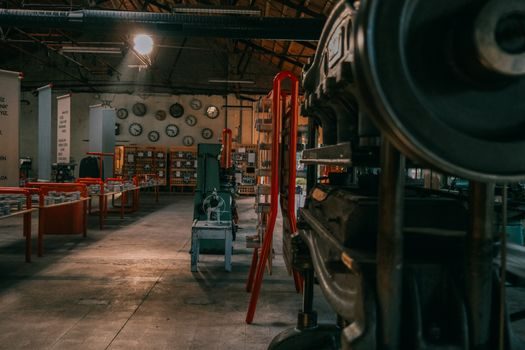
A vacuum die casting machine is a high-pressure die casting cell with a vacuum pump evacuating the cavity and shot sleeve before intensification. The point is to remove entrained air so the casting can be heat-treated or welded without blistering — critical for aluminium structural castings in automotive crash-relevant parts. Vacuum HPDC requires hermetic die sealing, vacuum valves on the die, and a pump sized to evacuate the cavity in 1-3 seconds. It does not change the pressure regime: intensification is still in the 30-100 MPa band. [S3]
There is no equivalent "vacuum gravity" machine class in commercial use, because the metallostatic head already produces low-porosity castings on most gravity geometries. The vacuum die cast path exists precisely because HPDC's high-pressure air entrainment is a real problem for premium aluminium castings — and is irrelevant to brass or zinc gravity work where the fill regime is already quiescent.
Selection Criteria at a Glance
Lining the two main options up against four decision gates gives a usable reference table for spec reviews. On injection/casting pressure, HPDC runs 30-100 MPa cold-chamber and 10-35 MPa hot-chamber, while GDC runs below 0.1 MPa (gravity head). On alloy suitability, HPDC covers aluminium, zinc and magnesium, while GDC covers brass, aluminium and zinc — but not magnesium. On cycle time, HPDC delivers 30-90 s cycles and GDC delivers 2-6 min cycles, with thin-wall capability on HPDC and thicker-wall-only on GDC. On tooling cost, HPDC dies run 5-10× the cost of comparable GDC dies but last longer in their pressure regime [S1][S2][S4][S5].
Who HPDC is for: high-volume thin-wall aluminium/zinc/magnesium parts, net-shape cosmetic surfaces, and buyers who can fund H13 die steel and robotic cell integration. Who GDC is for: brass sanitary ware, heavy aluminium hardware, sand-cored valve bodies, low-to-medium annual volumes, and buyers who need weldable, pressure-tight, low-porosity castings without paying HPDC tooling premiums. Who should not pick GDC: anyone needing magnesium thin-wall structural parts, anyone specifying hot-chamber zinc at 5+ million parts/year, or anyone needing sub-2 mm aluminium wall sections at volume.
The market context matters too: Allied Market Research's 6.1% CAGR forecast to 2030 [S5] suggests that the overall die casting equipment base is growing, which means the buyer's real decision is the machine class, not whether to invest at all. Where buyers go wrong is treating "die casting machine" as a single SKU — the GoldSupplier Delin listing itself bundles "Brass Aluminium Die Casting Machine" and "Gravity Die Casting Machine" into one product name [S1], which conflates two distinct process families. Engineers should ignore that bundling and spec the machine class to the alloy and geometry instead.
Standards, Sourcing and What to Verify on the Datasheet
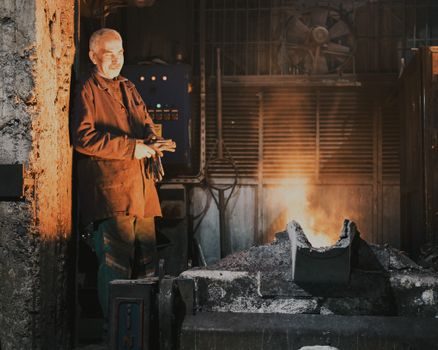
There is no single ISO or EN standard number that a buyer can cite for "die casting machine" as a complete unit. The relevant specifications are split: die steel typically meets NADCA #207 or similar tool-steel designations, safety guarding aligns with ISO 12100 and the regional machinery directive (e.g. EU Machinery Regulation 2023/1230), and pressure-equipment components on the hydraulic pack fall under regional PED rules where applicable. Buyers who need traceable certification should request the die-steel mill certificate, the hydraulic-component CE/PED file, and the PLC safety-circuit documentation — not a single "machine certificate" that does not exist in the standards system. [S4]
On sourcing, the Made-in-China directory shows QS Machinery marketing aluminium gravity die casting for agricultural machinery at US$2.10-2.50 per kg-class component, illustrating the per-part economics on the gravity side [S6]. Alibaba's 1,246-supplier hot-chamber index [S7] is a useful benchmark for the HPDC OEM count, dominated by Chinese suppliers but with 13% of one polled supplier's revenue from Africa and 10% each from Eastern Asia and South America, indicating that the technology base is globally distributed even if the OEM count is China-heavy. The 20-year trade-platform track record cited by GoldSupplier's "20 years of Global Trade Expertise" line is platform marketing, not machine warranty, and should be discounted accordingly [S1].
Two trackable signals for the next quarter: first, NADCA and similar die-casting bodies usually publish annual machine-shipment data in Q3 — that 2026 release will show whether the 6.1% CAGR [S5] is holding or compressing. Second, several European copper-alloy plumbing brands are reportedly re-evaluating GDC brass cell sourcing as brass ingot prices continue to fluctuate; whether that translates to new GDC cell orders in 2026 H2 is verifiable through the same CENS / GoldSupplier / Made-in-China product-update feeds used to source this article [S8]. For buyers specifying now, the safe path is to lock the machine class to the alloy and wall-thickness gate, and let cycle-economics and tooling payback settle the model.