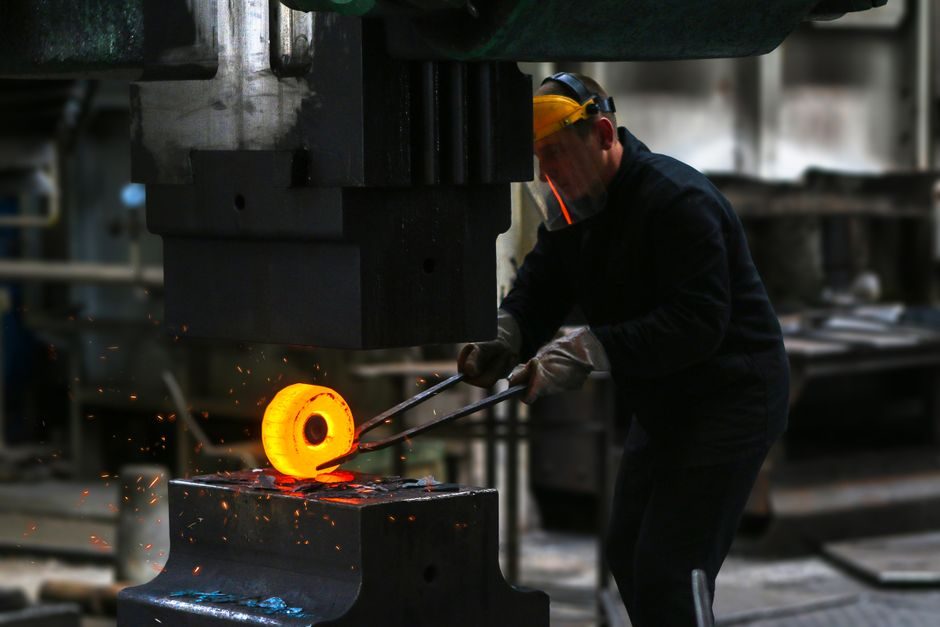
Foundry buyers weighing a shell core machine against a hot box core shooter in 2026 are choosing between two resin-bonded processes, not two sizes of the same machine: the shell process cures a thin-walled core in a heated metal match-plate pattern, while the hot box process shoots resin sand into a heated corebox for a near-solid core [S3].
Both process families ship as standard catalog items from Chinese OEM lines, with vertical/horizontal parting configurations, automatic sand loading, and PLC-controlled cure timers [S2][S3][S4]. The decision is driven by required core geometry, batch size, binder chemistry, and pattern cost, not by raw throughput claims.
Process Boundary: Where Shell Stops and Hot Box Starts
Shell core making bonds fine silica sand with phenolic resin, shoots it onto a heated metal pattern (typically 200-260°C), and forms a cured skin of a few millimeters that is then ejected — leaving a hollow, lightweight shell core suited to thin-walled internal passages. Hot box core shooting shoots resin-sand mix into a closed, heated corebox (around 200-250°C) where the resin cures throughout the mass, producing a solid core that carries higher mechanical load in the casting [S3].
The boundary is geometry-driven: when the drawing calls for a thin shell-type passage that needs to be lightweight and dimensionally stable, a shell core machine is the matched tool; when the drawing calls for a solid sand core that must resist metal pressure or shake-out forces, a hot box core shooter is specified instead [S3]. Both can be sourced as vertical or horizontal parting units from Chinese builders in 2026, with the horizontal parting HBH series explicitly marketed for solid hot-box work [S3].
Selection Criteria That Actually Decide the Buy
Five criteria are used by spec engineers to gate the choice: (1) core wall thickness and required mass; (2) required surface finish and dimensional tolerance; (3) cycle time per core; (4) pattern/corebox cost and lead time; (5) binder gas and ventilation demand on the foundry floor [S2][S3]. A shell molding machine is typically selected when cores are under ~15 mm wall and the casting needs a clean, controlled internal passage; a hot box line is selected when the core section is thicker than roughly 20-30 mm and must transmit load through the pour.
Resin chemistry also matters: shell process uses a thermosetting phenolic that cures by contact heat against the pattern face, while hot box uses a similar phenolic-urethane system activated inside the closed corebox — meaning the hot box process generally needs a fume-extraction and gassing-vent design that a shell pattern does not [S3]. Buyers should weigh corebox heating power, pattern wear, and downstream ventilation as line-cost items, not just head price.
Side-by-Side Comparison on Decision Criteria
On a four-criteria frame, the two process families line up as follows for 2026 sourcing [S2][S3][S4]:
Core wall thickness: shell core machine produces thin-walled shell cores (typically a few mm to ~15 mm); hot box core shooter produces solid sections, commonly 20-80 mm and up. Cycle time: shell core machines commonly quote 30-90 seconds per shell including cure and ejection; hot box shooters in the HBH class quote 20-60 seconds for a fully cured solid core, depending on section thickness. Tooling cost: shell patterns are matched metal patterns and tend to be cheaper per cavity for thin geometries; hot box coreboxes are heavier, machined steel blocks and cost more, but last longer under high-volume runs. Foundry fit: shell process needs pattern heating and a sand reservoir; hot box needs a heated corebox, often a gassing vent (in the gas-cure variant), and an ejector station. Buyers who run a shell core shooter line for valve and pipe cores will rarely need a hot box unit, and vice versa — the two are usually complementary, not interchangeable [S3][S4].
Who Each Machine Is For — And Who It Is Not For
A shell core machine is the right call for foundries producing thin-walled valve cores, pipe intersections, and small-diameter internal passages where weight reduction and dimensional control matter more than mechanical strength; it is the wrong call for foundries needing solid load-bearing cores in large iron castings. The OEM catalog for vertical automatic shell core machines positions the equipment at foundries running ferrous and non-ferrous small-to-medium castings with thin internal geometry [S2].
A hot box core shooter is the right call for foundries producing solid cores for engine blocks, gearbox housings, heavy valve bodies, and similar sections that take metallostatic pressure; it is the wrong call for foundries that only need a few thin shell cores per shift, since the corebox, heating, and ventilation cost cannot be amortized at low volume [S3][S4]. A cold box core machine is a separate family that fits the high-mix, low-tooling-cost segment and should be evaluated when neither shell nor hot box is the best fit.
Real Use Cases on the 2026 Sourcing Market

On the 2026 Chinese OEM market, vertical automatic shell core machines are catalog items targeted at pipe fittings, valve bodies, and small foundry runs, with automatic sand feeding, PLC timers, and heated pattern tables [S2]. Horizontal parting hot core box shooters, branded HBH series, are sold to iron and steel foundries needing medium-to-large solid cores, with heated corebox stations and pneumatic sand shooting [S3]. Gravity casting machine and hot-box core shooter lines from Quanzhou Sanjia Machinery list both process families in the same product catalog, treating them as complementary machines in a foundry's core shop rather than substitutes [S4].
Independent foundries in the US, such as Quality Cores, advertise shell cores, cold box Isocure cores, and air-set no-bake cores as a three-option menu — a real-world data point that shell and hot box are routed by the geometry and binder the buyer is willing to run, not by which single machine the foundry owns.
Limitations, Failure Modes, and Standards Anchors
The main failure modes of a shell core machine are pattern warping from repeated thermal cycling, resin build-up on the pattern face, and shell-core cracking on ejection if cure time is too short; the main failure modes of a hot box core shooter are corebox heating-element burnout, under-cure in thick sections, and amine/gas exhaust if a gassing variant is used [S3]. Both classes of equipment should be specified with PLC-controlled cure timers and interlocked ejector motion, and both should be paired with downstream core storage that protects the cores from moisture pickup before assembly [S2][S3].
Standards anchors applicable to both lines include ISO 9001 for OEM quality systems, foundry-grade phenolic resin specifications from the binder supplier, and the CE/EMC requirements that govern European-bound equipment; ventilation and amine gas exposure should be designed to local occupational exposure limits rather than copied from a generic machine data sheet [S3][S4]. Buyers should also confirm pattern/corebox material certificates and the rated heating power in kW, which is the single most useful figure for sizing the foundry's power feed.
Sourcing Checklist Before Issuing the PO

Before issuing a PO in 2026, the spec engineer should lock down: required core wall thickness, target cycle time per core, pattern/corebox material and lead time, rated heating power (kW), PLC brand and HMI language, ventilation and gas-extraction interface, and post-sales support window from the OEM [S2][S3][S4]. Confirm whether the line is sold as a hot chamber machine configuration in some catalogs — a related but distinct die-casting term that should not be confused with a hot box core shooter on the same quotation [S3]. Request a sample core run at the OEM's plant with the buyer's resin and sand before signing off on the cure-time specification.
Trackable signals over the next 6-12 months: rising kW-rating requests on 2026 quote sheets, more foundries pairing shell and hot box units in the same core shop, and tighter resin-supplier lead times for phenolic-urethane hot box binder — three indicators that buyers can monitor against the next quote round.
For related coverage, see Thickness Gauge vs CMM: Picking the Right Tool for Wall, Coating, and 3D Geometry.