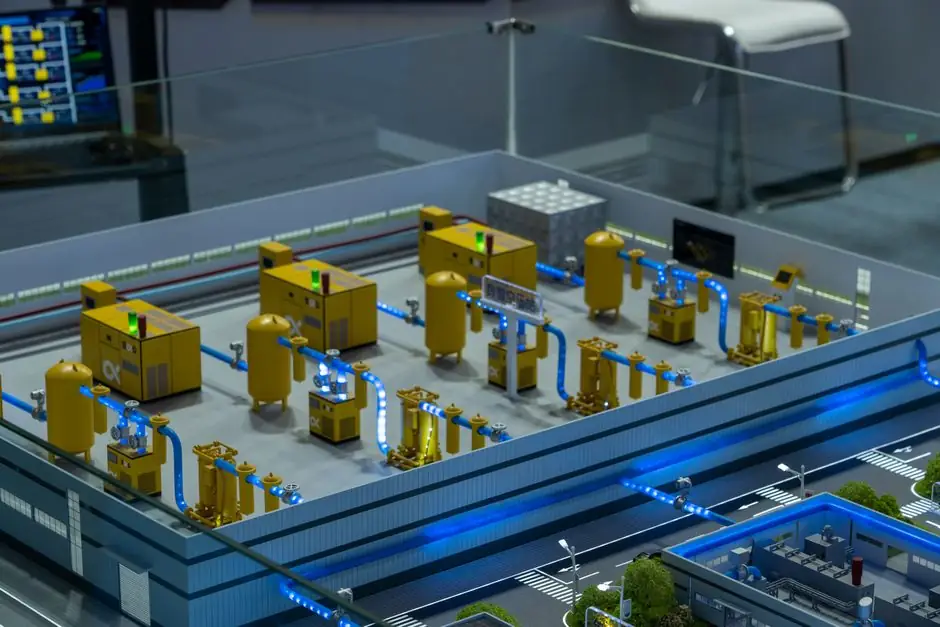
Digital Andon platforms in 2026 deployments report a 58% reduction in average response-to-resolution time and a 34% drop in unplanned downtime within the first operating quarter, against traditional stack-light-only Andon systems [S4].
The shift is structural, not cosmetic: a 4-minute average response with digital Andon and mobile escalation replaces a 22-minute average response with stack-light-only setups at comparable U.S. plants, and 68% of recurring line stoppage causes are identifiable from Andon event logs within 30 days of deployment [S4]. The architecture now spans four layers, signal capture, routing, escalation, and analytics, which sit above every workstation and every shift, and integrate directly with the MES layer for OEE reporting.
Trigger Layer: Cord Pull, Stack Light, and Touchscreen Comparison
The original Andon trigger is a physical cord pulled by the operator, paired with a red/yellow/green stack light that signals normal, developing, and stop conditions to the line [S3]. Digital andon cord systems replace the rope with connected devices, physical buttons, touchscreen terminals, tablets, or mobile devices, that capture the same intent with a richer data envelope: workstation ID, problem category (quality, safety, material, equipment), timestamp, and a response timer started at the moment of trigger [S2].
For high-mix or multi-cell plants, the physical cord fails on coverage: a rope cannot reach a supervisor working in a different area, and a light column cannot route to a remote engineer [S2]. The measurable consequence is mean time to respond, where stack-light-only systems average 22 minutes versus 4 minutes for digital deployments with mobile escalation, a 5.5x spread that compounds across hundreds of events per shift [S4]. Touchscreen and tablet triggers also allow multi-level escalation: an unacknowledged alert moves automatically from team leader to supervisor to plant director on a configurable timer, a behavior the physical cord cannot replicate.
Escalation Engine and Response-Time Architecture
A digital Andon deployment in 2026 is a routing and escalation engine, not a single device: it decides which alert type maps to which condition, which personnel receive which notification through which channel, and how long the system waits before escalating if the first responder does not acknowledge [S4]. The first-response acknowledgment target in a well-configured deployment is under 90 seconds, measured from the moment the operator triggers the event to the moment the assigned responder taps acknowledge on a mobile device [S4].
Physical Andon has no escalation timer, no acknowledgement log, and no measurable response-time clock; a light that nobody answers trains operators to stop pulling it, and the failure mode is silent [S3]. Digital systems add a fourth data point that physical setups cannot: how long the call sat unanswered, which becomes the leading indicator for staffing, training, and routing logic. The economic weight is concrete: an unaddressed line stoppage at a mid-size U.S. automotive assembly operation runs roughly $18,000 per hour, so a 14-minute compression in mean response time on a 60-minute event is on the order of $4,200 of avoided loss per event [S4].
Data Capture and MES Integration: The Structural Advantage
Digital Andon ties every signal to data, which station, what reason, how long until response, and a structured log of every event for analysis, and bridges the gap between human operator insights and machine-driven process data flowing through the MES [S6][S3]. A line stoppage in a digital deployment simultaneously illuminates the stack light, pushes a notification to the assigned team leader's phone, posts to the Andon board display, logs timestamp and station ID to the MES, and starts the response-time clock, all from a single trigger event [S4].
Physical Andon events are rarely logged in a searchable, structured way, which is why the same root cause can recur for months without surfacing in trend data; digital systems capture everything automatically, and root-cause identification runs 3x faster when Andon data is integrated with MES production records versus manual incident logging [S2][S4]. For flow-meter and pressure-transmitter instrumented cells, this data layer also feeds the industrial-valve maintenance loop: an Andon event tagged "equipment" with a station ID can auto-open a work order in the CMMS and pre-populate the affected asset list. Modern Andon deployments further integrate with Industrial Internet of Things (IIoT) sensors, ERP, and MES software, which is what turns the call-for-help from a visual signal into a continuous-improvement data source [S7][S1].
Decision Matrix: When to Stay Physical, When to Go Digital
For a simple, linear assembly line with co-located supervisors and a single shift pattern, a physical stack light with a cord-pull remains fit-for-purpose and lower in capex: no wiring runs, no devices to provision, and the operator's muscle memory is already trained on the rope [S2][S10]. The break-even point sits at the second escalation level: the moment you need a second tier of responder (maintenance, engineering, or quality) that is not standing within earshot of the light, the digital layer pays back in response-time compression alone.
Four criteria sort the choice cleanly: (1) plant layout (single cell favors physical; multi-floor or multi-cell forces digital); (2) shift pattern (single shift tolerates physical; 24/7 with handover requires a logged event record); (3) response-time target (under 5 minutes is a digital-only outcome at any scale); (4) data use (any root-cause analytics, OEE reporting, or MES integration makes physical setups a dead end) [S2][S4]. High-mix electronics, automotive, and pharmaceutical cells hit all four triggers; a single-process packaging line may hit one.
Limitations and Failure Modes of Digital Andon
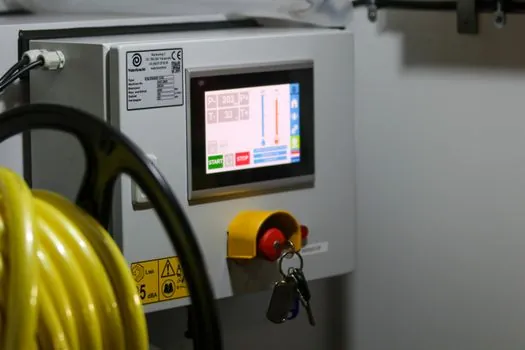
Digital Andon is not a free upgrade: it depends on network coverage at every station, a device fleet to provision and maintain, and a routing configuration that has to be kept in sync with the actual org chart. A digital Andon that pages the wrong person trains operators to ignore the page within a week, the same failure mode as a physical Andon that nobody answers [S3]. The first operating quarter is the honest measurement window; vendors publishing 58% response-time reductions report them as first-quarter outcomes, not as steady-state [S4].
Wireless devices also introduce a new failure class: dead batteries, OS updates, and dropped Wi-Fi sessions on the shop floor. Mitigation runs through shared tablets or panels at each cell rather than personal devices, and through trigger redundancy (a physical button plus a touchscreen plus a software trigger from the pressure-sensor or digital-panel-meter alarm), so a single point of failure does not silence the line. Andon only works if the signal triggers a fast, committed response; the technology choice is downstream of that cultural commitment [S3].
Vendor and Integration Footprint in 2026
Deployment patterns converge on a four-layer architecture: triggering devices at the station; a routing and escalation engine (typically cloud-hosted, sometimes on-prem); mobile and Andon-board display clients; and an analytics layer that feeds the MES and the OEE dashboard [S4][S7]. Mobile alerts to team leaders and supervisors are now standard, replacing the walk-to-find-a-supervisor model that physical Andon forces [S8][S2]. The category of "smart Andon" is differentiated less by the trigger hardware, which is largely commoditized, and more by the analytics layer and the depth of MES and ERP integration, which is where the digital-multimeter of production signals starts to look like a real-time operations console rather than a help button [S6][S1].
Trackable signals through the rest of 2026: vendor-published first-quarter KPIs for digital Andon deployments versus stack-light baselines (response time, downtime, root-cause identification rate), and IIoT integration depth between Andon event logs and MES work-order generation. A second signal to watch: regulator and customer audit trails, where the shift-handover log produced by digital Andon becomes an evidentiary record of who acknowledged what, and when, that a physical Andon system cannot produce.
For related coverage, see AMR Unit Price and Fleet Software Fees in 2026: Cost Breakdown.