Core control architectures and operating behavior
The activation control determines where the operator can command the leveler, not merely where the buttons are mounted.
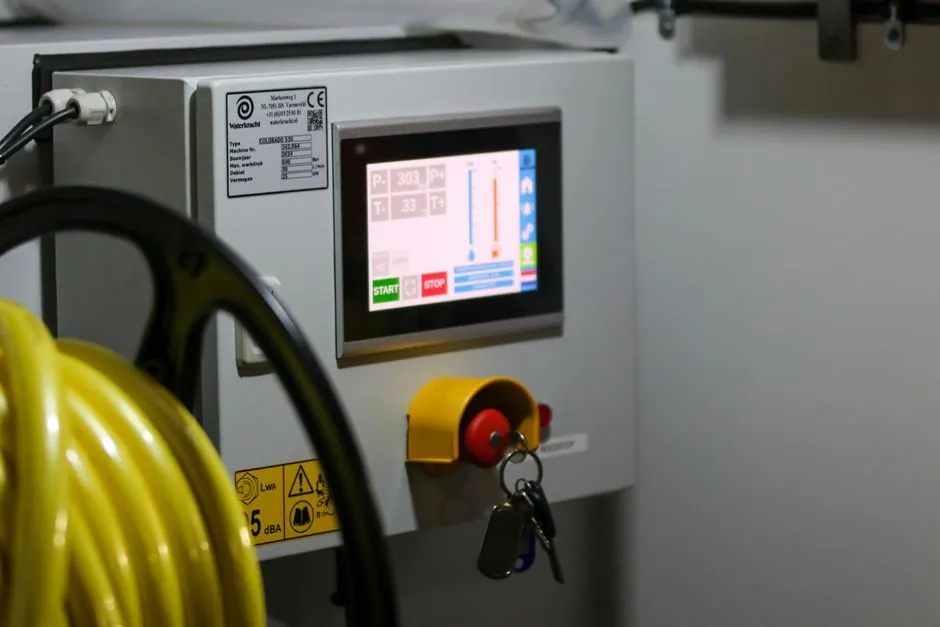
A fixed push-button panel places the controls at a defined wall or pedestal location and connects them to the leveler through fixed electrical wiring. The PR Series manual is Manual No. 4111-0001, dated February 2020, and the VS Series manual is Manual No. 4111-0008, dated April 2019 [S3][S4].
Some hydraulic products use a single-button architecture rather than separate UP and DOWN commands. Nova Technology’s NHS hydraulic leveler likewise uses one push button to energize the hydraulic pump for both platform and lip cylinders [S6]. The HHC Series hydraulic dock leveler control panel combines single-button activation with a mushroom-style Stop button [S7].
Decision matrix for control selection
Pendant versus fixed-panel selection can be made against operator mobility, installation exposure, functional integration, and maintenance access. The comparison below uses the control arrangements documented for specific dock-lift and dock-leveler families rather than treating all pendants or panels as equivalent products [S1][S3][S4][S6].
Cost cannot be assigned a defensible universal figure from the available material, and the product evidence does not support a blanket statement that either architecture is always cheaper. Installation cost depends on cord length, panel location, voltage, conduit, switching, and the leveler’s hydraulic or pneumatic control package [S1][S3][S4].
Where each control method fits
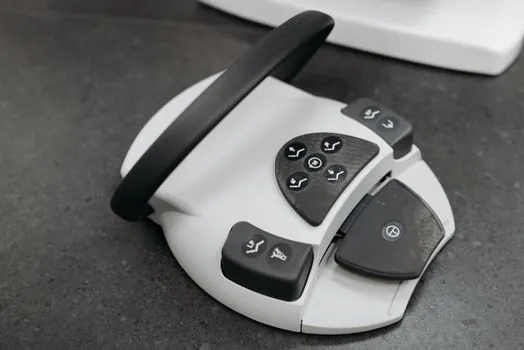
A pendant fits docks where the operator must change position during loading or where viewing the lip and trailer interface from the command station is valuable. Its advantage is operational flexibility: the operator carries the command point instead of returning to a wall-mounted station.
A fixed panel fits a conventional, permanent dock where operators work from a consistent position and the electrical package can be installed once. This makes the panel a practical interface for a standardized dock layout rather than a portable command device.
Single-button controls serve a narrower function: cycle the hydraulic or pneumatic power source and let the equipment’s sequencing logic handle the movement. That is the documented behavior of the Blue Giant SP1 for standalone pit-style hydraulic or air-powered levelers [S5]. The NHS arrangement uses a single push button to activate one hydraulic pump for operating both the leveler platform and lip cylinders, and its electrical control panel is a NEMA 12 enclosure [S6].
Safety, failure modes, and operating constraints
The pendant’s main safety limitation is loss of control when the cord, station, or connection is damaged. A fixed panel avoids a trailing control cord, but it does not remove the need to verify commands at the platform.
Vehicle departure creates a separate hazard for either control arrangement. The hydraulic dock-leveler documentation warns that if the truck pulls away before the leveler is stored, the lip will fall to its pendant position and may not be supported by the lip keepers [S8]. This is a sequence and vehicle-restraint issue, not a reason to select a pendant over a panel.
Emergency stopping must be specified with the leveler’s complete control package. The HHC Series hydraulic dock leveler documentation identifies a mushroom-style Stop button that stops the leveler instantly, alongside single-button activation and a thermal overload in the control panel [S7]. By contrast, a two-button UP/DOWN pendant does not, from the cited source, establish the presence or rating of an emergency-stop circuit [S1].
Environmental selection also matters. The NHS product specifies a NEMA 12 control-panel enclosure [S6], giving the fixed panel a documented enclosure classification. No equivalent enclosure rating is stated for the handheld station in the available pendant literature [S1], so a wet, washdown, corrosive, or high-traffic zone requires verification of the complete pendant, cable, connector, and panel package rather than extrapolation from the panel rating alone.
Integration and specification requirements
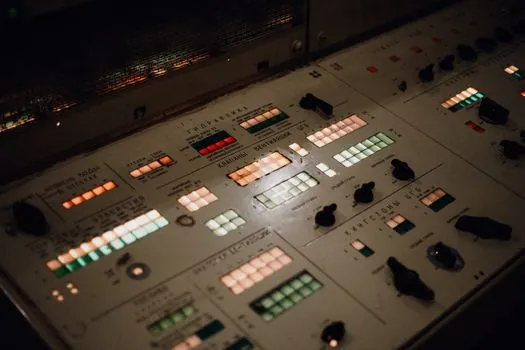
Specify the control architecture with the leveler model, not as a loose accessory. The PR Series manual is organized around a 60-page package covering installation, control-panel wiring, operation, maintenance, adjustments, troubleshooting, and parts; the VS Series uses the same 60-page structure with separate sections for the stored limit switch, down-speed flow control, storage prop, and hydraulic components [S3][S4]. These documents provide traceable requirements for commissioning the leveler with its factory control panel.
Pendant installations need defined cord length, button action, station protection, and cable routing. The documented baseline for a common dock-lift pendant is two UP/DOWN push buttons on a 10 ft or longer cord [S1]. Fixed-panel installations need the enclosure rating, station location, wiring method, overload protection, and any stop function. The NEMA 12 panel stated for NHS and the thermal-overload, single-button panel stated for HHC provide model-specific examples, not universal panel requirements [S6][S7].
The control choice should also be reconciled with the surrounding material-handling system. An electric pallet truck or manual pallet jack may share a pedestrian aisle, but neither determines the leveler’s actuation interface. Confirm that the operator can see the leveler lip, trailer floor, and exclusion area from the chosen control position, and that the station does not encourage standing in a vehicle path.
For maintenance planning, identify whether the control is a cord-connected device or a fixed enclosure. Pendant inspection should include the cord, push buttons, strain relief, connector or termination, and routing; panel inspection should include enclosure condition, wiring, overload protection, and manufacturer-defined adjustments [S1][S3][S4]. For replacement decisions, quote the exact leveler series, control-panel manual number, button count, and power type rather than ordering generic “up/down controls.”
The decisive record is the approved control sequence for the specified model: button count and momentary or held action, emergency-stop provision, overload protection, enclosure rating, cord length, panel location, and the conditions under which the leveler can be commanded [S1][S5][S6][S7].