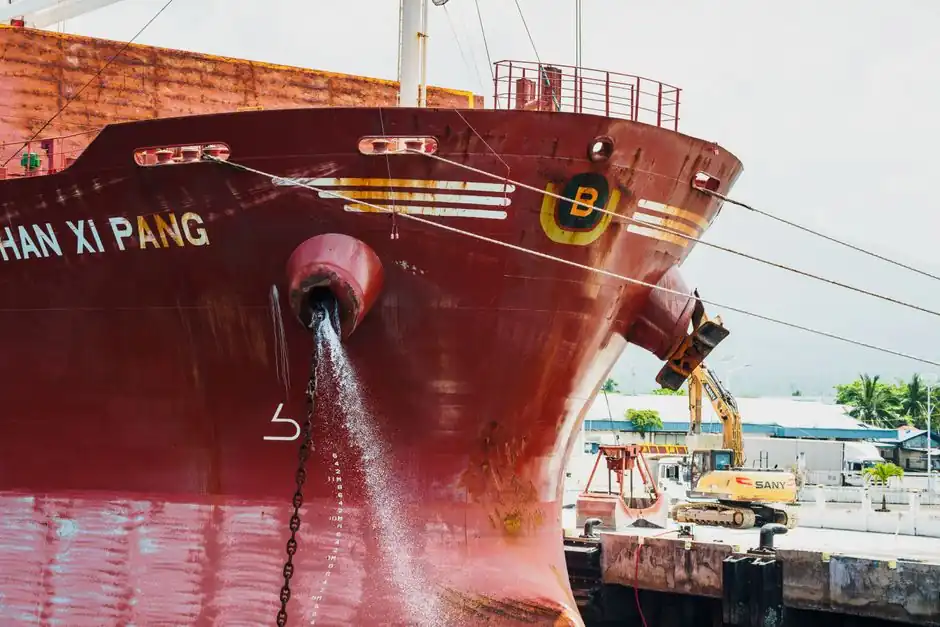
Chemical-shipment loading bays require dock levelers specified around corrosive vapour exposure, secondary containment, and DOT/UN-packaged load handling rather than standard 6–15 t pallet duty, with 50-cycle pre-shipment stress testing emerging as a baseline QC gate among manufacturers [S3].
Standard hydraulic units rated 6 t, 10 t, and 15 t remain the structural backbone of dock-leveler catalogues globally, with one OEM confirming ±250–300 mm vertical travel and custom platform sizing as the working envelope for hazardous-cargo bays [S2][S3]. For comparison, mechanical edge-of-dock levelers remain the lowest-cost option but lack the powered lip extension most chemical spill-response plans assume [S5].
Why Chemical Bays Are a Different Equipment Class
Chemical shipping docks fail for reasons a standard pallet bay does not: airborne acid or solvent vapour attacks hinge pins, lip pivot points, and exposed hydraulic seals long before the structural steel yields. Visible rust patches on dock leveler hinges, springs, and main frames signal chemical degradation rather than simple road-salt exposure, and degraded seals allow vapour infiltration into the warehouse envelope [S1].
DOT-regulated hazardous chemical freight introduces a packaging layer (UN specification packaging, classification labels, documentation) that standard pallet handling does not, meaning the leveler deck must tolerate intermittent drum and IBC contact without gouging the anti-slip surface or breaching any secondary containment the bay relies on [S7]. In practice, this drives specifiers away from painted mild steel and toward hot-dip galvanised decks, 304/316 stainless hinge kits, and chemical-resistant bumper rubber.
Hydraulic, Mechanical, and Edge-of-Dock: Decision Map
Hydraulic dock levelers dominate European and Canadian retrofit work where occupational safety rules push operators away from manual plates; the power unit provides seamless height adjustment across variable truck-bed heights, which is the working envelope most chemical-truck fleets require [S3][S6]. Standard ratings cluster at 6 t, 10 t, and 15 t dynamic load, with 15 t units specified for ISO-tank and bulk-tank handling where a single forklift crossing can deliver concentrated point loads [S3].
Mechanical dock levelers and edge-of-dock (Edge-O-Dock) levelers are permanently attached to the dock face and represent the lowest installed-cost path for low-frequency bays, but they depend on operator effort and a narrower vertical operating window [S5]. For chemical shipping, mechanical units fit remote or rarely-used emergency bays rather than primary receiving docks, where powered positioning, quick-cycle hydraulics, and integrated vehicle restraint reduce door-open time and therefore vapour ingress per truck move [S2][S6].
Travel, Cycle Time, and Throughput Thresholds
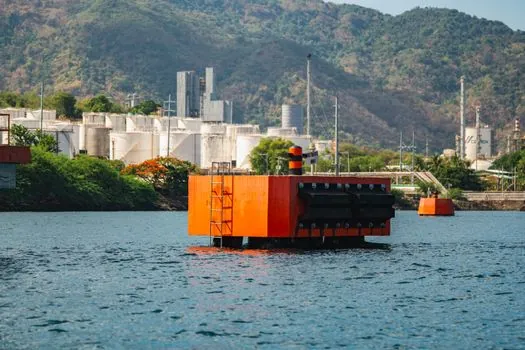
Vertical travel of ±250–300 mm is the working envelope OEM data sheets currently publish for hydraulic dock levelers in chemical and cold-chain service, and is the range that lets a single unit bridge the height variance between ISO tankers, standard road tankers, and flatbed IBC loads [S2]. Quick-cycle hydraulics target door-open dwell in the seconds, not tens of seconds, range, and selection on this basis is a recognised lever for cold-chain energy loss; the same lever applies in chemical bays where prolonged door-open time equals extended fugitive-vapour release [S2].
QC standards among exporters include a 50-cycle stress test of every unit before shipment, with CNC laser cutting and robotic welding on structural members [S3]. For chemical buyers, the cycle test is the verifiable signal that lip extension, hinge pivot, and hydraulic cylinder have been functionally proven, not just dimensionally inspected.
Corrosion, Containment, and Bay-Side Compatibility
Bumper rubber selection is the lowest-cost corrosion mitigation step and the most frequently overlooked: a heavy-duty rubber dock bumper absorbs repeated trailer contact before that force reaches the building, dock structure, or leveler frame, with rubber compound choice driven by the chemical families handled at the bay [S4]. Match the rubber to the vehicle type, traffic count, docking height, and contact mode; a mismatched bumper is the most common path to a cracked dock edge and eventual leveler frame damage [S4].
For temperature differential across the bay, hydraulic dock leveler selection should account for the temperature difference and use frequency at each industrial loading dock, with low-temperature hydraulic fluid specified where bays cycle below freezing [S6]. Pair the leveler with the related handling equipment by reading the dock leveler spec envelope against the chemicals being shipped, the carrier mix, and the documented UN packaging group from your DOT compliance file [S7].
Sourcing, Standards, and What to Verify Before Order
For hazardous chemical freight, the dock-leveler spec sheet is one input, not the governing document: the UN packaging group, DOT hazard class, and carrier selection rules dictate how the load arrives, which dictates deck finish, lip extension, and the chemical anchor pattern required to hold the unit to a chemical-resistant concrete approach [S7].
Where the bay also handles pressure-fed transfer or solvent dispensing, confirm the leveler power unit location is outside the classified hazardous area; this is a layout decision, not a leveler option, and it interacts directly with how the facility chemical material register is audited. Exporters with documented 50-cycle stress testing, robotic-welded frames, and CNC-cut decks represent the current verifiable QC baseline in published OEM data [S3]. For a complementary look at how hydraulic, mechanical, and air-powered levelers line up outside the chemical context, the comparison in dock leveler selection for e-commerce fulfillment provides a useful side-by-side, since e-commerce bays share the same ±250–300 mm travel and 6–15 t load envelope but without the corrosion constraint.
Track next: published OEM datasheets naming a specific stainless grade (304 vs 316) for hinge kits, and a DOT or industry guidance document linking UN packaging group to deck-finish chemical resistance, as the verifiable signals that chemical-bay spec language is moving from generic "anti-corrosion finish" claims to testable, auditable numbers [S3][S7].