
E-commerce fulfillment centers running multi-shift operations on standard 48 to 52 inch dock platforms [S2] should treat hydraulic dock levelers as the baseline, because push-button actuation and automatic lip extension dominate the high-cycle profiles typical of parcel and pallet e-commerce flows [S1][S3].
Selection for e-commerce hinges on four measurable variables: daily cycles per position, trailer-height variance, available pit depth, and total cost of ownership over a 10 to 15 year service life. The right leveler reduces forklift impact, cuts product damage, and keeps throughput steady when trailer dwell is compressed by same-day delivery windows [S1][S6].
Three Actuation Types: Hydraulic, Mechanical, Air-Powered
Hydraulic dock levelers use an electric motor driving a hydraulic pump and cylinder to raise the deck, extend the lip, and lower onto the trailer bed; after unloading, the unit returns to a stored position automatically [S1][S5]. Mechanical levelers rely on a spring-loaded mechanism activated by a pull-chain or release handle, while air-powered units use a high-capacity airbag beneath the deck [S3].
Hydraulic models deliver consistent performance with velocity fuses for free-fall protection, anti-slip deck surfaces, and safety locks that mechanical units cannot match, which is why they are described as the preferred choice for warehouses, distribution centers, and manufacturing plants with frequent loading [S5]. Air-powered levelers sit in a middle ground: push-button operation similar to hydraulic, with fewer moving parts and lower maintenance, but a moderate upfront cost and a smaller install base than hydraulic [S3]. Mechanical units cost less upfront but impose more operator effort and accelerated spring wear, which raises lifetime maintenance on light-to-moderate traffic docks [S1][S3].
Capacity, Adjustment Range, and Pit Geometry
Standard pit-style dock levelers supply approximately 12 inches of vertical adjustment above and below the stored dock height, which is the published adjustment band for typical Class-A industrial dock positions [S2]. Dynamic capacities commonly run 25,000 to 45,000 lb for forklift and electric pallet jack traffic, with vertical lip loadings in the 30,000 to 40,000 lb range on standard 6 ft to 7 ft wide x 8 ft long decks used in distribution work [S3].
Edge-of-dock levelers mount directly to the dock face without a recess, handle smaller height deltas, and are typically specified where pit construction is impractical or trailer mix is light and uniform. For e-commerce sites with mixed LTL, sprinter vans, and standard 53 ft trailers, a pit-style hydraulic unit delivers the wider adjustment range and higher cycle rating the operation demands [S3][S4].
E-commerce Operating Profile vs Leveler Match
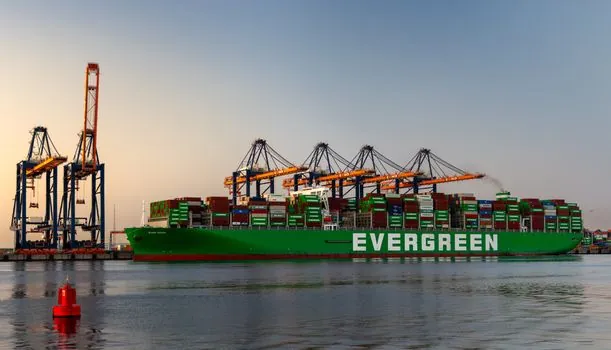
An e-commerce fulfillment center running parcel and pallet flow typically sustains 8 to 20 cycles per position per shift, with peak surges during promotional events that can double that rate; this profile maps directly to hydraulic or high-duty air-powered levelers rather than mechanical units [S1][S5][S6]. The dock leveler, as a loading dock equipment category asset, is the bridge that lets forklifts and pallet jacks move freely between the building and the trailer, compensating for the height difference that varies with each truck [S3].
For a fast-moving apparel or general-merchandise DC, hydraulic units pair with an automatic vehicle restraint and a high-speed overhead door to compress trailer dwell toward the 15 to 30 minute band that carrier scorecards expect; an air-powered leveler is acceptable on moderate-volume docks where cycle count is steady but not extreme [S3][S7]. Mechanical levelers are rarely specified in greenfield e-commerce builds because the operator effort scales with cycle count and creates a bottleneck at peak. When a leveler must hand off control signals to a WMS or yard management system, the PLC layer on the dock typically interlocks with the leveler control panel, the vehicle restraint, and the door, so the choice of leveler carries into the controls architecture.
Selection Criteria Compared
A side-by-side comparison of the three actuation types for e-commerce sites typically ranks them against cycle count, operator effort, upfront cost, and lifetime maintenance: [S3]
Hydraulic: best for high-volume docks, push-button operation, higher upfront cost, low to moderate maintenance [S1][S3]. Air-powered: best for moderate to high volume, push-button operation, moderate upfront cost, low maintenance [S3]. Mechanical: best for light to moderate traffic, manual pull-chain operation, lower upfront cost, higher maintenance due to spring wear [S1][S3]. For e-commerce, the decision almost always lands on hydraulic unless budget or pit constraints rule it out, with air-powered as the runner-up.
Total cost of ownership is driven by energy use, hydraulic-oil service intervals, seal replacement, and unscheduled downtime. Hydraulic units dominate on cycle count and operator safety, while air-powered models win on mechanical simplicity; mechanical units lose on both counts when cycle count exceeds roughly 5 to 8 per shift [S1][S3][S5].
Safety Devices, Standards, and Failure Modes
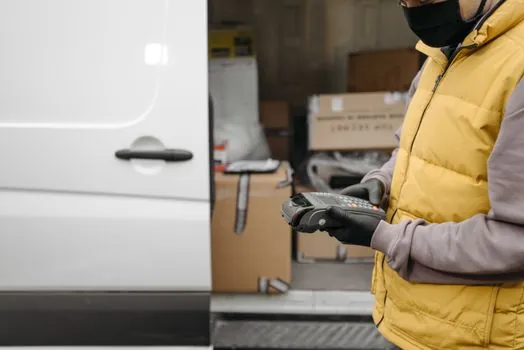
Modern hydraulic units include velocity fuses that arrest free-fall if a hydraulic line fails, automatic return-to-ramp when the truck departs, and lip-extension interlocks that prevent operation below a minimum extension [S5]. Edge-of-dock units typically rely on a mechanical hold-down rather than a hydraulic return, which limits their safe use to lower-capacity applications. The vehicle restraint system, typically a mechanical hook to the rear impact guard, locks the trailer in place during loading and unloading and is part of the same safety chain as the leveler [S2].
Common failure modes include hydraulic seal leakage, lip-hinge fatigue on units cycling above rated capacity, and stored-position drift on air-powered units with slow airbag leaks. Mechanical levelers fail most often at the spring assembly and the hold-down latch. The industrial valve manifold inside a hydraulic power unit, together with the pressure sensor on the lift cylinder, defines how safely the deck floats with the trailer as cargo shifts during loading [S3][S5].
Sourcing, Cost Bands, and Installation Constraints
Hydraulic dock levelers for e-commerce DCs are typically sourced from specialist dock equipment manufacturers and installed by regional integrators; published commentary notes that Las Vegas and Phoenix-area warehouses and distribution centers rely heavily on hydraulic units because of the high daily cycle counts in those markets [S3][S7].
Upfront cost trends lower from hydraulic to air-powered to mechanical, while lifetime maintenance trends the opposite way; the published comparison is consistent across multiple sources and is the cleanest cost axis to anchor a spec on [S1][S3]. Installation is constrained by pit depth, available approach apron, and whether the existing dock face allows an edge-of-dock retrofit. For greenfield sites, the pressure transmitter on the hydraulic circuit and the flow meter on the cooling loop for hot-climate installs are minor but real BoM items that should be sized with the leveler package, not as afterthoughts.
Two trackable signals to watch for follow-up coverage: the rate at which air-powered levelers gain share against hydraulic in mid-volume e-commerce retrofits through 2027, and the adoption of integrated WMS-controlled leveler interlock packages that bundle leveler, restraint, door, and seal status into a single dock node. For adjacent loading-dock material handling, a platform trolley spec map for apparel distribution is a useful read for sites moving rack-and-tote flow alongside pallets.