
Hydraulic dock levelers with 35,000–150,000 lb capacity are the default pick for high-cycle automotive parts docks, outranking mechanical and air-powered units on throughput and long-term maintenance cost [S3].
Automotive parts handling mixes inbound empty and loaded returnables, mixed-pallet outbound, and frequent trailer swaps; cycle counts on a busy Tier-1 supplier dock typically run well above 30–40 crossings per shift, which is the threshold where mechanical "walk-down" levelers start to lose their cost advantage [S3][S4].
What a Dock Leveler Does on an Auto-Parts Dock
A dock leveler bridges the height difference between a fixed warehouse floor and a varying truck bed, which on an automotive parts yard swings roughly ±300 mm depending on suspension, load, and trailer type [S4]. The platform carries forklifts, pallet jacks, and electric pallet trucks crossing the lip into the trailer, and a hydraulic unit lifts the deck on a 24V control signal and lowers it under a velocity-fuse-protected cylinder [S3][S4]. Permanent pit-mounted installation, not a portable yard ramp, is what allows the platform to carry the 6,800 kg dynamic / 10,000 kg static loads typical of a Tier-1 supplier dock [S4]. For a deeper look at dock hardware categories, see the dock leveler encyclopedia entry.
Hydraulic vs Mechanical vs Air-Powered: Criteria Comparison
Across the three primary dock leveler types, the practical envelope splits clearly by capacity, cycle rate, and lifetime cost. The table below distills the cross-vendor consensus on each [S3]:
<strong>Capacity (lb CIR):</strong> Mechanical 25,000–45,000; Air-powered 25,000–60,000; Hydraulic 35,000–150,000. <strong>Power source:</strong> Mechanical needs none; air-powered needs an electric blower; hydraulic needs an electric hydraulic pump. <strong>Free-fall protection:</strong> Mechanical and air units use safety legs, which carry a documented stump-out risk when a loaded trailer settles during unloading; hydraulic units use a velocity fuse, which removes that risk. <strong>Long-term maintenance cost:</strong> Mechanical highest, air-powered mid, hydraulic lowest. <strong>Best-fit application:</strong> Mechanical for light-to-medium budget sites; air-powered for medium-duty clean environments; hydraulic for heavy, high-volume docks [S3]. On an automotive parts dock running two-shift inbound and outbound, only the hydraulic envelope covers the duty cycle.
Spec Sheet That Matters for an Auto-Parts Dock
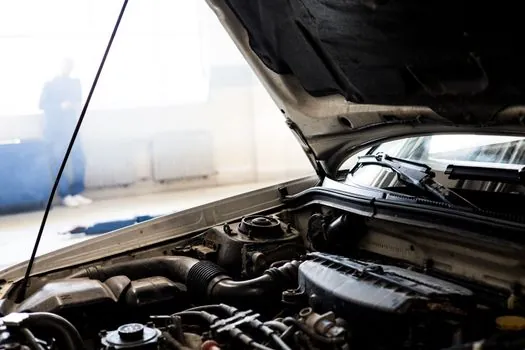
Standard hydraulic dock leveler dimensions for this segment are 2000 × 2000 × 500 mm (W × L × pit depth), with a +350 / -300 mm adjustment range above and below dock height [S4]. The platform is built from 8 mm anti-slip steel plate with a 16 mm reinforced steel lip, and the hydraulic power pack runs at 120 bar working pressure with a 5 L reservoir [S4]. Control voltage is 24V low-voltage, with an IP65 control box suitable for dusty body-shop and metal-stamping environments, and the working-temperature envelope of -25°C to +50°C covers unheated receiving bays as well as southern plant docks [S4]. Single- and double-cylinder configurations are both offered; double-cylinder is the typical choice when the platform exceeds 2 m width or when 100,000+ lb CIR is specified [S4].
Selection Workflow: Ten Data Points to Lock Before You Quote
A buyer-facing spec map for an automotive parts dock should freeze ten inputs before asking manufacturers for a quote, otherwise the OEM will gate the conversation on these anyway: (1) truck mix (53 ft dry van, 40 ft container, side-load, swap-body), (2) operating range above and below dock height, (3) dynamic and static load requirement, (4) pit dimensions and pit depth, (5) platform width and length, (6) cycles per shift, (7) ambient and washdown environment, (8) electrical supply and control voltage, (9) compliance regime (EN 1398, ANSI MH30.1, OSHA), and (10) integration with vehicle restraints, dock seal, and a high-speed door [S4]. Stating cycles-per-shift at the RFQ stage alone tends to push a buyer away from a tempting low-cost mechanical quote toward the correct hydraulic envelope [S3][S4]. For broader handling context, see the logistics packaging reference.
Standards and Compliance Map
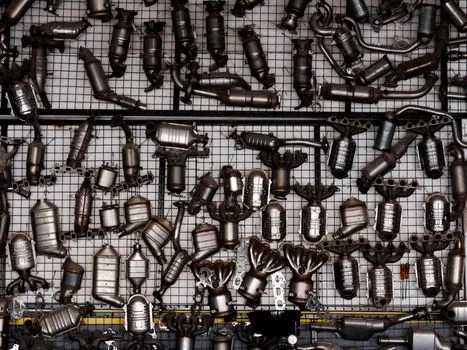
Hydraulic and mechanical units for North American auto plants are typically built to ANSI MH30.1 and OSHA requirements, while European automotive Tier-1 and Tier-2 sites additionally reference EN 1398 for the leveler itself, with deck material commonly specified as ASTM A572 high-tensil safety tread-plate [S3][S5]. Procurement teams at large automotive operators now ask for Total Cost of Ownership data over a 10-year horizon rather than first-cost comparisons, which historically favors hydraulic units once cycles exceed roughly 30–40 per shift [S5]. For cold-chain or refrigerated parts flows, the same spec envelope applies with added low-temperature hydraulic oil and seal packages, as covered in the related dock leveler cold-chain spec map.
Failure Modes and Constraints to Spec Out
The three failure modes that bite hardest on auto-parts docks are stump-out, lip drop, and platform deflection. Stump-out is a mechanical-leveler-specific hazard when a trailer settles during unloading and the safety leg hits its stop, creating a steep ramp; hydraulic units sidestep this with a velocity fuse [S3]. Lip drop under partial load is mitigated by specifying a 16 mm reinforced lip rather than the thinner 12 mm economy grade, and platform deflection is controlled by the 8 mm anti-slip plate plus reinforced steel profiles underneath [S4]. Free-fall protection on a mechanical or air unit is mechanical safety legs; on a hydraulic unit it is a velocity fuse, which is the safer architecture for any dock with electric forklift traffic [S3].
Who a Hydraulic Spec Is For, and Who It Is Not For
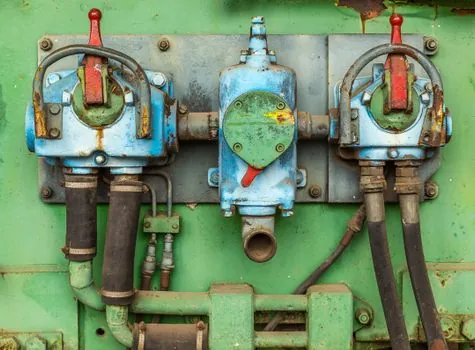
A hydraulic dock leveler rated 35,000–150,000 lb with 24V IP65 controls and a velocity-fuse free-fall protection is the right pick for Tier-1 and Tier-2 automotive part plants, OEM sequencing centers, and Tier-1 supplier cross-docks running more than 30 cycles per shift [S3][S4]. It is the wrong pick for a low-volume remote yard where electricity is unreliable and the budget is dominated by first cost, in which case a mechanical leveler at 25,000–45,000 lb CIR remains defensible [S3][S5]. Air-powered units at 25,000–60,000 lb fit a narrow mid-duty niche, but the dominant share of new automotive parts dock installs in 2026 spec sheets leans hydraulic because the long-term maintenance math closes the first-cost gap within the first three to five years on a two-shift cycle profile [S3]. For related plant-floor equipment specs, the gearbox selection for packaging lines map covers adjacent handling hardware.
Trackable signals to watch over the next 12 months: integration of IoT usage and maintenance sensors on hydraulic platforms becoming a default RFQ line item rather than an option, and a wider shift toward galvanized anti-corrosion finishes on mechanical units to extend life in body-shop and salt-laden winter operations [S5].
Spec-level background on the components involved: pressure transmitter.