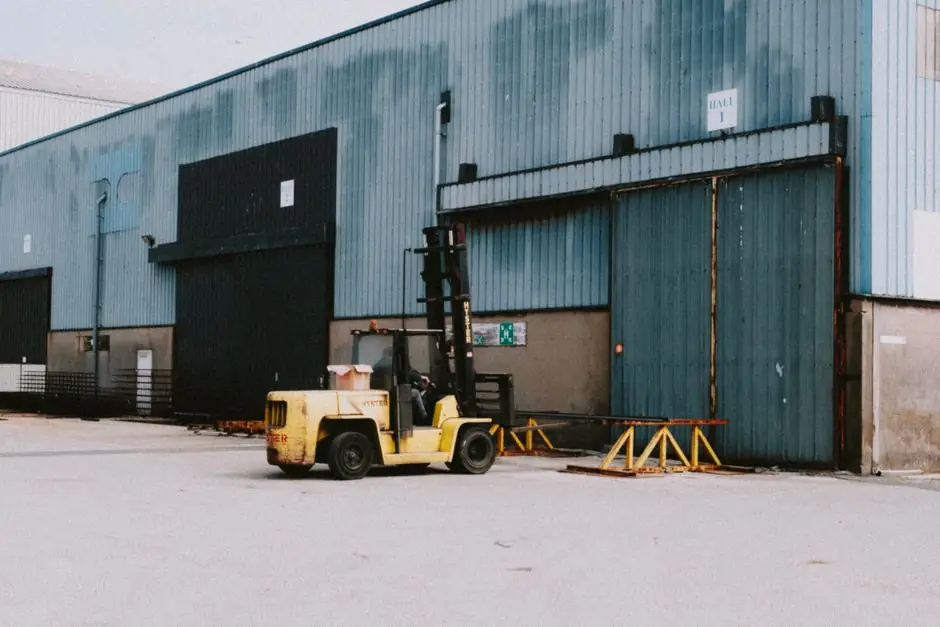
For pharmaceutical distribution, the right dock leveler is a stainless-steel-finished, hydraulic unit with a velocity-fuse free-fall stop, paired with full-perimeter pit seals and, where cold-chain is in play, a vertical-storing deck. ANSI MH30.1 and OSHA compliance are baseline; hygiene is the differentiator [S2][S3].
Three primary drive families exist, mechanical (spring/chain, 25,000–45,000 lb), air-powered (blower, 25,000–60,000 lb), and hydraulic (pump, 35,000–150,000 lb), and only one of them cleanly maps to Good Distribution Practice (GDP) requirements for temperature-controlled, wash-down-capable pharma bays [S2].
Hygienic Finish Options: Stainless vs Galvanized vs Painted
Stainless or hot-dip galvanized deck finishes are the two surface treatments consistently called out for hygienic sectors in 2026 OEM offerings, with powder coating (RAL 9005/7011/5010) and zinc primer reserved for non-contact exterior duty [S4].
Alapont's Smart-Dock platform lists S235JR chequered plate (5/7 mm) as the standard deck, with stainless steel, hot-dip galvanizing, powder coating, and zinc primer as configurable finishes, and sealing gaskets plus dock bumpers offered as an integrated accessory pack [S4]. The same OEM publishes dynamic load ratings of 6,000 / 15,000 / 20,000 kg and static ratings of 9,000 / 18,000 / 25,000 kg, with a 1.1 kW (1.5 HP), 380 V three-phase hydraulic power pack as the standard drive [S4].
For pharma, specify the stainless finish on the deck and lip (13/15 mm plate with 24 mm articulation shaft on Smart-Dock) so daily chlorine- or quaternary-ammonium wipe-downs do not undercut corrosion life; galvanized is acceptable for ambient (15–25°C) DC zones where wash frequency is lower [S4].
Drive Type Selection: Why Hydraulic Wins for Pharma
Hydraulic dock levelers offer the widest capacity range (35,000–150,000 lb), the lowest long-term maintenance cost, and the only free-fall protection that uses a velocity fuse rather than mechanical safety legs, eliminating the stump-out failure mode that plagues mechanical units in high-cycle service [S2].
Air-powered (pneumatic) units sit in the middle: 25,000–60,000 lb, semi-automatic push-button, moderate maintenance, and a clean operating envelope that suits dry pharmaceutical packaging lines, but they still rely on safety legs [S2]. Mechanical units, the cheapest at first cost (25,000–45,000 lb, no electrical power), carry the highest long-term maintenance burden, fatigue risk from walk-down operation, and a documented stump-out hazard when a loaded trailer rises during unloading [S2].
For a typical pharmaceutical DC running 200+ trailer cycles per week with mixed pallet heights, a hydraulic deck with a velocity fuse and a push-button control station (per Smart-Dock spec) is the lowest-total-cost-of-ownership option over a 15-year asset life [S2][S4].
Sealed Pit, Vertical Storing, and Cold-Chain Integration
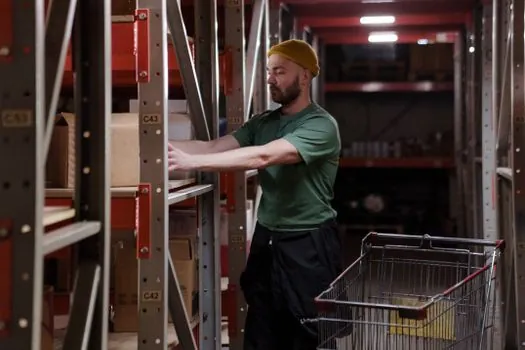
Pharma bays fail GDP audits at the pit, not the deck: unsealed pits let wash water, insects, and diesel fumes migrate into the temperature envelope, so the pit package is as critical as the leveler itself. The PitMaster Vertical accessory was designed specifically for vertical storing dock levelers to seal one of the most vulnerable areas of the loading dock envelope [S5].
Vertical storing levelers (e.g., Rite-Hite RHV-4100 / RHV-5000 / RHVJ-5000 Jumbo families) store the deck below dock floor in the pit when not in use, which gives a flush floor, blocks pit-to-bay air exchange, and pairs naturally with brush and vinyl seal kits around the pit perimeter [S1][S5]. Barron Equipment's dock leveler seal product line covers brush seals, vinyl seal kits, and WeatherBlock options, all American-made and ready to install around the pit lip and bumper line [S1].
For cold-chain pharma (2–8°C), a 2026 cold-storage aerial work platform spec sheet flags ±250–300 mm vertical travel and quick-cycle hydraulic actuation as the two parameters that most directly affect cold-chain energy consumption at scale, and the same logic applies to the dock leveler feeding that envelope: faster cycle = fewer open-door minutes = lower refrigeration load [S6].
Comparison Matrix: Mechanical vs Air-Powered vs Hydraulic for Pharma
Across four decision criteria that map to pharma operations, the three drive families rank as follows. Capacity: hydraulic (35,000–150,000 lb) beats air-powered (25,000–60,000 lb) and mechanical (25,000–45,000 lb) [S2]. Hygiene / wash-down suitability: hydraulic with sealed pit and stainless finish leads, air-powered is acceptable for dry lines, and mechanical is least suited because of exposed springs and linkages that trap wash residue [S2][S4]. Free-fall protection: hydraulic uses a velocity fuse, air-powered and mechanical rely on safety legs (stump-out risk) [S2]. 15-year maintenance cost: hydraulic is lowest, air-powered is moderate, mechanical is highest due to spring wear and adjustment [S2].
Pharma-specific use cases line up the same way: vaccine cold storage (2–8°C) → vertical storing hydraulic with PitMaster seal [S5]; ambient (15–25°C) DC with 200+ cycles/day → standard hydraulic with stainless lip and brush/vinyl pit seal [S1][S4]; low-cycle clinical-trial staging (<20 cycles/week) → mechanical remains acceptable if the budget cannot support hydraulics, but specify galvanized finish and add a brush seal kit [S1][S2].
Electrical, Controls, and Standards Compliance

Baseline pharma builds should spec a 1.1 kW (1.5 HP) 380 V three-phase hydraulic power pack, a push-button control station with emergency stop, complete pre-installed corrugated-conduit wiring, and compliance with ANSI MH30.1 and OSHA as listed in OEM technical sheets [S2][S4].
For higher-capacity bays (20,000 kg dynamic / 25,000 kg static on the Smart-Dock ladder), bump the power pack sizing in proportion and verify that the local power distribution feeder can handle the locked-rotor inrush, typically 5–7× full-load current for a brief cycle on a 1.1 kW hydraulic motor [S4]. If the dock house sits inside a classified or wash-down zone, the leveler's control panel and nearby power distribution box should be specified to a matching IP rating, typically IP65 for the wet side of the bay. For adjacent motor-control centers, a distribution cabinet with drip shields and epoxy-coated bus bars is the common 2026 European pharma-DC specification.
Installation and Civil Works: Smart-Dock and Pre-Formed Pits
Pre-formed permanent formwork boxes that integrate the leveler and its wiring at the factory cut slab execution errors and shrink civil works time, an attractive route for greenfield pharma builds where commissioning schedule drives first-batch release [S4].
Smart-Dock is a niche-type enclosing metal formwork box, hot-dip galvanized for durability, with 10 welded IPN 100 reinforcement beams, designed for on-site concreting; the platform ships with hinged-lip or telescopic-lip dock levelers pre-assembled, and accepts options like a tail-lift recess formwork box, sealing gaskets, dock bumpers, truck guides, and traffic lights as a single BOM [S4]. The same product page lists 5/7 mm S235JR chequered plate, 13/15 mm lip plate, and 24 mm hinge pins as the structural baseline, with continuous high-strength welding throughout [S4].
For brownfield retrofits, the conventional cast-in-place pit remains the default, but retrofit must include a brush or vinyl seal kit around the pit perimeter, otherwise wash water and pests will continue to bypass the leveler deck itself [S1].
Decision Flowchart and Common Pitfalls
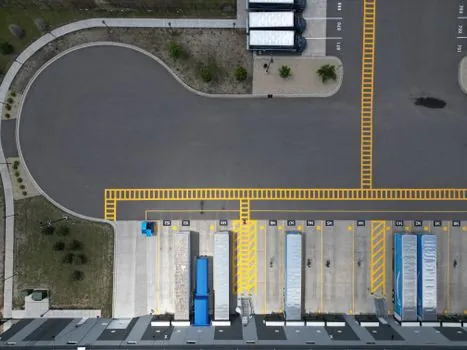
The 2026 selection flow for a pharma dock leveler reduces to four yes/no gates: is the bay wash-down daily? If yes, choose stainless or hot-dip galvanized finish, not painted [S4]. Are cycles above 100/week? If yes, hydraulic with velocity fuse, not mechanical [S2]. Is the temperature envelope below 8°C or above 25°C? If yes, vertical storing deck with PitMaster-style pit seal [S5]. Is the build greenfield with a hard commissioning date? If yes, factory-integrated Smart-Dock platform with pre-wired controls [S4].
Common pitfalls to flag at spec review: specifying painted deck for a wash-down zone (coating fails in 12–24 months under daily chlorine), using a mechanical unit where trailer rise during unloading can trigger stump-out (a known field failure mode), omitting the pit seal kit on a retrofit (unsealed pit undermines GDP audit regardless of deck finish), and undersizing the cable distribution cabinet feeder for the leveler's locked-rotor inrush. Where a dock house sits inside an ATEX zone 1 or 2 boundary, the leveler controls and any explosion-proof distribution gear must be specified to match, otherwise the dock becomes a compliance gap.
Trackable signals for the next 90 days: OEM announcements of revised ANSI MH30.1 alignment for vertical storing decks, and any 2026-Q4 release of stainless-finish hydraulic units at the 6,000 kg dynamic load step targeting secondary pharmaceutical distribution.
See also our earlier report, Gearbox Selection for Mining: Type, Service Factor and Duty Match.