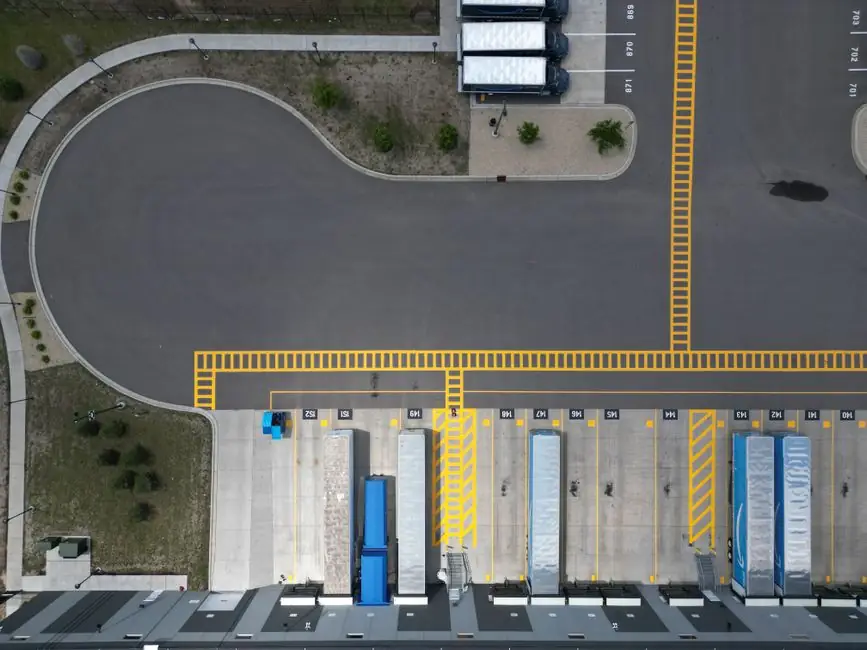
A dock leveller is a permanent, height-adjustable platform installed at a warehouse loading bay that bridges the vertical and horizontal gap between the building floor and the bed of a parked trailer, letting forklifts and electric pallet trucks cross in and out without shock-loading the truck or the dock [S1][S4].
Common static capacity ratings run from 6 tonnes to 15 tonnes, with deck and lip construction in galvanised or hot-dip galvanised steel, and platform widths and lengths tailored to vehicle mix rather than held to a single industry standard [S1]. Without one, every trailer height difference becomes manual shimming, a slow drop, or a fork drop, which is why the device is treated as baseline equipment rather than an optional accessory in modern distribution centres [S2][S4].
Definition, Scope, and the Gap It Bridges
A dock leveller is a bridge between the warehouse floor and a truck's trailer, ensuring an easy transition between forklifts and pallet jacks and accommodating different trailer heights without manual intervention [S4]. In mechanical terms, it consists of a main deck hinged at the rear (building side), a projecting lip that rests on the truck bed, a lifting mechanism, and an operating control, with the whole assembly set into a pit flush with the warehouse floor or mounted on an exterior approach ramp [S1][S3].
The gap it bridges is not just vertical lift, but also the horizontal reach onto an uneven trailer bed; a typical tele-lip or swing-lip design extends 300–500 mm onto the truck to maintain contact even when the trailer settles on its air suspension during loading [S1]. ASSA ABLOY Entrance Systems describes the unit as a device that "bridges the gap between a docked vehicle and the loading bay to ensure smooth and safe loading and unloading," and the same wording appears in independent industry glossaries [S1][S2].
Selection Criteria: Capacity, Material, Cycle Profile
Capacity selection is the first gate: standard ratings span 6 tonnes to 15 tonnes, sized to the heaviest loaded forklift plus pallet rather than to the average pallet weight alone, because dynamic impact from a 5,000 kg electric pallet truck entering at speed can briefly double the static load on the deck [S1].
Material choice is dominated by galvanised or hot-dip galvanised steel, valued for corrosion resistance in damp dock pits and for hygienic wash-down compatibility in food and cold-chain facilities [S1]. Cycle profile is the second gate: high-throughput cross-docks, fulfilment centres, and cold stores running more than roughly 50–80 truck movements per day per door are the natural fit for hydraulic or air-powered units, while lower-cycle warehouses on tight capex can justify mechanical spring-loaded designs [S3][S4].
Type Comparison: Hydraulic vs Mechanical vs Air-Powered
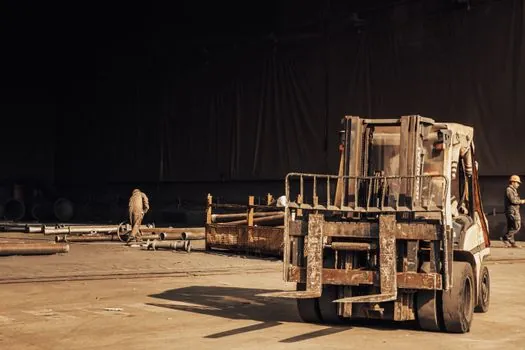
Three drive types dominate the market, and the decision typically comes down to budget, cycle count, and safety policy. [S3]
Hydraulic dock levellers use pressurised fluid to raise and lower the platform on a button press, eliminating manual heavy lifting, cutting injuries, and lowering lifetime cost in high-cycle operations [S3]. Mechanical dock levellers are spring-powered and require pulling a chain to deploy, with more moving parts under spring tension that are sensitive to cold and need yearly maintenance, which keeps them in lower-cycle environments [S3][S4]. Air-powered dock levellers are functionally similar to hydraulic units but use compressed air instead of oil, which suits facilities where hydraulic oil spills are a contamination or environmental concern [S4].
On four decision criteria, the comparison reads: (1) Upfront cost, mechanical is lowest, air-powered is mid, hydraulic is highest. (2) Operator effort, mechanical is highest, hydraulic and air-powered are push-button. (3) Maintenance frequency, mechanical needs yearly spring and latch checks, hydraulic and air-powered are typically quarterly fluid and seal checks [S3]. (4) Best-fit cycle profile, mechanical for low cycles, hydraulic for sustained high cycles, air-powered for clean-room or food-grade sites [S3][S4].
Who Needs a Dock Leveller and Who Does Not
A facility running scheduled full-truckload or less-than-truckload movements with forklifts crossing into the trailer needs a leveller, because the trailer bed height varies by 200–400 mm across tractor and trailer combinations and drops further as the air suspension deflates under load [S1][S4]. Distribution centres, cold stores, parcel hubs, FMCG plants, and palletised manufacturing shipping docks all fall into this "needs" group, particularly when the throughput target is more than 2–3 trailer swaps per hour per door [S3][S4].
Operations that do not need a powered leveller include low-volume docks moving fewer than a handful of pallets per day, sites exclusively handling hand-loaded parcels through roller doors, and any dock where vehicles are matched to a fixed-height platform such as a tail-lift van or a dedicated low-bed trailer [S3]. A simple aluminium dock plate is often the right call in those cases, not a 6-tonne hydraulic unit, and over-specifying equipment wastes capex and adds maintenance burden without a productivity return [S1][S3].
Real Use Cases and Productivity Impact
In a high-cycle cross-dock, replacing manual chain-pulled mechanical units with push-button hydraulic levellers removes a recurring pinch-point injury risk and cuts the time per trailer swap, because the operator no longer leaves the forklift to deploy the deck [S3]. A typical before-versus-after sequence, drawn from Dockzilla's deployment guidance, shows mechanical units requiring the driver to dismount, pull a release chain, and let the spring extend the deck, while hydraulic units deploy and retract from inside the cab on a single button press, which compounds into measurable throughput at 50+ cycles per day per door [S3].
In cold-chain and food facilities, hot-dip galvanised steel construction plus air-powered drive avoids hydraulic-oil contamination risk on the loading floor, and the same hardware supports wash-down cleaning, an operating constraint that purely mechanical units struggle with because of exposed springs and chains [S1][S4]. For facilities with mixed trailer fleets, tele-lip or swing-lip designs increase the contact area between the leveler and the truck bed, which ASSA ABLOY cites as enabling "optimal load utilization" on vehicles with shorter or irregular rear edges [S1].
Limitations, Failure Modes, and Maintenance Constraints
Every dock leveller type carries a defined failure mode. Mechanical units are spring-and-chain devices, so spring fatigue, latch wear, and cold-temperature loss of spring preload are the dominant field issues, and yearly maintenance is the recommended baseline for safe operation [S3]. Hydraulic units shift the failure profile to seal and hose wear, hydraulic fluid contamination, and electrical control faults, and best practice calls for checking electrical connections and monitoring hydraulic fluids and lubrication about once per quarter [S3].
Capacity is a hard limit: exceeding the rated static load, typically 6–15 tonnes, can buckle the deck plate or shear the lip hinge, and a 5,000 kg forklift entering the leveller at speed can briefly exceed the static rating even on a nominally in-spec unit, so cycle speed and forklift mass must be considered together [S1][S3]. Pit depth, lip length, and perimeter sealing also constrain where a recessed unit can be installed, and civil-works errors in the pit are a common reason new installations fail to seal against a cold-storage envelope or against under-platform air curtains, problems that the recessed dock leveler pit depth and lip-length spec map addresses directly.
Standards, Sourcing, and Specification Hygiene
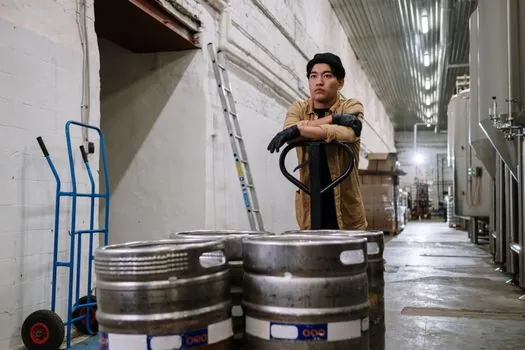
There is no single ISO or EN standard that fixes a dock leveller's dimensions, so buyers specify by capacity (6–15 t), platform size, material (galvanised or hot-dip galvanised steel), drive type, and pit or surface-mount configuration [S1]. Vendor documentation from ASSA ABLOY Entrance Systems and from independent material-handling publishers like Maini Materials treats the device as a configurable engineered assembly rather than a catalogue commodity [S1][S4].
Sourcing discipline comes down to matching three numbers: the heaviest expected loaded forklift plus pallet against the leveller's rated capacity, the expected daily cycles against the drive type's maintenance window, and the trailer height range in the fleet against the leveller's lift and lip reach [S1][S3][S4]. A specification that ignores any one of those three tends to surface as either a structural failure, a maintenance backlog, or a productivity miss within the first year of operation, and a 2026 civil-works reference on dock leveler pit drainage and frost protection is the kind of follow-on document a specifier should keep on hand before signing the install drawing.