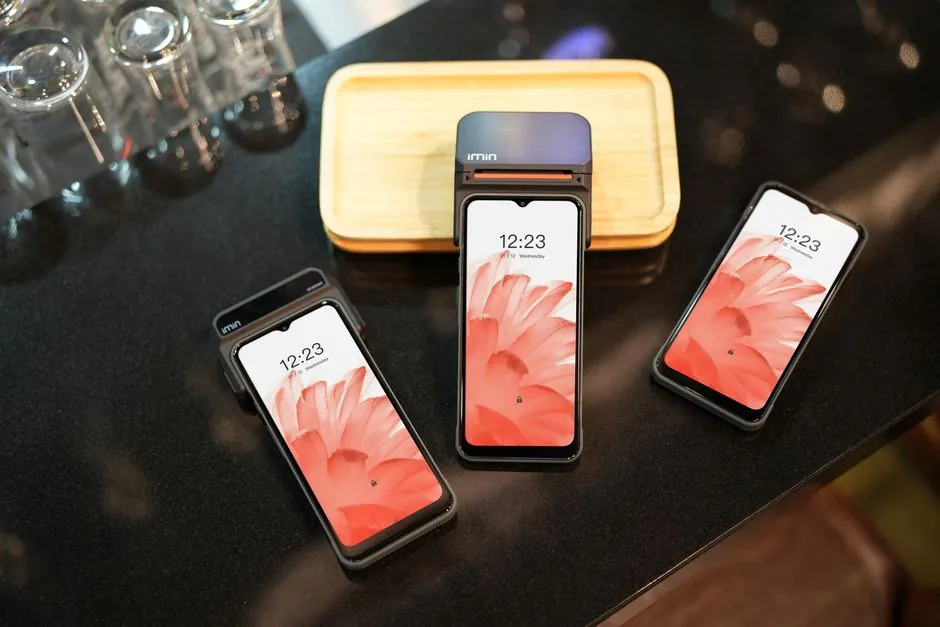
A pod of three Vertical Lift Modules (VLMs) served by a single operator is the standard parallel-workstation configuration for medium-to-high-throughput picking, and the rule of thumb is binary: the operator is always picking while at least one of the three extractors is bringing the next tray to the access opening [S3].
VLMs are fully enclosed automated storage and retrieval systems with two columns of trays per tower flanking a central extractor that delivers totes to an ergonomic access window at a goods-to-person station, a configuration that recovers a documented 80 to 85% of floor space versus static shelving and aisle layouts [S2]. A pod of three units wired to a warehouse management system (WMS) typically triples the effective pick face of a single tower without adding headcount, which is the core reason the three-machine cell is a recurring specification in distribution-center retrofits [S1].
Why Three Units Per Operator, Not One or Two
A third unit closes that gap by guaranteeing the next tray is already presented at the access opening the moment the operator finishes the current pick, which is the same parallel-extractor logic formalised in the dual-tray VLM throughput literature [S3].
For a Kardex-class VLM line, single-tray load ratings run 555 to 1,000 kg (1,223 to 2,204 lb) per tray depending on the model tier, and storage height typically spans 2.5 to 8 m of usable vertical envelope, which is enough cubic capacity that a three-unit pod can hold 1,000 to 3,000 SKUs in roughly 15 to 25 m² of floor footprint including the operator aisle [S1][S2].
Throughput Math: Operator Pick Time vs Extractor Cycle
A single-tray VLM cycle from command to tray-presented at the window runs 8 to 15 seconds for short vertical moves and 20 to 30 seconds for full-height travel, so any single-occupant picking station where the operator pick time exceeds 10 seconds will starve the machine on a one-to-one basis [S1]. The pod mitigates this by overlapping extractors: the average observed three-unit VLM pod sustains 100 to 180 picks per hour per operator in real distribution deployments, with the upper band achieved when the WMS pre-batches orders across all three units so that the second and third extractors can pre-stage trays while the first is being picked [S1][S3].
Vertical zoning inside each tower reinforces the same principle by keeping fast movers at low elevations (2 to 3 m) where extractor travel is shortest, and pushing slow movers to the upper zones where 5 to 8 m of travel adds 3 to 5 seconds per retrieval without affecting the average pick rate [S1]. For facilities considering automated height scanning to compress tray pitch below the conventional 25 mm increment, the related 25 mm storage pitch analysis details the trade-offs in detection accuracy and extractor dwell time.
Pod Layout, Bay Count, and Operator Ergonomics
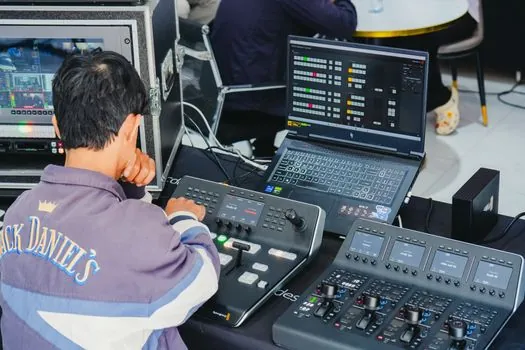
Each VLM tower can be fitted with one, two, or three operator bays positioned either at floor level or at an elevated mezzanine, and in a three-unit pod the most common arrangement is one bay per tower at a single height, with the three bays inline on a 4 to 5 m arc so a single operator can step 1.2 to 1.5 m between access windows [S4]. Where the operator stays anchored, the bay-to-bay reach must stay under 1.8 m, otherwise the lateral walk time begins to exceed the extractor cycle and the pod loses its parallelism advantage [S1][S4].
Integration with an existing WMS or ERP is mandatory, not optional: the three extractors are not coordinated by the operator but by the software layer, which routes each pick to whichever unit holds the SKU with the shortest sum of extractor travel plus queue depth, and that decision is recalculated on every order release [S1][S4]. Sites that try to run a three-unit pod with manual call-by-tray operation typically see throughput fall back to single-machine levels, because the operator becomes the scheduler instead of the software [S4].
Comparison: 1-Unit vs 2-Unit vs 3-Unit Pod on Four Decision Criteria
On four procurement criteria, the three-unit pod wins on three of four. Picks per hour per operator: 1-unit caps near 40 to 60 because the operator waits for the extractor, 2-unit reaches 80 to 120, 3-unit reaches 100 to 180 [S1][S3]. Software dependency: 1-unit is low, 2-unit is medium, 3-unit is high (real WMS or ERP integration required, not optional) [S1][S4].
The point at which a fourth unit pays for itself is a separate question, and Dukic and associates' throughput model treats a pod of four VLMs as the upper practical limit before operator travel between bays overwhelms extractor cycle time [S3]. For most distribution-center cells, three remains the engineering default, and buyers should plan installation and delivery schedules with that baseline in mind when reviewing the on-site installation timing benchmarks.
Who the Three-Unit Pod Fits, and Where It Fails

The three-unit pod fits operations running 80 or more pick lines per hour, with SKU counts above 500 and item weights inside the 555 to 1,000 kg per-tray envelope, and where the building ceiling clears 6 m so each tower can be specified at 5 to 7 m of usable height [S1][S2]. It does not fit low-throughput environments like labs, R&D sample rooms, or cable storage with 10 to 12 accesses per day: a single taller tower consolidates shelving into a smaller footprint and is the cheaper answer for those profiles [S1].
It also does not fit facilities that cannot integrate the WMS or ERP layer, because without software-driven batch routing the pod collapses to sequential single-machine picking, and the operator becomes the bottleneck the design was supposed to eliminate [S4]. For applications outside the goods-to-person picking envelope, such as aerial work platform selection or pit dock leveler choice, the same one-operator-one-station logic does not apply, and buyers should treat VLM pod sizing as a domain-specific decision rather than a general warehouse-automation rule.
Standards, Sourcing, and Trackable Signals
No single ISO or IEC standard governs VLM pod sizing, but the design draws on general AS/RS terminology (ISO 5053-1 for industrial automation vocabulary) and on integrator-specific WMS API specifications, which is why vendor selection should weight API documentation and reference installs as heavily as mechanical spec sheets [S1][S4]. Sourcing goes through OEM direct or certified dealers (Kardex, Modula, Hänel, White Systems are the four most cited suppliers in the 2024 to 2026 North American market), and lead time from order to commissioned pod is typically 12 to 20 weeks per the on-site delivery and installation benchmarks.
Two signals worth tracking through the rest of 2026: first, whether WMS vendors begin offering native three-pod orchestration templates rather than per-customer integration projects, because template availability is the most reliable proxy for pod adoption moving from bespoke to commodity. Second, whether the peer-reviewed throughput literature extends the dual-tray model [S3] to a documented three-extractor model with measured operator travel, since current sizing is still driven by supplier case studies more than by published independent benchmarks.
Component reference pages worth checking: three phase asynchronous motor, pressure transmitter, and flow meter.
See also our earlier report, Can Shot Blasting Replace Pickling for Bars and Wire Rod?.