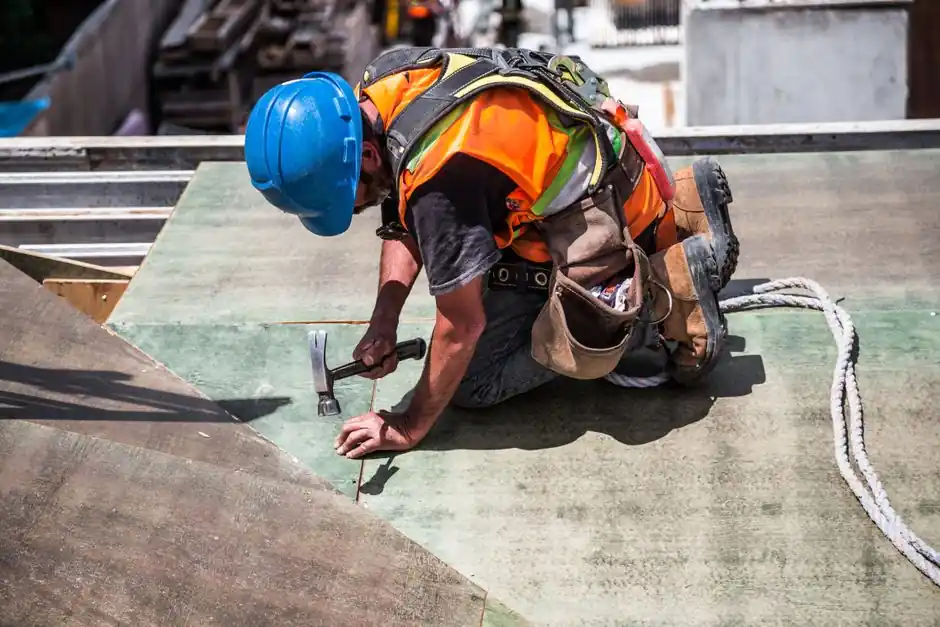
A dorsal D-ring between the shoulder blades is the primary attachment point for a fall-arrest lanyard or self-retracting lifeline, while a sternal D-ring places the connector at chest level [S2][S3].
The correct choice depends on the system, fall-clearance calculation, connector type, and manufacturer instructions, not simply which ring is higher on the harness [S1][S4].
Dorsal and sternal D-rings serve different attachment duties
The dorsal D-ring is centered on the upper back between the shoulder blades and is normally used for fall arrest with shock-absorbing lanyards, self-retracting lifelines, and personal fall-arrest systems [S2][S3].
The sternal D-ring, also called a front D-ring in some equipment descriptions, is positioned at the center of the chest [S1][S2]. It is commonly used for fixed-ladder climbing, controlled descent, rope-access connections, positioning, and particular rescue applications, subject to the harness instructions and the complete system design [S1][S2].
The distinction is functional, not cosmetic. A harness described only by the number of D-rings is inadequately specified: one dorsal “A” ring, two sternal “A/2” rings, and side D-rings perform different roles and carry different use restrictions [S4].
Compare the attachment points by task and control
Dorsal placement offers the strongest match to ordinary fall arrest because it is the designated primary connection for a lanyard or SRL [S2][S3][S6]. Sternal placement keeps the connector near the upper torso during climbing, which supports controlled ascent and descent, but it is not a universal substitute for the dorsal ring [S1].
Sternal attachment is less suitable when the fall-arrest design requires an approved dorsal connection or when a rear connector position is necessary to maintain the intended body orientation [S1]. Side D-rings provide a different capability: they are waist-level attachment points for positioning and controlled rope movement, not for fall arrest [S2][S4].
For fixed ladders, the sternal ring can add a front attachment option, but the system still needs a compatible connector and anchor arrangement. The detailed selection guidance for climbing D-rings is covered in Fall-Arrest Harness Climbing D-Ring Selection for Ladders.
Fall-arrest use depends on the marked rating and system

A sternal ring marked “A” may serve as a fall-arrest connection, while two rings marked “A/2” must be used together when that is the marked configuration [S4]. The presence of a chest D-ring alone does not establish that it is approved for ordinary free-fall arrest.
These limits are specific to that described rescue and rope-access arrangement and must not be transferred to a generic fall-arrest application without system-level review.
The connection must also match the connector. A harness ring cannot be evaluated independently of the lanyard, SRL, rope, anchor, and rescue arrangement. The manufacturer’s instructions define the permitted use of the specific harness and attachment point [S1][S2].
Choose by work method, not by ring position alone
Use a dorsal D-ring for roofing, construction, general maintenance, warehousing, manufacturing, and steel erection when the primary requirement is conventional fall arrest with a lanyard or SRL [S2]. The basic configuration is a full-body harness with one dorsal D-ring between the shoulder blades [S5].
Use a sternal D-ring for fixed-ladder climbing, controlled ascent or descent, certain rope-access operations, and specified positioning or rescue tasks [S1][S2]. A chest D-ring can improve stability and ergonomics during vertical movement because the attachment remains at chest level [S1].
Do not choose either ring as a substitute for waist-side positioning rings or dedicated retrieval attachments; waist D-rings on rope-access or rescue harnesses can serve mainline or rappel functions [S2][S5].
Fit, clearance, and misuse determine the outcome

A correctly positioned D-ring is ineffective if the harness does not fit. The dorsal ring must sit between the shoulder blades, with the harness adjusted so the attachment point remains in its intended location [S6][S8]. Chest rings, leg straps, buckles, and dorsal positioning are part of one system rather than independent accessories.
Fall clearance must be calculated for the selected connection and the complete fall-arrest sequence, including connector length, lanyard extension or SRL deployment, worker movement, and connector geometry. Moving from a dorsal to a sternal connection can change body position and clearance behavior, so the calculation should be repeated for the actual configuration.
Misuse can cause injury even when every component appears capable of carrying a load. Side D-rings are not designed for fall arrest, and connecting to the wrong point can produce unintended loading of the harness [S1][S4]. Verify the ring marking, connector engagement, harness condition, anchor suitability, and task-specific instructions before use.
Procurement criteria for a defensible harness specification
Specify attachment points by position and marking: dorsal “A” for the primary fall-arrest connection, sternal “A” for a permitted single chest connection, paired sternal “A/2” points for their combined use, and side D-rings for positioning only [S4]. Record whether the harness also has waist, shoulder, or rescue attachments [S2][S5].
For a working-at-height purchase, the specification should state the intended task, required attachment locations, permitted connector types, applicable standard or regulatory basis, maximum user mass from the manufacturer, adjustment range, and required fall clearance. Those fields separate a general-purpose fall-arrest harness from ladder, rope-access, positioning, and rescue configurations.
For a broader comparison of regional full-body harness requirements, see EN 361 vs ANSI Z359.11-2021: Full Body Harness Spec Comparison. Before purchase or use, verify the exact attachment markings and manufacturer instructions for the selected model, since placement alone does not establish compatibility with a particular connector or fall-arrest system.