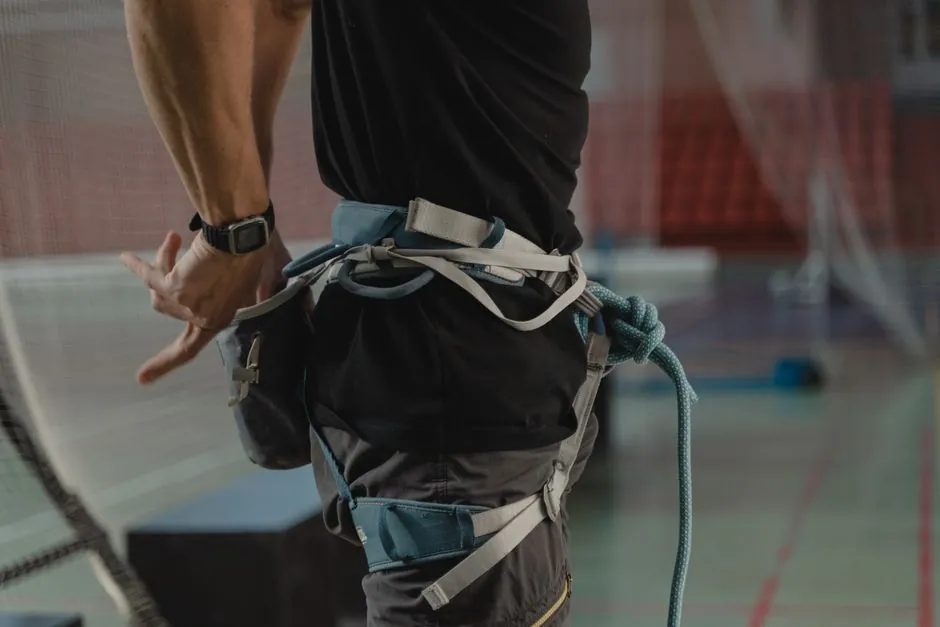
Construction harnesses prioritize fall arrest for elevated work, while tower-climbing harnesses add attachment points, mobility features, and vertical-work options [S1][S2].
The correct selection depends on the climbing method, fall-arrest equipment, required attachment locations, environmental exposure, and the worker’s fit, not on the product label alone [S4][S7].
Construction Harness vs Tower Harness: Decision Matrix
A construction fall arrest harness is suited to general elevated work where a full-body harness, energy-absorbing lanyard or self-retracting lifeline, rated anchor, and adequate fall clearance form the complete protection system [S4]. Tower harnesses serve a different movement pattern, with prolonged vertical climbing and multiple directional working positions [S1].
For attachment options, construction models commonly center on dorsal fall-arrest attachment, while tower models typically add sternal or chest, side positioning, and sometimes bosun-seat D-rings [S1][S2]. For construction applications, a fall-protection harness should match the fall-arrest method used by the crew and fit the workers who wear it [S7].
Tower-climbing harness options include arc-flash-rated designs for workers who may face arc-flash hazards [S1]. For sustained vertical work, lightweight materials, shoulder and leg adjustment, and freedom of movement become more important than basic attachment count [S1][S8].
Where Each Harness Type Fits
General construction harnesses are appropriate for steel erection, roofing, formwork, platform work, and other tasks where the fall-arrest connection is normally made from the back [S4][S6]. A full-body configuration supports fall arrest, and Class A examples are intended to stop a fall in progress before the wearer reaches a lower surface [S6].
Tower harnesses are for workers who ascend vertical structures for extended periods and require movement in several directions [S1]. This arrangement suits tower technicians who need to climb, work, and reposition without relying on one attachment location for every task [S2].
Rope-access equipment should not be substituted without task-specific evaluation. A tower-climbing harness and a rope-access harness share features such as dorsal or sternal attachment, but their intended work methods and equipment integration differ [S2]. Rescue capability and vertical-line procedures must match the actual climbing system, not merely the harness category [S2][S3].
Attachment Points, Materials, and Fit
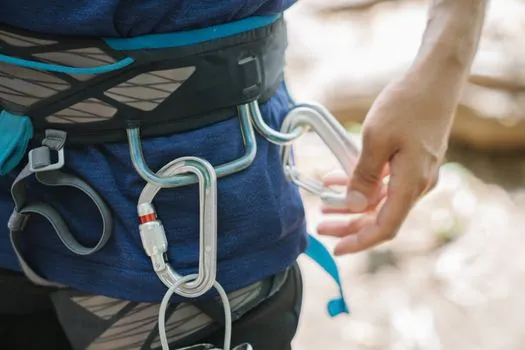
Tower harnesses commonly use steel or aluminum D-rings, with aluminum reducing carried mass while costing more than steel [S5]. Steel remains a practical choice where rugged handling, multiple attachment functions, and lower purchase cost dominate [S5].
Attachment layout must follow the intended connection. Dorsal rings are identified with fall arrest, chest or sternal rings with vertical-system connections, and side rings with work positioning [S1][S2]. Selection guidance on dorsal versus sternal D-ring placement is relevant when the permitted connection point affects the system setup.
Fit governs usable safety margins. Straps should be adjusted so the harness remains correctly positioned on the body, and the product must fit the wearer’s anatomy without loose leg loops, restricted movement, or pressure that encourages unsafe removal [S1][S7]. Five-point and four-point layouts differ in adjustment coverage, so teams comparing construction and tower harnesses should assess leg restraint, dorsal support, and the number of usable adjustments rather than comparing attachment-ring count alone.
Fall Clearance and Equipment Integration
The harness is one component of a fall-protection system, with the connector, such as a lanyard or SRL, and a load-rated anchor working together to arrest a fall [S4]. Sufficient clearance must exist below the user after deployment of the energy-absorbing or retracting device [S4]. Choosing a tower harness does not reduce the clearance requirement.
Energy-absorbing lanyards remain common for tower climbers, while tower harness designs can integrate with ANSI Class 1 and Class 2 SRLs [S1]. The selected connector must be compatible with the harness attachment point, anchor, approach, and permitted system configuration [S1][S7]. For detailed fall-clearance decisions, compare a self-retracting lifeline with a shock-absorbing lanyard using the actual deployment dimensions and available clearance.
Electrical work adds a separate protection layer. Tower-climbing harness options include arc-flash-rated designs for addressing thermal exposure from arc-flash hazards [S1]. More details on arc flash-rated fall arrest harnesses are useful because ordinary construction certification does not establish arc-flash performance.
Limitations, Inspection, and Rescue

No harness solves poor anchorage, insufficient clearance, electrical exposure, or an absent rescue plan. Tower technicians face falls, fatigue, strong winds, long vertical climbs, and electrical hazards, while construction workers can face uncontrolled edges, dropped materials, and rapid arrest loads [S1]. Those hazards require system-level controls rather than a single PPE choice.
Inspect the harness before each use and remove it from service after a fall event, when damage is found, or when its service status cannot be established. The product markings, manufacturer instructions, inspection criteria, and applicable jurisdiction determine replacement intervals; the cited material does not support one universal inspection period. Tower-specific instructions are particularly important because added D-rings, seat features, and vertical connections change the configuration under review [S1][S2].
Rescue planning must be verified before ascent. A user arrested by a lanyard or SRL may remain suspended after the fall is arrested, so a qualified rescue method, trained responder, communications plan, and suitable suspension-relief approach must be available [S3]. The anchor and connector must also be evaluated as parts of the same engineered system rather than ordered independently [S4].
Purchasing and Compliance Checklist
For construction, specify a full-body fall-arrest harness that fits the worker and supports the crew’s intended lanyard or SRL connection. Confirm that the product is certified for the jurisdiction and application, that the anchor and connector form a compatible system, and that fall clearance is maintained [S4][S6]. For a dedicated fall arrest harness purchase, retain the model, revision, and certification records.
For tower work, specify the intended climbing technique before selecting attachment geometry. Document the dorsal, sternal, side, and seat requirements; select SRL or lanyard compatibility; assess weight and fit over extended shifts; and add ANSI Z359 and ASTM F887 arc-flash requirements where the electrical exposure assessment calls for them [S1][S2]. Tower harness D-rings may be aluminum or steel, with material chosen against mass, handling, cost, and corrosion exposure [S5].
The final acceptance record should identify the harness model, wearer size, connector type, anchor, required clearance, rescue method, and applicable certification. Review tower-climbing D-ring selection for ladders when ladder work may be added to the task, because an ordinary construction harness may not provide the required climbing attachment arrangement [S2].
Track harness model and size changes, connector deployment dimensions, anchor changes, and arc-flash exposure reviews. Each change requires confirming that the complete system still matches the worker, climbing method, and available fall clearance [S1][S4][S7].