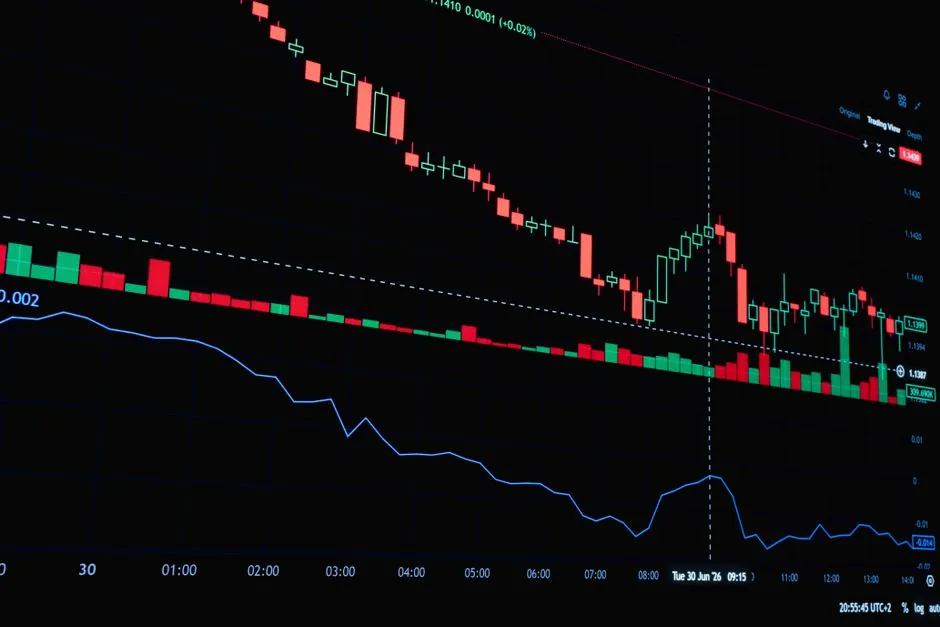
DRAM contract negotiations entering Q4 2026 are running on a split track: HBM and HBM4 contract ASPs are forecast +121% YoY for 2027, while conventional DRAM contract momentum has cooled to roughly 0–5% QoQ after +13–18% QoQ in Q3 2026 [S5]. The pricing asymmetry comes from the HBM-vs-commodity capacity reallocation that has starved DDR5 RDIMM and LPDDR5X supply since late 2025 [S2][S3].
Buyers now face four real cost drivers in negotiation: HBM wafer pull displacing roughly 3× the wafer capacity of equivalent conventional DRAM per gigabyte [S3]; HBM4 manufacturing cost step-up; supplier yield differentiation (Samsung reports ~80% HBM4 yield in late August 2026) [S5]; and customer inventory tolerance, which is the only knob that has flipped toward buyers in the second half of 2026 [S5]. For sourcing teams, this is the most uneven supplier-power environment since the 2017–2018 cycle, but with a new structural layer: AI training demand is no longer a one-off spike.
Cost driver breakdown: why HBM pulls conventional DRAM up with it
Contract price pressure on DDR5 RDIMM and LPDDR5X starts with HBM wafer economics. TrendForce (May 2026) reports that HBM per-wafer output value and margins fell below DDR5 RDIMM in 1Q26 under annual pricing mechanisms, which is precisely the signal that triggers aggressive reallocation toward HBM4 in 2H26 [S2]. The capacity reallocation cost is asymmetric: producing a given amount of HBM can require roughly three times the wafer output of conventional DRAM because of TSV processing, wafer thinning, and multi-die stacking [S3]. That factor is the structural reason a 100% LPDDR5X contract hike (Samsung Q1 2026 negotiation outcome) [S4] can coexist with a flat Q4 2026 conventional DRAM contract forecast [S5].
The secondary cost driver is mix. TrendForce raised its 2027 blended HBM ASP forecast to +121% YoY on September 29, 2026, citing supply tightness, a richer HBM4 mix, and a gradual HBM4e ramp in 2H27 [S5]. HBM bit supply grows only 50–60% in 2027, still short of demand, and Nvidia is evaluating lower-stack 8-Hi HBM for Rubin Ultra, with 8-Hi stacks expected to carry a 10–20% per-Gb premium over 12-Hi [S5]. For a contract negotiator, the takeaway is that any HBM line you book is now anchoring the marginal price for the entire memory basket.
Conventional DRAM contract benchmark: the +13–18% then 0–5% shape
Conventional DRAM contract prices came in close to TrendForce's July 2026 forecast of +13–18% QoQ for Q3 2026, with server DRAM leading and PC/mobile moderating as device makers hit affordability limits [S5]. Q4 2026 is forecast at roughly +0–5% QoQ per Goldman Sachs' reading of TrendForce-linked analysis, as customer inventories and end-demand tolerance cap further increases [S5]. The spot market has not cracked: DDR4 8Gb (1Gx8 3200) spot climbed from ~$36.54 in early July 2026 to about $42.50 on August 10 and $43–$44 in late August, with DDR5 16Gb averaging about $24.80 on September 21; no two-week decline and no contract/spot inversion in mainstream parts [S5].
The asymmetry between contract deceleration and spot firmness is the negotiation tell. Spot is the marginal buyer's last resort; if spot holds while contract guidance flattens, it means suppliers are protecting contract books by withholding spot supply, not by weakening. Samsung delayed its customary October 2025 pricing announcement, a move widely interpreted as a signal of tighter-than-expected inventory levels [S1]. That pattern (delayed pricing, spot above contract) is the most reliable late-cycle tell and is now visible in 2H26 data. For a comparison of how wafer-pulls and contract momentum split between HBM and commodity, see HBM wafer pull and commodity DRAM tightness through late 2026.
Supplier comparison: who holds pricing power in late 2026

The three HBM suppliers are not symmetric in contract posture, and the divergence is the second key negotiation input. In Q2 2026, SK Hynix held about 50% of HBM share (down from 58%), with Samsung gaining and Micron at about 18% [S5]. All three suppliers are now qualified for Nvidia's Vera Rubin HBM4, but Samsung confirmed ~80% HBM4 yield in late August 2026 and is taking share precisely because its 1H26 yield profile was the binding constraint [S5].
For conventional DRAM, Samsung's Q1 2026 negotiation outcome of >100% contract hikes for major global customers, including Apple's reported acceptance without negotiation on 12GB LPDDR5X originally targeted at $25–$29 a year ago, has reset the reference price for the entire 2026 contract calendar [S4]. 12GB LPDDR5X modules that were priced at $25–$29 a year earlier hit about $70 by March 2026 [S4]. TrendForce analyst Ellie Wang framed the supplier posture in late 2025: "They [Samsung] are really confident that the price is going to increase. And the main reason is that now the demand is really strong, and everyone is working on long-term agreements with the suppliers" [S1]. For a contract negotiator, the practical implication is that the supplier willing to write multi-year LTA terms in 2H26 will out-bid the one chasing only quarterly volume.
Buyer-side negotiation tactics: where total cost can still move
Three negotiation levers actually move total cost in the 2H26 environment. First, term length: 12-month fixed-price LTAs are being priced at a premium to quarterly contracts because they free supplier capacity planning. Samsung's pricing behavior since November 2025 (initial 30–60% over September levels, then 40–50% additional hikes in Q4 2025) shows that suppliers reward commitment and punish spot reliance [S1]. Second, mix lock-in: 8-Hi HBM stacks carry a 10–20% per-Gb premium over 12-Hi [S5], which is counterintuitive; if a workload can use 8-Hi, you can trade headroom for cost. Third, payment terms: cash-up-front and prepay structures shorten the supplier's working-capital cycle and are reliably exchanged for 2–4% of contract value in past cycles; in this cycle the premium is larger because supplier inventory has collapsed to ~8 weeks (from ~10 a year earlier and from 31 weeks in early 2023) [S3].
Two things do not work in this market. Threatening to switch suppliers does not work, because all three are sold out of HBM and all three are raising conventional DRAM on the same reference curve. Threatening to delay a quarter does not work either, because spot has not cracked and there is no two-week decline to wait out [S5]. The reliable move is to expand the option set: take 8-Hi where the workload allows, split conventional DRAM across two suppliers to avoid the single-supplier premium Samsung used to extract from Apple [S4], and pre-commit volume for 2027 to capture the 121% HBM ASP reset before it is fully priced in [S5].
Failure modes and constraints buyers should price in
Three failure modes are visible in the data. Supply-side: meaningful new HBM wafer output still lands in late 2027–2028, so any contract assumed to be backed by 2027 capacity expansion is in fact backed by 2026 supply [S5]. Micron is targeting ~100,000 HBM wafers a month by end-2026 and SK Hynix plans to double memory wafer capacity within five years, but the immediate term remains tight [S5].
Demand-side: end-device affordability is the only cap. PC and mobile DRAM moderated in Q3 2026 because device makers hit price points that consumers would not accept, and Q4 2026 is forecast at roughly 0–5% QoQ for the same reason [S5]. The risk for buyers is that Q4 flattens but then re-accelerates in 1Q27 if HBM4 mix-up pulls another wafer reallocation round. Sourcing-side: 12-month LTAs priced in 2H26 lock the buyer into a flat-to-+5% QoQ reference, but if the HBM side re-prices at +121% YoY for 2027 [S5], the conventional basket will follow upward in 2H27. The single most important number to track in a contract negotiation right now is supplier HBM4 yield, because that determines who has free wafer capacity to offer conventional DRAM allocations to in 2027.
Standards and sourcing discipline for memory procurement
Memory procurement does not have a single governing standard the way a pressure transmitter spec sheet has ATEX 2014/34/EU or IECEx. The closest analog is JEDEC JESD79-5 for DDR5 SDRAM and JESD209-5 for LPDDR5X, which define the device-level timings, densities, and package conventions that any contract clause around compatibility must reference. Contract clauses should require JEDEC-compliant part numbers and reject vendor-specific binning, because re-binned parts create qualification risk that is invisible at the contract table but very visible at PCBA. [S1]
For module-level validation, contracts should reference the supplier's JEDEC module-level compliance certificate (not just die-level), and should require disclosure of the HBM stack generation (HBM3, HBM3e, HBM4, HBM4e) at the part-number level. Just as a flow meter contract clause will pin ISO 5167 for orifice-beta ratio and a pressure sensor clause will pin the proof pressure and long-term drift in ppm/year, a DRAM clause should pin the JEDEC revision, the HBM stack height (8-Hi vs 12-Hi), the per-Gb premium reference if 8-Hi is elected, and the yield-class confirmation. Treat the memory contract as an engineering document, not a purchasing document, and the 2H26 split market becomes manageable rather than a one-sided squeeze.
Trackable signals into 1Q27: TrendForce's official Q4 2026 conventional DRAM contract release (the confirmation that turns the secondary 0–5% QoQ forecast into a binding number), any Samsung or SK Hynix 2027 HBM4 LTA headline ASP, and Micron's fiscal Q1 2027 print versus its ~86.25% gross margin guide, which is the first sequential decline of the cycle and the first data point on the two-consecutive-decline trim trigger [S5]. If Q1 2027 guides to a second consecutive margin decline, conventional DRAM contract pricing power has flipped to buyers; if it re-accelerates, the 2H26 flat is a pause, not a turn.