
Direct procurement from a transformer OEM or licensed remanufacturer can cut the calendar by several months on a 2026 North American order, but only when the buyer is willing to take ownership of the engineering specification, the factory-acceptance test plan, and the shipping permit. Routing the same order through an EPC contractor adds an averaging buffer, not raw days: the EPC still books the same factory slot, but inserts a coordination layer that frequently extends the schedule by 8-26 weeks on large utility units [S1][S3].
The baseline numbers in 2026 are unforgiving. Power transformers on the Wood Mackenzie survey averaged 128 weeks, generator step-up (GSU) units 144 weeks, and some specialized orders stretch to four years; three-phase padmount units that hyperscale data centers actually need are running 40-plus weeks; standard distribution units averaged roughly 30 weeks (down from a 100-week peak in 2023); and the merchant market as a whole commonly delivers in 1-4 years depending on electrical-steel (GOES) allocation and factory queue position [S3][S6].
Where the EPC actually adds time on a transformer order
An EPC contractor's value on a transformer package is interface management, not factory throughput. The engineering, raw-material procurement, winding, vacuum drying, tanking, and impulse/heat-run testing are all performed inside the same OEM bay, on the same production slot, whether the buyer holds the purchase order or the EPC does [S1][S5].
What the EPC inserts between PO and energization is a documented sequence: EPC internal engineering review, vendor-document turnaround (typically 2-4 weeks per round on a large power transformer), multi-discipline comment resolution, logistics coordination across road/rail/barge for a 100-300+ MVA unit, and site-side readiness checks. On a medium power transformer (30-100 MVA) already running 5-8 months of OEM lead time, that overlay is the difference between energization in Q3 and energization in Q4 of the following year [S1][S5].
Direct-buyer projects that survive this compression almost always front-load three artifacts: a frozen single-line diagram, a fully dimensioned transformer data sheet (voltage, MVA, impedance, vector group, tap range, cooling class, sound level, short-circuit withstand), and a third-party-witnessed FAT protocol. Taishan Transformer and other 2026 OEM guidance both treat finalizing the technical spec as the single highest-leverage action a buyer can take to shorten delivery [S1].
The 2026 lead-time table the EPC has to work with
These are the schedules an EPC is scheduling against right now, regardless of who holds the PO: [S4]
Standard distribution transformer: 8-20 weeks. Small power transformer (5-30 MVA): 4-6 months. Medium power transformer (30-100 MVA): 5-8 months. Large power transformer (100-300 MVA): 8-12 months. Extra-large utility transformer (>300 MVA): 12-18 months or longer [S1]. Specialized GSU and large power units: 128-144 weeks average, with outliers reaching roughly four years (208 weeks) [S3].
Within that envelope, three-phase padmount units, the segment hyperscale data centers actually consume, has seen roughly 77% demand growth since 2019 and is delivering at double or triple pre-pandemic norms, while pole-top units (30% demand growth) sit closer to blended averages [S3]. The blended 30-week "distribution transformer" number that surfaces in headline market data hides this split and is the single most common cause of a missed pro forma on a data-center project [S3].
Direct-OEM vs EPC-routed vs remanufactured: a decision matrix
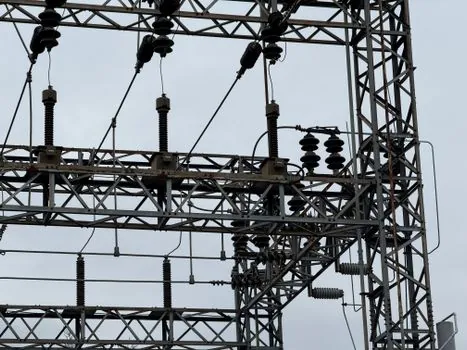
On cost control, direct OEM purchase removes the EPC's markup on the transformer package itself (typically 8-18% on large power units) but transfers change-order and freight risk to the buyer. EPC-routed orders bundle that risk into a single point of accountability, which matters when a 300 MVA unit crosses three state lines under a superload permit. Remanufactured units bought directly from a licensed remanufacturer carry the lowest capex per MVA and the shortest calendar, but cap nameplate MVA, impedance, and loss evaluation; they are rarely a fit for new-build utility interconnection [S2].
On lead time, direct OEM procurement on a 100-300 MVA unit typically saves 8-26 weeks versus EPC-routed by collapsing document-review cycles, but only if the buyer's in-house team can run a FAT and manage a warranty claim. EPC-routed orders are slower but the schedule is a single line item on a turnkey contract, which suits project-finance lenders. Remanufactured units ship in weeks-to-months versus years for new-build, at the cost of a smaller vendor pool and limited utility acceptance on greenfield sites [S1][S2][S5].
On technical risk, direct procurement demands that the buyer own specification accuracy; errors in impedance, sound level, or short-circuit withstand discovered after winding starts are not recoverable on the original schedule. EPC-routed orders push that risk into the contractor's contingency line. Remanufactured units shift the risk to the remanufacturer's test report and to the buyer's acceptance of a used core and windings [S2][S5].
On who it is for, direct procurement fits owner-operators with an in-house electrical engineering team (utilities, large industrials, hyperscalers with dedicated substation groups) and merchant developers willing to carry the schedule. EPC-routed fits project-financed builds, EPCM scopes, and any project where the lender requires a single point of accountability. Remanufactured units fit brownfield replacements, emergency spares, and capacity additions where the nameplate spec already exists on the one-line [S1][S2][S4].
Why 2026 is structurally different from the 2019 baseline
Three forces are extending the merchant market regardless of channel. First, grain-oriented electrical steel (GOES) remains allocated, with material formerly routed to distribution transformer production now competing with EV-charging and grid-modernization demand under the Inflation Reduction Act subsidy pull [S2][S6]. Second, factory capacity additions in North America are still in the queue, so the order book at most merchant OEMs is booked deep into 2027-2028 on large power units [S6][S7]. Third, lead times beyond 24 months have become the explicit planning baseline that EPCs, component suppliers, and data-center developers are scheduling around, not a tail-case [S7].
For owners, that means the EPC-versus-direct question is increasingly a question of who carries the 128-week factory queue. One procurement officer at a hyperscale developer told Giga Energy in August 2026 that they now release transformer orders before the tenant lease is signed, because the alternative is letting a supply chain they do not control set their energization date [S3].
What "shortest lead time" actually means on an OEM data sheet
Vendor claims of "shortest lead time in the industry" (a phrase Virginia Transformer uses on its EPC channel page) are not interchangeable with a calendar commitment; in this market, the binding artifact is a firm delivery date quoted from order receipt, paired with a liquidated-damages clause and a documented production milestone schedule [S4]. Buyers who can read the milestone schedule, not the marketing line, are the ones who actually capture the weeks the EPC would otherwise absorb [S1][S4].
For a process engineer reading this from a spec seat, the practical filter is: if your project's one-line, data sheet, and FAT plan are stable, and you can hold a vendor to a milestone schedule, buy direct and bank the 8-26 weeks. If any of those three artifacts are still moving, route the PO through the EPC and pay for the buffer. On brownfield spares and emergency replacements, a licensed remanufacturer with a documented test program is still the fastest path to an energized bay in 2026 [S1][S2][S5].
For related reading on long-lead industrial equipment decisions, see the spec-driven comparison of stepper motor frame sizes and holding torque ranges and the procurement-side framing in CEMS demand and specification drivers for 2026. On the equipment-side adjacent to substations, flow-meter selection for high-viscosity fluids follows the same direct-vs-channel lead-time logic.
For the relevant spec sheets and selection criteria, see lead screw, pressure transmitter, and flow meter.