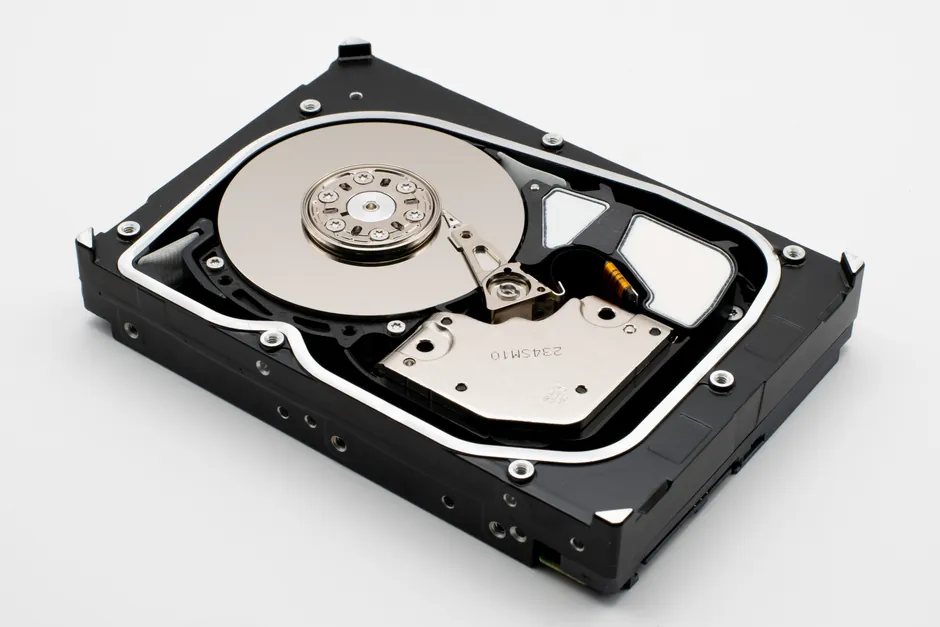
HBM production consumed roughly three DRAM wafer starts for every one HBM wafer shipped, and the same memory makers running those lines are now allocating 2026 output under multi-year hyperscaler contracts [S2][S8].
By 2026, HBM is expected to absorb about 25 percent of total DRAM wafer production, with year-on-year HBM demand growth near 70 percent, while total DRAM wafer starts grow only 6 to 8 percent year over year [S3][S4].
The 3-to-1 Wafer Penalty and What It Means for Output
Producing a given bit volume of HBM requires roughly three times the wafer output of conventional DRAM, driven by smaller HBM die, through-silicon-via steps, wafer thinning, and chip stacking on advanced substrates [S2][S5]. Micron has confirmed the same 3-to-1 conversion ratio between HBM and DDR5 wafer capacity in its 2026 disclosures, so every incremental HBM ramp directly removes general-purpose DDR5 and DDR4 wafer starts from the line [S2]. The physical reason is die area, not yield: an HBM3E 12-Hi die with TSV is a fraction of a DDR5 server die, so it takes more wafers to fill a 24 GB HBM stack than a comparable-density commodity module. SK Hynix, Samsung, and Micron remain the only volume HBM producers, and HBM3E and HBM4 output for 2026 is already committed under multi-year agreements, which means the wafer that would have flowed to PC, mobile, and industrial DRAM customers has already been spoken for [S2][S6].
Price Action: 93 to 98 Percent QoQ in Q1 2026
TrendForce measured conventional DRAM contract prices up 93 to 98 percent quarter-over-quarter in Q1 2026, after two forecast revisions in as many months, the fastest memory price move on the public record [S2]. Concrete SKU moves from late 2025 to September 2026: a 32 GB DDR4 kit rose from about $60 to $90 to $150 to $180, and many DDR5 SKUs moved 3.5 to 4x [S2]. Samsung was earning roughly 60 percent gross margin on HBM and around 40 percent on commodity DRAM by Q3 2025, and the commodity figure is still rising as contract prices rebase upward [S5]. For buyers who held the long view on memory, the rule from the 2017-18 super cycle, roughly a 90 percent rise peak-to-trough, has already been exceeded: DRAM ASPs are tracking a 275 to 300 percent increase from 2025 through 2027 [S4]. The same dynamic is reshaping nearby industrial sourcing: see display panel fab utilization dropping 3 points in October 2026, where panel makers absorb the same allocation pressure from upstream capacity.
Who Gets the Bits: Allocation Mechanics
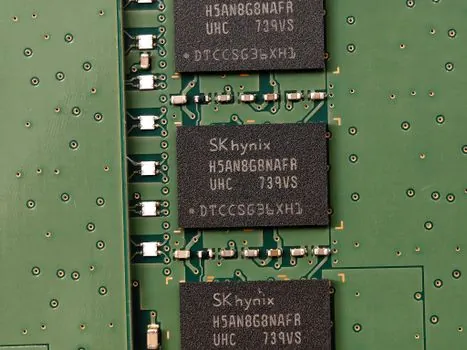
Suppliers are running allocation-only frameworks that rank hyperscalers and tier-1 OEMs first, so smaller OEMs, EMS houses, and any buyer with an unforecasted demand burst get pushed to the back of the queue or onto the spot market [S2]. DRAM channel inventory fell below 10 days in September 2026, and TrendForce reported on September 4, 2026 that Micron will add 60,000 HBM wafers per month, taking its total HBM capacity to about 100,000 wafers per month, capacity that is committed, not free [S7]. The three-to-one wafer penalty cuts both ways: when hyperscalers contract for HBM, the equivalent commodity bits simply do not exist on the merchant market, so the EMS shop sourcing a 16 GB DDR5 SO-DIMM for an industrial panel PC is competing with data-center buyers for the same fab output. The same allocation ladder is being walked by buyers in industrial equipment assembly moves and tariff bills, where 12 to 24 month forecasting has become the difference between a build schedule and a stop-line.
Selection Criteria for Sourcing Teams in Late 2026
Build-or-buy decisions on memory should be evaluated against four hard criteria: forecast horizon, qualification depth, allocation risk, and second-source coverage. Forecast horizon: suppliers now build against confirmed POs, so a 12 to 24 month rolling forecast with quarterly call-offs secures more wafer than spot orders ever will [S2]. Qualification depth: DDR4 is being de-prioritized as fabs shift to DDR5 and HBM, so any new design should standardize on DDR5 while qualifying at least two approved part numbers, because a single allocation on a single approved vendor can stop a line [S2]. Allocation risk: the spot premium is real, with spot DRAM nearly 3x year-on-year by late 2025, but independent distributors carry allocation SKUs at a price premium of 10 to 20 percent per month through the end of 2026 [S2][S5]. Second-source coverage: pairing a primary DDR5 source with a qualified LPDDR5 fallback gives a design team a parallel allocation channel when one fab tightens.
Comparison: HBM, Server DDR5, Commodity DDR5, DDR4

The four memory categories now behave as four separate markets, and the difference is no longer academic. HBM3E 12-Hi is sold out for 2026 with supplier gross margins around 60 to 70 percent and wafer allocation locked to hyperscalers [S2]. Server DDR5 trades at 3.5 to 4x late-2025 levels, with ASPs approaching $1.20 to $1.30 per gigabit, converging with HBM3E 12-Hi pricing as scarcity compresses the premium [S2][S4]. Commodity DDR5 (PC, mobile, industrial) is up 93 to 98 percent QoQ in Q1 2026, with inventory weeks collapsing from 31 in early 2023 to 8 by late 2025 [S2][S5]. DDR4 is on a slow legacy fade, with 32 GB kits at $150 to $180 and a last-time-buy window now open as fabs shift lines to DDR5 and HBM [S2]. For applications where a pressure transmitter data-acquisition board carries a DDR4 module for backwards compatibility, the cost of holding the legacy interface is now visible on the BOM.
Limits, Failure Modes, and What the Numbers Don't Say
The cycle is structural, but not infinite. Samsung and SK Hynix new fab capacity is not expected to ramp before the second half of 2027, so the supply side cannot ease in 2026, and most analysts expect elevated pricing and tight allocation to persist into late 2027 or 2028 [S2][S4]. The downside risk is the same one that ended the 2017-18 cycle: double and triple ordering inflates the apparent demand signal, and when allocation eases, inventory can flip from shortage to surplus in two quarters [S5]. For procurement teams, the failure mode to plan against is a spot-market purchase that looks cheap in month one and arrives in month nine behind a cancelled allocation slot. A second failure mode is a single-vendor DDR5 qualification with no LPDDR5 fallback, where one allocation event stops production outright. The mitigations are mechanical: forecast 12 to 24 months, dual-source DDR5, run a DDR4 last-time-buy sized to bridge until DDR5 is fully qualified, and avoid spot exposure above 20 percent of the line's monthly bit budget [S2].
Standards, Sourcing Signals, and Trackable Data Points
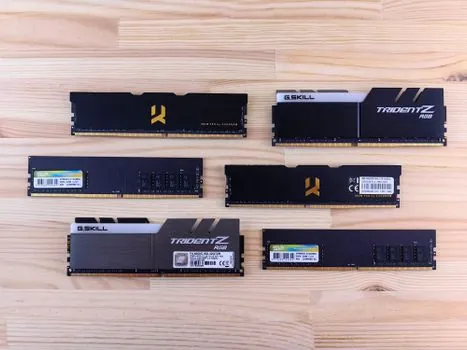
There is no IEC or JEDEC standard that allocates fab output, so the binding rules are commercial contracts, JEDEC DDR5 device specifications (JESD79-5 family), and supplier allocation letters. For buyers, the JEDEC JESD79-5 DDR5 SDRAM standard continues to define the electrical and protocol envelope, but it does not ease supply. Trackable signals for the rest of 2026: TrendForce quarterly contract price index releases, Micron's monthly HBM wafer-start disclosures (currently 100,000 wafers per month target after the 60,000 wafer-per-month addition announced September 4, 2026), Samsung and SK Hynix capex updates, and the spot-to-contract spread on DRAMX and TechInsights weekly prints [S7]. Two leading indicators worth watching: PC OEM memory cost-of-goods as a percentage of bill-of-materials (now pressuring shipments, with 2026 PC volumes falling), and mobile NAND demand year-over-year, which was flat for the first time in industry history in 2026 [S4]. A reader comparing this squeeze to the parallel pressure on flow meter sourcing will recognize the same allocation-ladder dynamic playing out across very different commodity classes.
Next node to watch: TrendForce's Q4 2026 DRAM contract price release in early January 2027, which will confirm whether the 93 to 98 percent Q1 2026 QoQ move extended, plateaued, or reversed. Second trackable signal: Micron's first 100,000 wafer-per-month HBM output report, expected in its fiscal Q1 2027 earnings, which will show whether the 60,000 wafer-per-month addition announced September 4, 2026 actually lands on schedule or slips, a slip that would extend the commodity DRAM squeeze another quarter.
Spec-level background on the components involved: checking and testing apparatus.