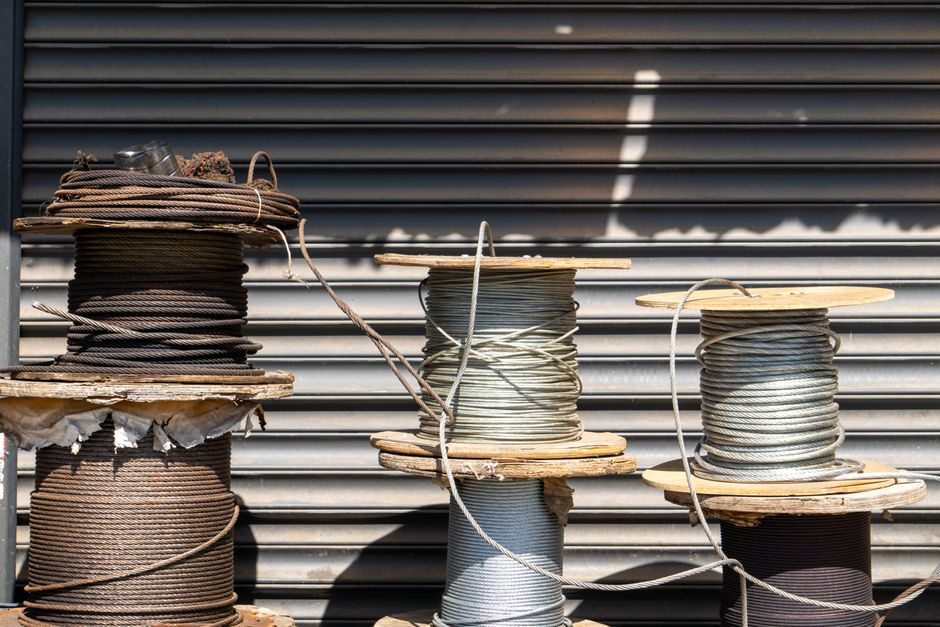
Draw-wire displacement sensors cover a 1.25-10 m measurement range in compact form factors, with the SICK EcoLine mechanical/analog unit spanning that full band [S1] and the TME WS10SG capacitive variant topping out near 1.25 m [S2].
Selection is a four-axis problem — measurement range, sensing technology, output signal, and environmental rating — and the wrong axis kills the install more often than the wrong vendor [S1][S2]. For deeper displacement context, the draw-wire sensor encyclopedia page lays out the operating principle before the decision tree below.
Stroke Length and Mechanical Envelope
The SICK EcoLine mechanical draw-wire sensor offers a minimum range of 1.25 m and a maximum of 10 m in a precision, miniature, shock-proof housing [S1]. Long-stroke draw-wire units outperform wire-rod alternatives in retracted-length packaging, but the wire must tolerate the bend radius specified by the OEM [S1].
For sub-1.5 m strokes on machine tools and small actuators, the TME WS10SG ships in incremental capacities of 100, 125, 375, 500, 750, 1000, and 1250 mm, with a 350 g aluminium-and-stainless-steel body and stainless-steel wire [S2]. The discrete capacity ladder is a cost lever: buy the next size down, not the next size up, when the application only needs 800 mm.
Sensing Technology Comparison
Four sensing principles dominate the draw-wire catalog, and each carries a different cost/robustness signature. Capacitive units like the TME WS10SG deliver ±0.1% FS linearity over 1.25 m on 18-27 VDC excitation, with 20 mA draw on 0-10 VDC and 35 mA on 4-20 mA loops [S2]. Potentiometric sensors (e.g. SIKO SG10, AK Industries CD30) output a ratiometric signal but wear over millions of cycles; magnetic/Hall contactless units (ASM posiwire WST85/WST61, Sentop XL50SH) extend life at the cost of output resolution; mechanical analog encoders (SICK EcoLine) add shock tolerance [S1][S2].
Selection matrix for the four main types:
• Capacitive (TME WS10SG): ±0.1% FS linearity, -20 to +85 °C, 0-10 VDC or 4-20 mA, ~350 g, 1.25 m max [S2].
• Mechanical analog (SICK EcoLine): 1.25-10 m range, shock-proof housing, metal measurement object [S1].
• Magnetic/Hall contactless: extended cycle life, no contact wear, common in elevator and stage rigging [S2].
• Potentiometric (SIKO SG10, AK CD30, Waycon GX200 CANopen): simple analog or fieldbus output, IP50-IP64 ratings, lower cost [S2].
Output Signal and Integration
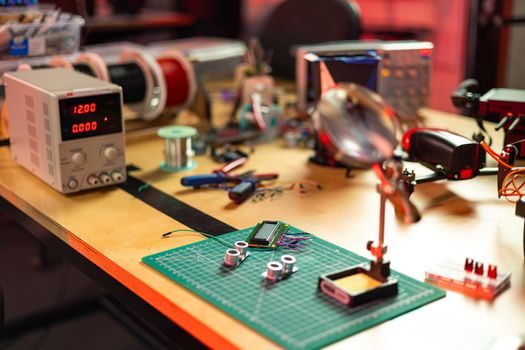
Analog outputs dominate the draw-wire category, with 0-10 VDC and 4-20 mA as the two industry-standard options. The TME WS10SG lists 18-27 VDC excitation for 0-10 VDC output and 12-27 VDC for 4-20 mA output, drawing 20 mA and 35 mA respectively at full scale [S2]. Fieldbus variants exist — Waycon's GX200 ships with CANopen and Angst+Pfister offers a Fieldbus-interface draw-wire unit [S2].
Buyers who need to compare a draw-wire against a non-contact linear position device should consult the linear encoder vs draw-wire sensor selection map — it lines the two technologies up against stroke, resolution, contamination tolerance, and installed cost. For LVDT cross-references on sub-300 mm strokes, the LVDT displacement sensor selection guide covers excitation, stroke, and duty-match logic.
Operating Environment and Duty Cycle
Temperature window is the first environmental filter: the TME WS10SG is rated -20 to +85 °C, which covers most indoor industrial cells but excludes unheated outdoor or cryogenic service [S2]. IP rating is the second: the ELAP HLS metal draw-wire hits IP64 for industrial washdown, while AK Industries' CD30 is IP50 for clean cabinet use [S2].
Vibration and shock dictate technology choice. Mechanical analog sensors like the SICK EcoLine are explicitly shock-proof, which makes them the default for stamping presses, mobile hydraulics, and crane trolley positioning [S1]. Capacitive and Hall-effect contactless units tolerate vibration better but cost more per metre of stroke. For displacement sensing in electrically noisy cells, the inductive sensor encyclopedia page documents the EMI behaviour that draw-wire capacitive designs have to coexist with.
Limitations and Failure Modes
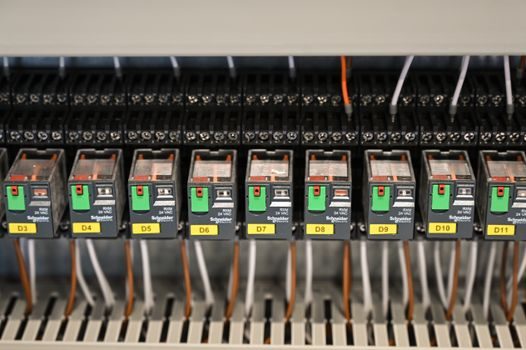
Draw-wire sensors have three predictable failure modes: wire fatigue at the drum interface, seal failure allowing contamination ingress, and encoder/potentiometer wear on contacting designs. Capacitive contactless designs (TME WS10SG) and Hall-effect contactless designs (ASM posiwire, Sentop XL50SH) eliminate the third mode but introduce a new constraint — the measurement object and mounting geometry must remain within the sensing gap tolerance [S2].
Stainless-steel wire is standard for outdoor and washdown service; the TME WS10SG uses stainless-steel wire with an aluminium and stainless-steel body, weighing 350 g [S2]. SICK's mechanical EcoLine lists metal as the measurement object and shock-proofing as a headline feature, signalling heavy-industry deployment [S1]. Buyers who need non-contact displacement measurement for very long strokes should weigh the displacement sensor alternatives before committing to a draw-wire drum-and-wire architecture.
Sourcing, Standards, and Shortlist Logic
Specifying a draw-wire sensor comes down to a shortlist of three questions: stroke, environment, and output. Stroke sets the drum diameter and housing size — anything above 3 m points to mechanical analog or magnetic contactless designs rather than capacitive (capped near 1.25 m in the TME catalog) [S1][S2]. Environment sets the IP and temperature class — IP64 metal housings (ELAP HLS) for washdown, IP50 (AK CD30) for clean cabinets [S2]. Output sets the integration cost — 0-10 VDC or 4-20 mA for direct PLC analog input, CANopen (Waycon GX200) or Fieldbus (Angst+Pfister) for networked cells [S2].
Shortlist logic: choose capacitive (TME WS10SG) when stroke ≤ 1.25 m, linearity ±0.1% FS is required, and analog output is acceptable [S2]. Choose mechanical analog (SICK EcoLine) when stroke 1.25-10 m, shock and vibration are present, and the measurement object is metal [S1]. Choose magnetic/Hall contactless (ASM posiwire, Sentop XL50SH) when cycle life exceeds 10 million operations and the budget tolerates the premium [S2]. Choose potentiometric (SIKO SG10, AK CD30) for cost-sensitive cabinet installs below 1.5 m stroke [S2].
Watch the SICK EcoLine family page [S1] and TME WS-series listings [S2] for the next catalog refresh.