Drive-in rack rail systems use one work aisle, typically 3 to 5 pallets deep, and provide LIFO inventory handling, while drive-through rails permit access from both ends for FIFO operation [S5].
Both configurations use pallet rails and multi-tiered lanes for high-density storage, but rail count, end access, forklift movement, SKU control, and required aisle space determine the correct choice [S1][S5].
Core configuration difference: one aisle versus two aisles
Drive-in racking has a single entry and exit point. Pallets are loaded from the front toward the rear and unloaded in reverse order, so the first pallet loaded is normally the last pallet removed [S1][S2].
Drive-through racking permits loading through one end and unloading through the other. This arrangement creates first in, first out, or FIFO, access and gives operators two separate work aisles [S1][S3][S9].
Both drive-in and drive-through racking systems use pallet rails that allow forklifts to enter the lanes and place pallets on multiple vertical levels.
Decision criteria: density, flow, access, and control
Drive-in is the stronger choice when maximum density and minimum floor-space consumption outweigh FIFO requirements. It requires only one work aisle, can be installed back to back, and is suitable for large quantities of homogeneous SKUs [S1][S5].
Drive-through is the stronger choice when stock age, expiry, or replenishment order matters. The operator loads from one side and unloads from the other, supporting FIFO flow and organized traffic planning [S1][S5][S9].
Rail geometry and loading sequence
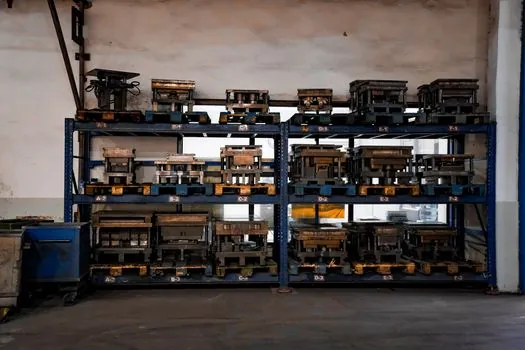
Pallet rails run through the depth of the lane and support pallets at multiple vertical levels. In drive-in lanes, the forklift operator loads pallets from back to front and unloads them from front to back.
In a drive-in lane, the pallet nearest the aisle is removed first, followed by the next pallet behind it. This is why a lane must remain assigned to one SKU: reversing the load sequence can otherwise make the required unit inaccessible [S1][S5].
Drive-through lanes use the same rail-based loading principle, but the opposite aisle permits unloading from the far end. The pallet that entered first can therefore leave first, provided the lane is managed as a single-SKU flow [S5][S9].
Equipment and clearance constraints
Both systems require the forklift to travel between uprights, so the lane must be sized around the truck mast, pallet, and required clearances. Drive-in rack designs are specifically coordinated with counterbalanced forklifts and defined clearances between the rack and truck [S8].
Rail guides and accessories that guide forklift movement and help position pallets are therefore relevant design features [S1][S5].
Drive-through operation reduces the need to reverse out of a loaded lane, but it does not remove equipment constraints. The operator still needs compatible forklift dimensions, adequate lane width, controlled approach angles, and two functioning aisles [S5][S6].
For equipment planning, compare the rack envelope with the specific forklift model used in the warehouse rather than selecting a nominal aisle width without truck geometry.
Best applications and unsuitable operating conditions
Drive-in racking fits warehouses with a small variety of SKUs and many pallets per SKU. Drive-in and drive-through pallet racking is suitable for warehouses storing large inventories of limited product types.
Drive-through racking supports first in, first out (FIFO) operation by allowing loading on one side and unloading on the other. It is also suitable for closed-loop loading and unloading where the warehouse can reserve two aisles and separate inbound from outbound traffic [S5][S9].
Neither configuration is a good fit for high-SKU, fast-pick storage where every pallet must be individually accessed. Neither should be used for age-sensitive goods if the site cannot enforce FIFO through operating controls [S3][S5].
Specification, installation, and sourcing discipline
Specify the configuration as part of the complete rack system, not as a rail-only detail. The procurement package should define lane depth, rail layout, frame bracing, number of levels, pallet sizes and weights, forklift model, aisle widths, guides, and operating sequence [S1][S8].
Manufacturer guidance identifies support rails and vertical and horizontal bracing as defining components beyond the frame used in selective pallet rack [S3]. Each drive-in lane should be devoted to a single SKU, and dividing bars should be used for back-to-back drive-in installations to reduce collision risk.
Use the manufacturer’s engineered drawings, load ratings, installation instructions, and operating manual for the selected rack model. The material supports the configuration difference, but it does not provide universal rail dimensions, capacities, clearances, or a single governing standard that can be transferred between manufacturers.