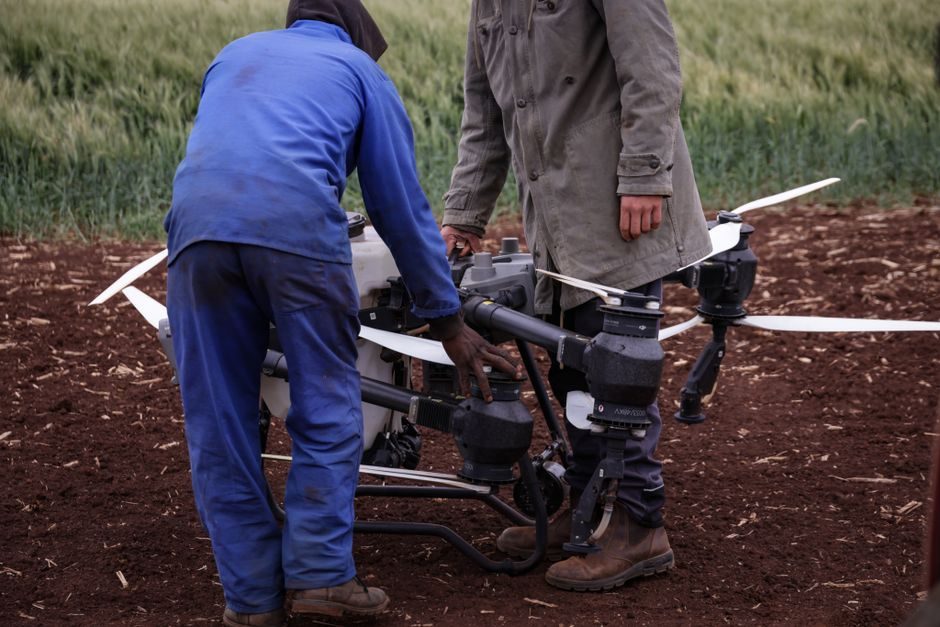
China hosts the bulk of OEM-level commercial drone output, with Shenzhen-area contract manufacturers disclosing monthly capacity benchmarks in the 300,000-unit range for adjacent electronics and a multi-line UAV buildout feeding U.S. and EU service operators [S2][S4].
Service-side demand absorbs that hardware across three core verticals — aerial cinematography, industrial inspection/survey, and delivery/logistics — with California- and UK-licensed operators confirming the geographic spread of finished airframes produced almost entirely in Asia [S1][S3][S5].
Country-level capacity: who actually builds, who only flies
China (Shenzhen, Dongguan, Guangzhou, and the Yangtze River Delta cluster) accounts for the majority of global commercial-drone OEM throughput, with contract manufacturers on the Made-in-China platform listing UAV, delivery-drone, and battery-capacity-monitoring product lines from a single factory footprint [S4]. Adjacent electronics capacity at the same tier of factory — 300,000 label-printer units per month at one Shenzhen OEM — illustrates the high-volume surface-mount and lithium-pack assembly lines that drone production shares and competes for [S2].
The United States is a near-net importer of commercial airframes: licensed U.S. operators in San Diego, San Francisco, and nationwide service as aerial videography and event providers sourcing DJI-style and Skydio-built airframes rather than running high-volume OEM lines [S1][S3]. The U.S. does host a meaningful Skydio / Auterion / Anduril-aligned defence and dual-use manufacturing footprint, but the public capacity disclosures for commercial cinematography and survey platforms point overwhelmingly to Asia-built units being delivered, registered, and flown by U.S. Part 107 holders [S1][S3].
Europe (UK, Germany, France) sits between the two: licensed UK survey and inspection operators absorb Asian-built multi-rotor and fixed-wing platforms for asset inspection, while home-grown producers (Parrot in France, Quantum Systems in Germany, Wingcopter with a German/African build strategy) hold niche industrial and defence share [S5]. The U.S./EU pattern is consistent: integrator and licensed-operator revenue is high; OEM-tonnage is low relative to China.
Output bands by airframe class
Three airframe classes dominate 2026 commercial production: sub-250 g consumer/enterprise (DJI Mini / Neo class, Autel Nano class), 0.25–2 kg prosumer/inspection (DJI Mavic / Skydio X10 class, Autel EVO II class), and 2–25 kg industrial/inspection (Matrice 350, Wingcopter 198, Quantum Trinity class, heavy survey fixed-wing) [S1][S3][S4][S5]. Made-in-China factory listings bundle UAVs alongside UTVs, sanitation trucks, and fire-fighting vehicles, indicating that 2–25 kg industrial airframes share assembly lines with special-purpose vehicles and benefit from shared carbon-composite and aluminium monocoque jigs [S4].
Delivery-drone and heavy-payload lines (10–25 kg MTOW) are the smallest-volume but fastest-growing OEM class, with payload-capable airframes from Chinese OEM/ODM lines appearing on the same factory portfolios as agricultural-spray UAVs [S4]. For lithium-pack and BMS sourcing feeding all three classes, the battery supply chain map shows the upstream constraint that any new drone-OEM capacity line must solve before airframe throughput scales.
Selection criteria: what an integrator actually buys
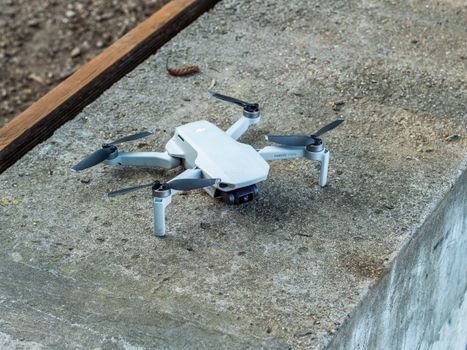
Integrator procurement in July 2026 prioritises five criteria: (1) airframe MTBF and IP rating, (2) payload-swappable ecosystem (LIDAR, thermal, RGB survey, gas-sniffing), (3) supply-chain lead time and FAA/EASA Part 107 traceability, (4) software ecosystem (DJI Pilot 2, Skydio Cloud, Autel Enterprise, open-source PX4/ArduPilot), (5) battery cycle life and cell-level traceability [S3][S5]. The licensed U.S. operator's explicit listing of "TV, Film, Real Estate, Private Events" verticals versus the UK operator's "Drone Survey & Inspection" focus shows how the same airframe class is resold into radically different downstream services [S3][S5].
Buyers should refuse any OEM that cannot trace cell-to-pack BMS data on the lithium pack, because drone airframes now share cell grades with the lithium raw-material sourcing chain that feeds EVs and grid storage — capacity competition at the cell level is the binding constraint on drone-OEM output, not airframe jig count.
Who this map is for — and who it is not for
This country-capacity breakdown serves procurement engineers at drone-service integrators, OEM sourcing managers evaluating contract-manufacturer footprints, and defence-procurement analysts comparing dual-use industrial lines. It is not for hobbyist pilots choosing between sub-250 g toy-class airframes, where the supply picture collapses to a duopoly of DJI and Autel with effectively no country-capacity question at all. [S1]
It is also not a substitute for a sanctioned-list or ITAR/EAR dual-use compliance check: any European chemical-plant inspector specifying a Chinese-built industrial platform for ATEX-classified zones still needs an ATEX/IECEx-certified variant, and that filtering happens at the airframe-certificate level, not at the country-capacity level [S5]. For adjacent component selection — e.g. seal materials on delivery-drone payload bays — the FFKM/FKM spec bands reference the same aerospace material grades that industrial drone OEMs publish in their qualification packs.
Failure modes and binding constraints on output
The three binding constraints on 2026 drone production are: (1) cylindrical lithium cell allocation (21700/18650 grades shared with EVs), (2) flight-controller and GNSS-module lead times, and (3) carbon-fibre monocoque and arm forging capacity. The Made-in-China factory listing that bundles UAVs with sanitation trucks and fire-fighting vehicles is a structural signal: Chinese OEMs treat drone airframes as one product line inside a broader special-vehicle plant, sharing jigs, paint booths, and QA with the truck side [S4].
U.S.
Sourcing signals and standards anchors
Standards anchors that 2026 drone procurement cannot skip: FAA Part 107 (U.S. commercial operations), EASA EU 2019/947 and EU 2019/945 (EU operations + class-identification labels), and for the airframe itself, IEC 62133-2 on lithium-pack safety and UN 38.3 on transport. ATEX/IECEx certification applies only when the airframe is specified into Zone 1/2 hazardous-area inspection, which is a separate variant line and not part of the volume commercial-OEM throughput [S5].
Trackable signals for the next 90 days: (1) Made-in-China factory-portfolio expansion on the UAV/delivery-drone category through Q3 2026 [S4]; (2) U.S. licensed-operator fleet-renewal disclosures on Skydio X10 and DJI Mavic 3 Enterprise [S1][S3]; (3) UK CAA and EU EASA U-space airspace-rule enforcement dates, which will gate the next wave of BVLOS commercial operations and re-define which airframe classes see real production volume in late 2026 [S5].
For component-level specifications, see pressure transmitter, flow meter, and industrial valve.