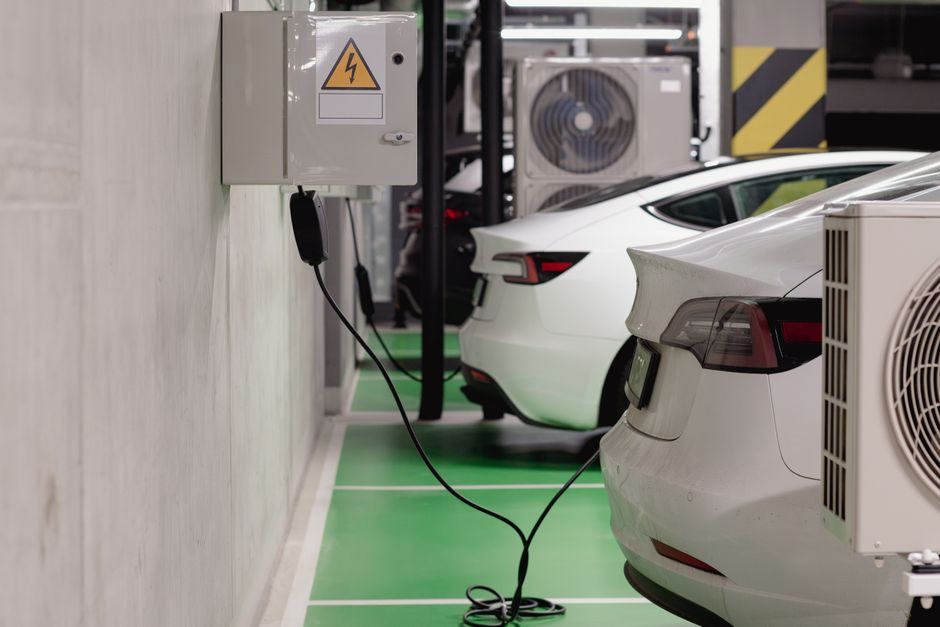
A modern lithium-ion battery supply chain is conventionally split into five sequential stages: upstream lithium and companion-metal mining, midstream chemicals conversion and cell-component production, cell and pack assembly, vehicle or stationary integration, and end-of-life collection plus recycling [S1][S3].
The Verge's 2021 reporting on the U.S. lithium gap documented the structural reason this flow matters: mining output, refining output, and cell output each sit in different geographies, and the binding constraint for any new gigafactory is no longer cathode chemistry but the precursor upstream [S3]. Industrial Info's 2026-06 database, covering the same five stages, lists "mining sites, refining operations, manufacturing plants, EV assembly" as separate asset classes buyers can track individually [S5].
Upstream Mining: Lithium, Nickel, Cobalt, Manganese
Brine and hard-rock lithium extraction remains the rate-limiting first node, with spodumene concentrate converted to lithium carbonate or lithium hydroxide downstream [S1]. The Verge reported on 2021-03-12 that workers at Xinwangda Electric Vehicle Battery Co. Ltd in Nanjing were already running multi-shift cell production for EV packs, illustrating how downstream demand pulls raw-material contracts [S3].
Industrial Info's database explicitly tracks mining assets as a distinct queryable layer, confirming that procurement teams in 2026 treat the mining layer — not the cell layer — as the first place to lock multi-year offtake [S5]. For nickel and cobalt, sulfide vs laterite ore choice changes the refining route and therefore the cell chemistries the chain can feed; engineers spec'ing NMC or NCA cathodes should know whether the nickel will arrive as class 1 metal (battery-grade) or class 2 (plating-grade) and price accordingly [S1].
Midstream Conversion: Salts, Cathode Precursors, Anode Foil, Electrolyte
The midstream stage turns refined metals into battery-grade chemicals: lithium carbonate or hydroxide, nickel sulfate, cobalt sulfate, and manganese sulfate feed cathode-precursor (pCAM) plants, which in turn feed cathode active material (CAM) lines [S1]. The Hangzhou Dianzi University SCOR-model paper (2023-03) lists "5 key domains, 9 first-grade index and 20 secondary-grade index" needed to score a green lithium-battery supply chain, of which the chemical-conversion and CAM domains consistently carry the highest weight in expert scoring [S1].
On the anode side, graphite — natural flake or synthetic — is the dominant active material, copper foil is the standard current collector, and the electrolyte is typically LiPF6 dissolved in a carbonate solvent blend [S2]. UL XPLORLABS' "Extraction to E-Waste" module explicitly walks learners through this conversion step, calling it the bridge between "the mine and the cell" [S2]. Aluminium foil handles the cathode current-collector duty, and separator film — most commonly polyethylene or polypropylene — is sourced as a separate sub-line, meaning a single cell touches at least six independent midstream suppliers before assembly [S1][S2].
Cell and Pack Assembly: Format Choice and Line Throughput
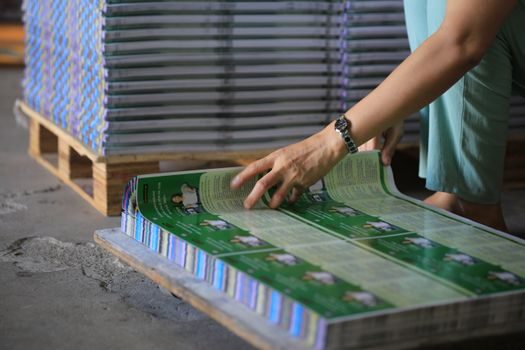
Cell formats split into three families — cylindrical (e.g. 18650, 21700, 4680), prismatic (hard-case aluminium), and pouch (laminate) — and the choice cascades back into midstream foil widths and into pack-module mechanical design [S2]. The UL "Extraction to E-Waste" module positions the cell as the unit that is "safe to ship" only after formation cycling and BMS attachment [S2].
Pack assembly then adds the battery management system, busbars, thermal-management plates or coolant loops, and the enclosure; for stationary storage the enclosure is typically IP55 or NEMA 3R, for EV packs it is IP67 or IP6K9K depending on submersion and high-pressure wash-down exposure [S2]. For engineers cross-linking power-conversion spec work, pack outputs feed switching power supply front ends and DC power supply test stands during end-of-line cycling.
Integration: EV, ESS, and Industrial End-Markets
Industrial Info's 2026 database is built around asset owners and EV-assembly plants as distinct query layers, which signals that 2026 procurement teams are tracking integration sites — not just cell plants — as separate sourcing decisions [S5]. Cell-to-pack (CTP) and cell-to-body (CTB) architectures collapse the module stage, but the chain still adds pack-to-vehicle harnesses, onboard chargers, and high-voltage distribution before the battery reaches the buyer.
For stationary storage, the same cell format is repackaged into 20-foot or 40-foot containerised ESS units, and the bill of materials grows by HVAC, fire suppression, and a DC power supply-fed BMS rack. The Verge's 2021 piece framed the chain as "broken" in the U.S. because integration-layer demand was growing faster than upstream-of-cell capacity could follow [S3]; that ratio still drives policy and offtake-contract structure in 2026 [S5].
End-of-Life: Collection, Second-Life, Hydromet Recycling
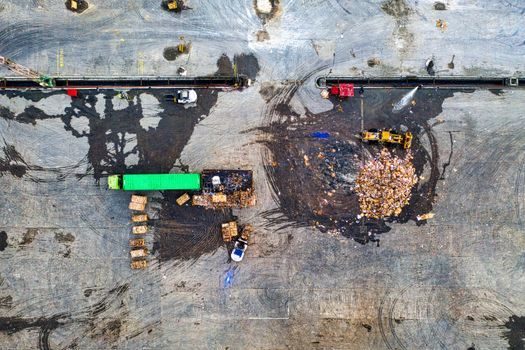
Grepow's engineering write-up on lithium-battery failure modes (2019-11) classifies cell-level failure into three buckets — external short circuit, internal short circuit, and overcharge — and notes that lithium is "the smallest and most active metal on the chemical periodic table," which is precisely what makes spent cells a handling hazard at collection and shredding [S4]. UL XPLORLABS uses the phrase "Extraction to E-Waste" to anchor the loop, putting recycling as a stage of equal weight with mining [S2].
Hydrometallurgical recycling routes dissolve black mass in acid, then selectively precipitate lithium, nickel, cobalt, and manganese salts that re-enter the midstream stage; pyrometallurgical routes recover a copper-cobalt-nickel alloy but lose lithium to slag [S2][S4]. Engineers spec'ing chain conveyor lines for black-mass feed or selecting conveyor chain pitch for cell-handling pallets should treat recycling-plant duty cycles as comparable in severity to primary cathode-plant duty cycles.
Sourcing Levers and Standards Engineers Track in 2026
The HDU SCOR paper recommends scoring suppliers on five key domains — plan, source, make, deliver, return — which maps cleanly onto the five physical stages of the chain [S1]. On the product side, UL 1642 covers cell-level safety, UL 1973 covers stationary and motive packs, and UN 38.3 governs transport classification; for chain-conveyance of cells and black mass, ISO 13715 and ISO 9001 quality clauses show up in audited vendor questionnaires.
Industrial Info's 2026 offering is positioned as data on "asset owners, mining sites, refining operations, manufacturing plants, EV assembly" as distinct trackable layers, which is a useful proxy for how a 2026 buyer is expected to segregate RFPs by stage [S5]. On the metallurgy side, NACE MR0175 governs sour-service materials in upstream lithium-brine piping, and IEC 62133 is the dominant transport-and-portable cell safety reference for cells moving in the chain. For component spec on the recycling line, suppliers cross-link into silent chain drives and roller chain drives for shredder and separator-feed conveyors.
Comparison: How the Five Stages Differ on Decision Criteria
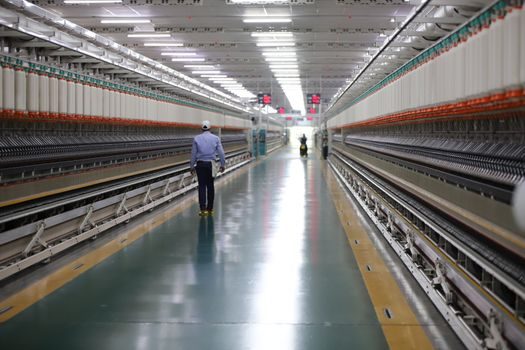
Comparing the five stages on four buyer-relevant criteria — geographic concentration, lead time, capital intensity, and ESG audit difficulty — clarifies where leverage sits. Upstream mining is highly concentrated (the "lithium triangle" plus Australia) with 3–7 year lead times and high capital intensity [S3][S5]. Midstream conversion is dominated by East-Asian chemical refiners, with 18–36 month lead times for a new pCAM line [S1][S5].
Cell and pack assembly is now multi-region (China, Korea, Japan, U.S., EU gigafactory build-out), with 12–24 month line ramp times and moderate capital intensity [S5]. Integration is regionally distributed and asset-light, with lead times under 12 months but high OEM-specific tooling cost. End-of-life recycling is the least concentrated stage, with the lowest capital intensity, the shortest lead times (6–18 months for a hydromet line), but the highest ESG-audit difficulty because collection networks span consumer, automotive, and industrial streams [S2][S4][S5].
For a procurement team trying to decide where to enter the chain, the criterion-by-criterion read is: if the goal is supply security, lock upstream; if the goal is margin, midstream; if the goal is end-customer differentiation, integration; if the goal is ESG narrative and circularity compliance, recycling [S1][S3][S5]. UL's framing — "safe and sustainable cities will depend on lithium-ion batteries" — anchors the whole chain against a downstream policy pull, not an upstream commodity pull [S2].
Trackable Signals in 2026-07
Two signals make the chain auditable this month. First, Industrial Info's 2026-06 database is structured so that "mining sites, refining operations, manufacturing plants, EV assembly" appear as four separately queryable asset classes, which is the cleanest public signal of how analysts expect the chain to be split in second-half 2026 [S5]. Second, UL XPLORLABS' module explicitly numbers the chain "extraction to e-waste," and that five-stage numbering is now the default taxonomy in 2026 educational material, meaning RFPs and ESG reports adopting the same five-stage label will cross-reference cleanly [S2].
Engineers building a sourcing plan for late-2026 cell deliveries should pin at least one contract on each of the five stages — brine or spodumene upstream, lithium hydroxide or carbonate midstream, cell or pack direct from a gigafactory, integration via an OEM or containerised-EPS integrator, and a closed-loop recycling offtake — and verify the chain end-to-end against the SCOR five-domain scorecard [S1][S3][S5].
For related coverage, see How to Choose a Harmonic Drive Reducer: Spec-Driven Selection for Engineers.