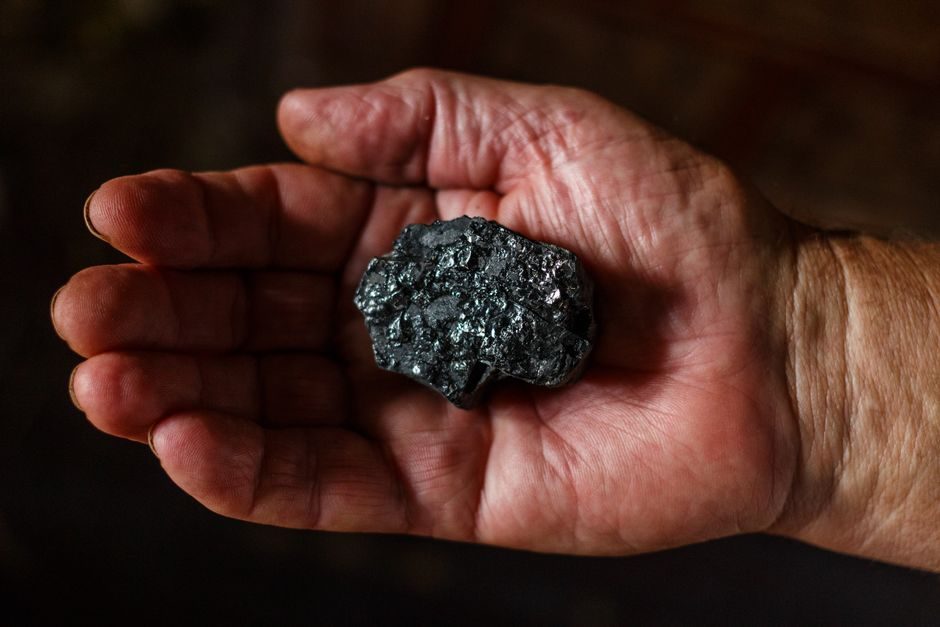
China-based intermediate suppliers continue to anchor the lithium-battery raw-material trade in 2026, with Made-in-China listings showing 99.99% purity Cu foam copper-foam electrode sheet offered at US$298.00 per 100 square metres MOQ by Zhejiang manufacturer Jiujiang Xingli Beihai Composite [S1].
At the same time, dedicated materials houses such as Changsha Lyrun New Material Co. Ltd. (founded January 1998, registered capital RMB 83,690,000) list continuous strip-like foam Ni as a backbone Ni-H battery material under China's national '863' key-project track, illustrating the long-established industrial base behind modern Li-ion feedstock supply [S6].
Anode-side feedstock: graphite powder, purity and particle envelope
Graphite remains the dominant anode-active material for Li-ion cells, and lab/research-grade graphite powder for lithium-battery anodes is actively traded on ChemicalBook by Chinese manufacturers as of 2026-06-09, typically tagged with purity ≥99.9% and D50 particle size in the 5-20 µm range for synthetic graphite grades [S5].
For production-scale procurement, three variables drive the spec sheet: tap density (typically 0.8-1.2 g/cm³ for artificial graphite), specific surface area (1-5 m²/g BET for coated spherical graphite) and first-cycle Coulombic efficiency (≥90% for premium grades). Material selection also pulls on broader guidance such as the magnetic material properties reference when cells integrate magnetic shielding, though graphite itself is non-magnetic.
Buyers should pin lot-level certificates showing ash content (usually <0.1 wt%) and magnetic impurity counts in ppb range; suppliers without batch-level ICP-MS data on Fe, Cr, Ni, Co should be downgraded regardless of headline purity claims.
Cathode-side precursors and current-collector foams
For Ni-foam used in Ni-H and increasingly in Li-ion substrate roles, suppliers like Changsha Lyrun report continuous strip-like foam Ni output, with typical thickness 0.5-3.0 mm, surface density 250-500 g/m², and pores-per-inch (PPI) 60-110 [S6].
When comparing current-collector options, decision-makers should weigh four criteria side-by-side: cost per m² at MOQ (Cu-foam ~US$2.98/m² at 100 m²; Ni-foam 2-4× that), conductivity (Cu ≈ 5.96×10⁷ S/m vs Ni ≈ 1.43×10⁷ S/m), mass per unit area (Cu lighter, advantage for energy density) and electrolyte compatibility. For deeper engineering context on copper material selection in current collectors, the trade-off between foil (rolled) and foam (electrodeposited) is decisive — foil wins on mass, foam wins on 3D active-material loading.
Process-equipment ecosystem and full-line vendors
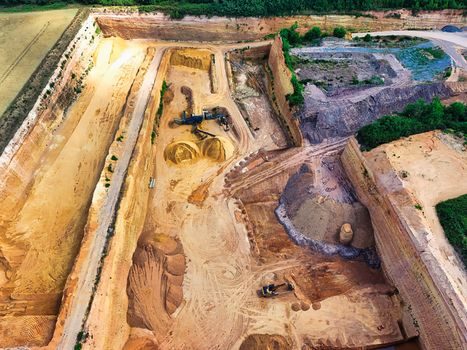
Trading-company aggregators such as Shandong Gelon Lib Co., Ltd. (Business Type: Trading Company, established 2017-03-28, 35 employees, address No. 1606 Golden Plaza, Yimeng) bundle lithium battery materials, production equipment, lab equipment and full Li-ion production lines under one sourcing request, allowing buyers to consolidate RFQs across electrode coating, calendaring, cell assembly and formation. [S1]
This is significant for first-time cell builders: a single Chinese trading partner can deliver coating machines (slot-die or comma-bar), vacuum mixers, calendaring presses and formation cabinets, but the engineering review burden shifts to the buyer — vendor validation, FAT witness testing and IEC 62133 / UN 38.3 documentation still need a separate QA owner.
Buyers operating through such aggregators should also reference cross-industry sourcing patterns like the GPU tier-1 supplier reset map when assessing single-vendor concentration risk — even a low-value material line can stall cell output if a single supplier fails.
Verification: who it is for, and who should look elsewhere
This raw-material sourcing map is built for cell integrators, R&D labs and module pack assemblers needing 10-1000 kg lots of anode/cathode precursors and metal-foam current collectors from Chinese audited suppliers [S1][S6].
It is NOT the right path for buyers seeking automotive-grade A-sample cathode active material (CAM) at multi-tonne scale from signed-off tier-1s (e.g. battery-grade lithium carbonate ≥99.5% from Ganfeng, Yahua, SQM) — that segment is dominated by long-term off-take contracts and is not transacted through the trading-company channels surfaced here. Direct cell-makers like Frey Battery, offering LiFePO4 marine/RV and explosion-proof mining power supplies out of North America, source upstream CAM through separate proprietary channels [S3].
For low-volume, lab-scale work or pilot-line electrode coating, however, the trading-aggregator route is cost-effective and faster than opening direct accounts with tier-1 mines.
Decision criteria: lab-grade graphite vs Cu/Ni foam vs precursor oxides
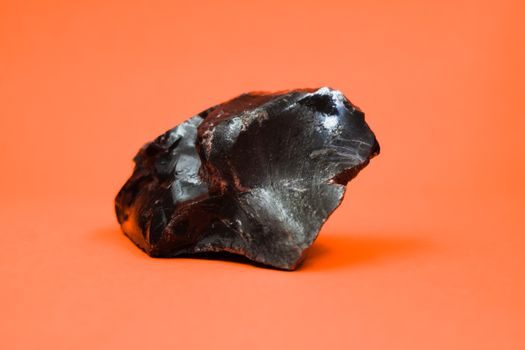
Across the main feedstock categories, four criteria separate a defensible buy from a problematic one: (1) minimum purity / assay with batch-level certificate, (2) MOQ flexibility (kg vs 100 m²), (3) lead time and Incoterms (FOB Shenzhen vs EXW), and (4) ISO 9001 audit status visible on the supplier profile [S1][S5][S6].
On those axes: lab-grade graphite powder scores high on purity documentation and low MOQ (often 1 kg), medium on lead time (2-4 weeks ex-China); Cu/Ni foam scores high on cost-per-area, medium on purity traceability (99.99% claim is common but not always lot-validated); and precursor oxides are typically outside the trading-aggregator channel. When a buy needs traceable additive manufacturing material feedstocks — relevant for solid-state battery pilot lines — purity audit depth becomes the decisive gate, not headline price.
Failure modes and QC traps in raw-material procurement
The dominant failure mode is mismatched spec sheet vs shipped lot: a '99.99%' Cu foam without an accompanying ICP-OES metals report on Fe/Ni/Pb impurities has been a recurring rejection driver in EU cell-pilot qualification. Add to that the transport-classification risk — lithium-related raw materials do not always fall under UN 3480/3481, but contamination with electrolyte-grade solvents does [S2].
A second trap is supplier-type confusion: Manufacturer/Factory & Trading Company hybrids (Zhejiang, China examples in current listings) can re-export material they did not themselves produce, breaking the technical-support chain when a defect surfaces [S1]. Buyers should ask for the producer's name (not the trading entity) and the producer's own ISO 9001 certificate, not the trading company's.
The fix is to demand the test method (XRF, ICP-MS, combustion analysis) alongside the value.
Finally, contact-data hygiene is operationally underrated: supplier hotlines like +86 20 3901-1403 (Guangzhou Nansha district, Battsysbattery corporate contact) can go dark during Chinese New Year (typically February) and orders placed late January often miss that window [S2]. Build a 6-week buffer into procurement calendars.
Logistics, Incoterms and 2026 trade-friction signals
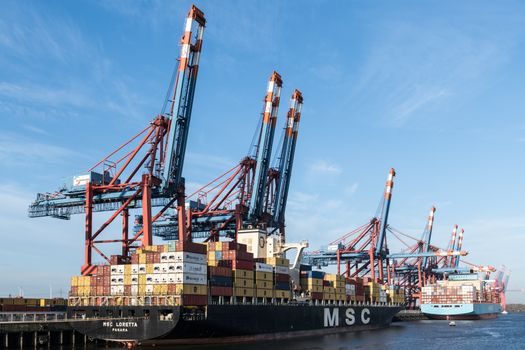
For 2026, three trade-flow signals are worth tracking by procurement teams: (1) Chinese supplier consolidation in Hunan and Jiangxi for foam-metal and graphite — Changsha Lyrun's continuous-strip foam Ni line being representative of Hunan's cluster [S6]; (2) export-control discussions on certain high-purity graphite grades that may be reclassified under dual-use codes; (3) rising shipping insurance for lithium-related cargo after several 2024-2025 vessel incidents.
Incoterms 2020 remain the baseline, with FOB Ningbo or FOB Shenzhen the default for Made-in-China trade-company deals. Buyers in the EU should also factor in CBAM-style reporting for processed metal foams if the Cu or Ni is of non-Chinese origin and re-exported after lamination. Industry pattern parallels in the semiconductor supply chain 2026 map suggest that the raw-material tier is where audit friction concentrates most, not at finished-goods customs.
Track the next nodes: Gelon Lib's 2026 product-line refresh (electrode-coating machines and full Li-ion turnkey lines), and any revisions to ISO 9001:2015 audit reports on the top-10 Made-in-China Gold-Member suppliers in the Li-battery raw-material category.