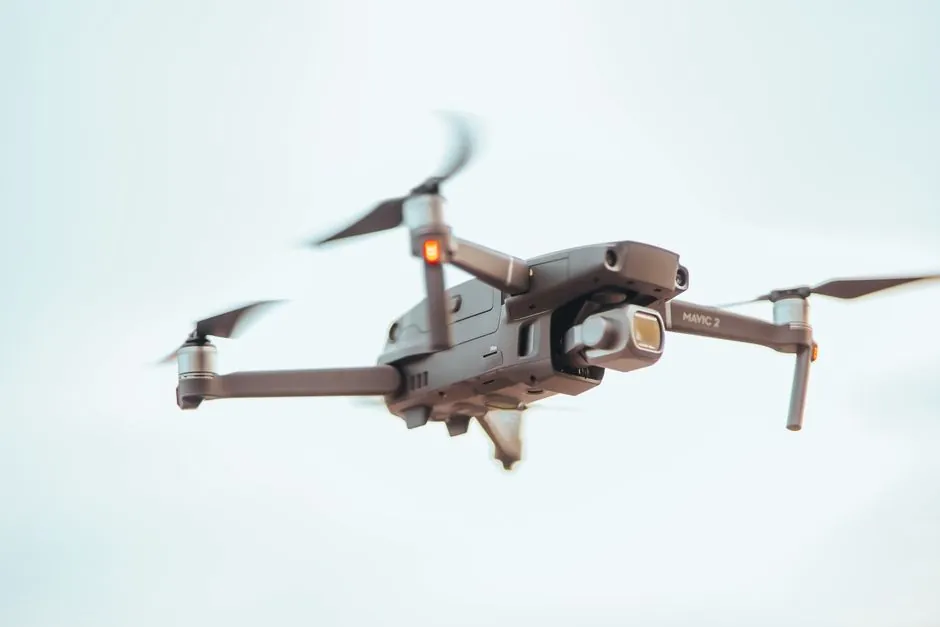
DJI continues to anchor the global consumer and prosumer drone market, while the supporting component tier shows 30+ active brands on distributor World Drone Market's catalog page as of 2026-08-09 [S1].
The 2018 propulsion-system report (AskCI, dated 2018-10) already named DJI alongside Orbital, Northwest UAV, Ballard Power Systems, GE Aviation, UMS Skeldar (Hirth Motors), PPS Aerospace, Rolls-Royce, 3W International and UAV Engine Limited as the competitive set for propulsion, illustrating how deep the OEM stack runs below the airframe brand [S2].
Where DJI actually sits in the 2026 share picture
DJI remains the only airframe manufacturer with broad consumer, commercial and prosumer coverage listed in current distributor catalogs, alongside Autel Robotics as the most visible second-tier brand carried by World Drone Market [S1]. The propulsion-side competitive set documented in 2018 already mixed civil OEMs (GE Aviation, Rolls-Royce) with specialists such as UMS Skeldar, Hirth Motors, 3W International and Northwest UAV, a stratification that still defines the heavy / fixed-wing and military drone segment [S2].
Component-brand share, not airframe share, is the more granular layer: the same World Drone Market brand index lists Autel Robotics, Benewake, CUAV, Chinowing, Cubepilot, Holybro, Hobbywing, HEQ UAV, Hitec, HDZero, Helio UAV, Jiyi, Locosys, Lumenier, Mauch, Mateksys, Pixracer, Reebot, RFDesign, Radiolink, Radiomaster, Skydroid, Siyi, SMD Drone, Tattu, T-Motor, ToolkitRC, VK, WDM, Zingto and Zubax as active suppliers, a 31-name roster in which flight-controller brands (CUAV, Holybro, Pixracer, Mateksys, Jiyi) and motor/ESC brands (T-Motor, Hobbywing, Zingto) crowd the long tail [S1].
Military and propulsion: the 2018 supplier set still relevant
For military and heavy drone propulsion, the 2018 supplier list (Orbital, Northwest UAV, Ballard Power Systems, GE Aviation, DJI, UMS Skeldar / Hirth Motors, PPS Aerospace, Rolls-Royce, 3W International, UAV Engine Limited) divided cleanly into three technology lanes: fuel, electric and hybrid, with DJI appearing alongside civil aero-engine OEMs rather than in a separate category [S2].
That same report defined the market along two application axes, Military Drone and Commercial / Civil Drone, which maps onto the way 2026 procurement is still split: defense programs continue to favor Northwest UAV, UMS Skeldar and Rolls-Royce-class suppliers, while commercial operators converge on electric propulsion dominated by T-Motor, Hobbywing and Zingto-class ESC/motor stacks [S2]. Skydroid, Radiomaster and SIYI round out the ground-control and gimbal-pod layer for the commercial segment, with the SIYI ZT30 marketed as a four-sensor hybrid gimbal (zoom, thermal, laser rangefinder, wide-angle) per the distributor video page [S1].
Counter-drone: a separate competitive lane

The counter-drone segment in 2018 was forecast to grow at a CAGR of roughly 53.2% to 2023, with manufacturer coverage spanning Thales Group, Mistral Solutions, Leonardo S.p.A., Kelvin Hughes, Precision Hawk, Dedrone, DroneShield, Blighter Surveillance Systems, Dronelabs, Rinicom, Aaronia AG, Advanced Protection Systems and Rheinmetall AG, a set that has since consolidated around Thales, Leonardo and Rheinmetall on the defense side and Dedrone / DroneShield on the commercial side [S3].
That counter-drone set is split into Identification & Detection and Countermeasures types, and across Military, Commercial and Homeland Security applications, which directly mirrors the propulsion report's military / civil split, and explains why detection vendors (Dedrone, DroneShield, Blighter) and electronic-warfare vendors (Rheinmetall, Thales) rarely compete head-to-head even though both are filed under the same drone-defense parent market [S3]. The two-typed, three-application split is also the reason counter-drone market share is reported per technology lane, not per company.
Custom / regional entrants: the India example
Bengaluru-based HAVELI UAVs (IITB Innovation Centre, Electronics City Phase 1, Karnataka 560100) is a representative 2026-era custom-UAV entrant, advertising customizable platforms, open-source design initiative support, system integration, R&D and training services, with partner links to WeRobotics / Flying Labs India, Dronemakers India, IIIT-Bangalore Innovation Centre and MeitY Startup Hub [S4].
Its flagship SWAMI 1.0 platform, the customizable drone stack and the open-source design initiative together position HAVELI in the education / research tier rather than the DJI / Autel consumer tier, and the contact routing (email [email protected], WhatsApp +917984057625) confirms a custom-build, B2B service model rather than a high-volume retail one [S4]. For a buyer comparing it against the global OEMs, the meaningful differentiator is lead time and payload customization, not airframe unit cost.
How to read drone market share by manufacturer in 2026
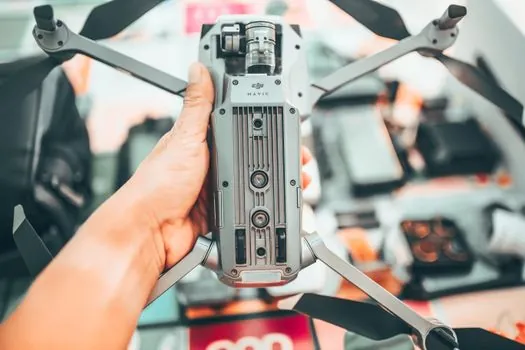
There is no single number to quote: drone market share is reported by segment, and the segments are consumer (DJI dominant, Autel second), commercial prosumer (DJI plus Autel plus emerging Chinese OEMs), industrial / military propulsion (Orbital, Northwest UAV, UMS Skeldar, Rolls-Royce, GE Aviation, 3W International, UAV Engine Limited, PPS Aerospace, DJI), counter-drone (Thales, Leonardo, Rheinmetall, Dedrone, DroneShield, Blighter, Aaronia), and components (31-brand long tail led by CUAV, Holybro, T-Motor, Hobbywing on World Drone Market's catalog) [S1][S2][S3].
For procurement, the cleanest comparison is airframe brand versus total cost of ownership: DJI-class platforms ship with integrated gimbals, HD video links and mature SDKs at consumer pricing; Autel-class platforms compete on thermal and long-endurance variants; custom builders like HAVELI UAVs target education and specialized payloads at the cost of unit-volume pricing [S1][S4]. For component selection the same distributor catalog, with flight controllers from CUAV / Holybro / Pixracer, motors and ESCs from T-Motor / Hobbywing / Zingto, and ground stations from Skydroid / Radiomaster / SIYI, defines the practical 2026 ecosystem [S1].
Limits of the public 2018 data and what 2026 buyers should track
The 2018 AskCI propulsion and counter-drone reports name the manufacturer set and the application split, but leave the headline dollar figures as 'xx million US$', so they cannot be cited as a 2026 share number [S2][S3]. The 53.2% CAGR figure in the counter-drone report is forecast-period, not realized, so it is useful only as a directional growth signal, not as a current market-share input [S3].
Trackable next signals for a 2026 reader: (1) whether Autel Robotics expands its share on World Drone Market's brand list relative to DJI listings, (2) whether the Skydroid GR02 relay receiver (documented 2026-08-05 in the same catalog) gains traction for beyond-visual-range operations, and (3) whether custom builders like HAVELI UAVs shift from education-tier to industrial-payload-tier contracts given their MeitY Startup Hub affiliation [S1][S4]. A separate procurement thread worth tracking is how the 31-brand component long tail consolidates: flight-controller and motor/ESC categories are most exposed to M&A because the technical differentiation is thin.
Spec-level background on the components involved: pressure transmitter, flow meter, and industrial valve.
Related analysis: Linear Guide Certification Checklist for Servo Positioning Axes.