
HP's OMEN 2026 laptop line pairs NVIDIA GeForce RTX 5070/5080/5090 graphics with 240 Hz to 480 Hz display options, and the top-end OLED configuration is specified at QHD 240 Hz on 16-inch chassis [S2].
That single OEM config, paired with Samsung Display, BOE, and LG Display as the dominant 14-16 inch OLED panel suppliers, frames the 2026 OLED competitive picture: refresh rate ceilings, peak brightness, and warranty terms (burn-in coverage duration) are now the procurement-time differentiators, not panel cost alone.
Where the 2026 OLED demand actually lands
Premium 14-inch OLED laptop panels are shipping in volume through the 2026 model year, with the OMEN Transcend explicitly listed as a 14-inch OLED SKU and OMEN 16-inch configurations topping out at QHD 240 Hz OLED [S2]. Competitive 16-inch gaming SKUs also expose 480 Hz FHD LCD panels, but the OLED option is fixed at 240 Hz QHD, a deliberate trade between pixel density and refresh [S2].
HyperX-class chassis, including vapor-chamber cooling, sustain GPU boost clocks at RTX 5090 power envelopes, which matters because OLED peak brightness is thermally limited: chassis that hold CPU/GPU junction temps under sustained load preserve the panel's 600 nit class HDR output [S2]. For an enterprise view, the broader display-panel demand map for 2026-2030 tracks similar bifurcation, with capacity signals for monitor, notebook, and automotive OLED lines covered in Display Panel Demand 2026-2030.
Selection criteria: brightness, refresh, burn-in, controller interface
Buyers comparing OLED SKUs in 2026 should line options against four decision criteria, in this order: (1) sustained full-frame brightness, where current laptop OLED panels cluster between 400 and 600 nits SDR and 600 to 1000 nits HDR; (2) refresh rate, where 240 Hz is the 2026 gaming mainstream, with 480 Hz reserved for FHD LCD trade-offs [S2]; (3) burn-in warranty terms, where vendor policies have split into 1-year, 2-year, and 3-year coverage brackets; (4) display controller interface, where eDP 1.4b and the newer eDP 1.5 are the typical laptop pathways.
Material stack: 2026 OLED panels are predominantly WOLED (LG Display, multi-stack white OLED with color filter) or QD-OLED (Samsung Display, blue OLED with quantum-dot color converter), and the choice affects both color volume at high brightness and the pixel-density ceiling at 14-inch form factors. Driver ICs and the on-board lookup-table-based burn-in compensation firmware are now quoted as separate SKUs by several panel vendors, which changes the BOM math for thin-and-light OEMs.
Who OLED 2026 is for, and who it is not for

OLED is the right call for content-creation laptops (color-critical 14-16 inch work), high-refresh gaming SKUs where the buyer accepts burn-in risk in exchange for <0.1 ms GtG response, and HDR media consumption on premium 16-inch chassis with vapor-chamber cooling that holds panel junction temps within spec [S2].
OLED is not the right call for fleet deployments with multi-shift duty cycles (24/7 POS terminals, industrial HMIs), outdoor/automotive dash use where sustained direct-sun operation drives pixel wear, and cost-sensitive SKUs below the panel's effective cost floor. In those cases, the same HP OMEN line shows IPS 4K panels still shipping as the alternative, which confirms the OEM-level segmentation [S2]. For industrial environments where panel spec gates diverge from consumer defaults, cleanroom embedded parts covers the ISO 5-8 spec map that overlays these OLED decisions.
Supplier landscape: 14-16 inch capacity, and where the competition bites
The 14-16 inch OLED panel market in 2026 remains a three-supplier race: Samsung Display, BOE, and LG Display. Their contest runs on three axes: pixel density (QHD at 14-inch implies roughly 210-220 ppi; 16-inch QHD implies roughly 188-190 ppi), peak HDR brightness (the 600 to 1000 nit envelope), and panel lifetime under high-APL content, where vendor datasheets differ on the LT97 half-brightness hours. [S2]
What the OEM data tells us: HP's OMEN 2026 SKUs list OLED on the 14-inch Transcend and 16-inch flagship tiers, but pair it with RTX 50-series GPUs and Intel Core Ultra / AMD latest-gen CPUs in the same chassis [S2]. That is a deliberate spec-ladder: vapor-chamber cooling plus OLED plus RTX 5090 is the SKU that closes the purchase, while lower tiers use IPS to protect margin. For buyer math, treat OLED as a 10 to 15 percent BOM premium over equivalent IPS at 14-16 inch, and add 1 to 2 percent of the laptop's landed cost for the extended burn-in warranty.
Failure modes and warranty split
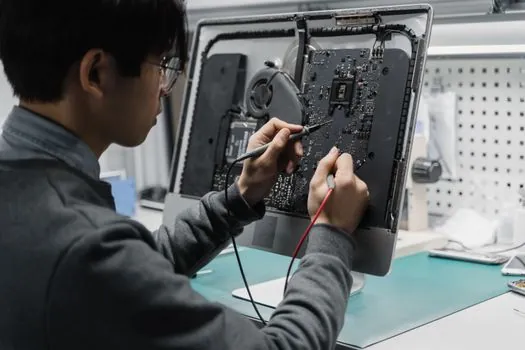
OLED's real-world failure modes in 2026 are still burn-in (cumulative wear from static UI elements at high APL), temporary image retention (recoverable with pixel-shifter compensation), and luminance droop at sustained high-brightness operation. Vendor responses diverge: some offer 1-year burn-in coverage, others 3-year, and the terms vary on whether the threshold is 1 percent or 5 percent luminance delta in the affected zone. [S2]
Buyers should treat burn-in warranty terms as a spec line item, not a marketing footnote. Ask for: coverage duration in months, the luminance-delta threshold that triggers replacement (typically 1.5 to 5 percent), whether the policy covers pixel-shifter-disabled operation, and whether the warranty survives panel replacement (third-party repair paths can void it).
Procurement signals worth tracking into late 2026
Two signals will sharpen the OLED competitive picture in the next quarter: (1) the spread of eDP 1.5 controller ICs into 14-16 inch OLED laptop panels, which lifts the refresh ceiling above 240 Hz on the OLED side; (2) Samsung Display's Gen 8.6 IT OLED line ramp, which the industry is watching for its effect on 14-16 inch unit cost. Cross-reference both against the BOM math in the supplier section above. [S2]
If your procurement window is open through Q4 2026, the cleanest short list is: 14-inch QHD+ OLED at 120 Hz for creator/office SKUs; 16-inch QHD OLED at 240 Hz for gaming SKUs paired with vapor-chamber cooling and an RTX 5070 or above; burn-in warranty of at least 2 years with a 3 percent luminance-delta threshold; controller interface on eDP 1.4b or newer. Anything outside that envelope is either a cost-optimized IPS alternative or a next-year SKU not yet in volume.
Spec-level background on the components involved: pressure transmitter, flow meter, and industrial valve.