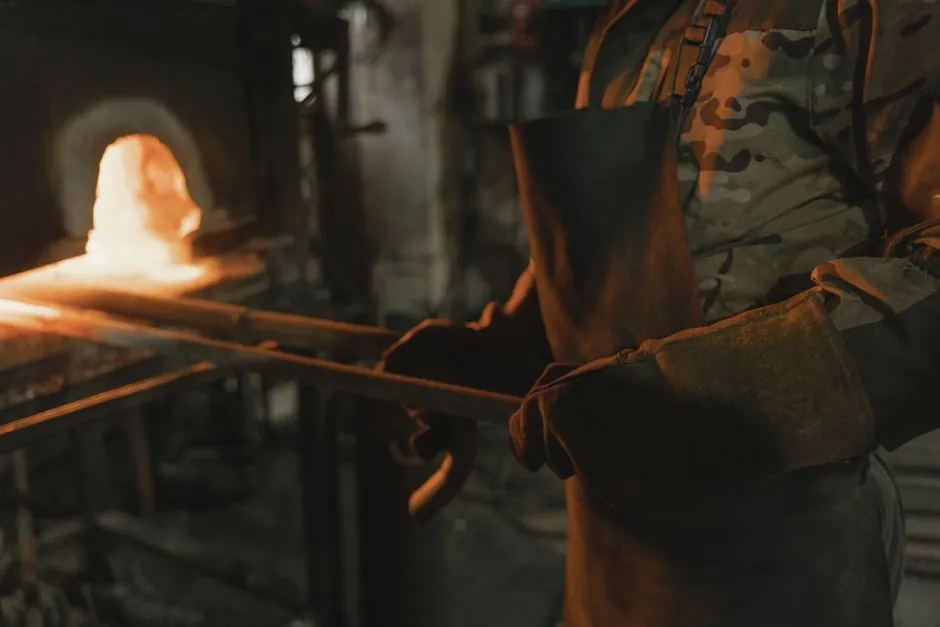
For aluminum solution heat treating, the two dominant equipment choices are the drop bottom furnace (elevated chamber over a quench tank) and the roller hearth furnace (continuous conveyor of externally driven rolls through heating and cooling zones), with maximum design temperatures of 650°C (1200°F) and a typical temperature uniformity requirement of ±6°C (±10°F) per OEM specification practice [S1].
Drop bottom furnaces handle 5 to 100+ ton single loads with vertical hoist loading through a bottom opening, and are the traditional configuration for thick-section aerospace and large automotive castings [S6]. Roller hearth furnaces move individual workpieces on externally driven rolls through preheat, soak, and cool sections, and are the standard choice for high-volume, lighter-gauge aluminum components and continuous coil-style flows [S4][S5].
Quench Delay and What It Costs You
Quench delay is the make-or-break spec for aluminum solution treatment, because the interval between the doors opening and the load being fully submerged determines how much supersaturation is retained in the alloy [S3]. A 6000-series extrusion, thin sheet, or thin-wall casting typically needs 5-7 second delays to avoid uncontrolled precipitation during transfer; a thick-section forging or large structural casting can tolerate 15-20 seconds or longer [S3]. Drop bottom configurations deliver 5-10 second total quench delay in practice, the fastest transfer time of any common aluminum heat-treat layout, because the load drops straight down into a quench tank mounted directly under the chamber [S3].
Roller hearth lines, by contrast, are continuous, so each workpiece exits the soak zone at a defined temperature and travels through a controlled cool or integrated spray/immersion quench at the unload end, with no single batch transfer event. The trade-off is geometric: roller hearth delays are functions of conveyor speed, zone length, and quench design, not a single drop event, and throughput is set by the slowest section. For a comparison with another spec-driven process debate, see FKM vs EPDM gaskets in mineral oil, where material selection is driven by a single limiting property, similar in spirit to the quench-delay-first rule here.
Temperature Uniformity and Operating Ceiling
Aluminum solution treatment happens between roughly 460°C and 540°C for common 2xxx, 6xxx, and 7xxx alloys, well below the 650°C (1200°F) maximum design temperature used by general-purpose aluminum heat-treat furnaces [S1]. OEM practice on aluminum solution and age systems targets ±5°F (±2.8°C) for tight metallurgical repeatability, while the broader industry baseline for aluminum solution furnaces is ±6°C (±10°F) across the work zone [S1][S2].
Roller hearth furnaces built specifically for aluminum and low-temperature service typically do not operate above 1400°F (760°C) and are constructed with different refractory and fabrication standards than the 1400°F+ units used for steel annealing and neutral hardening [S5]. Direct-fired gas, gas radiant tube, and electric ribbon resistance heating are all available, and preheat chambers can run on direct or indirect heating under air or controlled atmosphere, with off-gas handling for burn-off of residual blanking fluids when needed [S4][S5].
Capacity, Footprint, and Loading Geometry
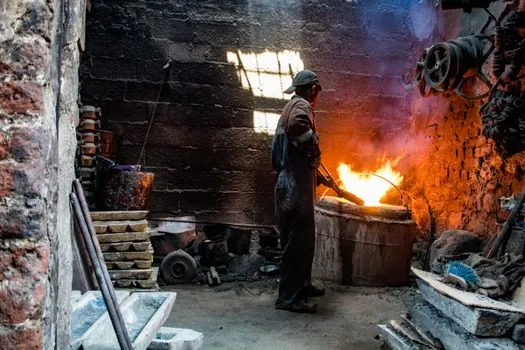
Drop bottom furnaces are sized by single-load mass: 5 ton units for small batch heat treating, 100+ ton units for massive aerospace and forging loads, with the heavy-duty lifting mechanism, fast-acting bottom doors, and vertical pit or platform the dominant cost drivers [S6]. Because the quench tank sits directly below, building height is the geometric constraint, and side-by-side installation of multiple drop bottom units is the standard way to scale throughput in a solution-treat department [S1].
Roller hearth furnaces are sized by throughput (typical aluminium heat-treat lines run from 1-2 t/h up to 5-50 t/h depending on part cross-section, soak length, and cooling capacity), and the conveyor length scales directly with the number of process zones, with no cumulative chain or belt tension limit because the rolls are externally driven and stay in their own temperature zones [S4]. Modular, skid-mounted furnace sections are preassembled at the factory and bolted or welded together on site, which shortens installation time compared to a stick-built pit furnace [S4].
Throughput Profile: Batch vs Continuous
Drop bottom furnaces are inherently batch: one load at a time per unit, with the next load staged in the queue while the current one soaks and quenches, and cycle times set by the slowest alloy in the schedule. Front-loading batch furnaces sit in the same family but trade the vertical drop for a horizontal roller-rail or push/pull transfer from the chamber into a side-mounted quench tank, which lowers the building height but lengthens the quench delay, an issue for thin material [S1].
Roller hearth lines are continuous: parts enter the preheat section, soak, and exit through the cooling or quench zone at a steady rate governed by the slowest section, and individual roll drives can be started, stopped, reversed, or oscillated to run different zones at different speeds, which lets one line run mixed cycle recipes in adjacent pockets [S4][S5]. For plants running a single dominant alloy and a tight cycle, a roller hearth generally wins on €/kg processed; for plants running a job-shop mix of large varied loads, a drop bottom or front-loading batch layout is more flexible.
Quench Media, Delay Sensitivity, and Part Geometry
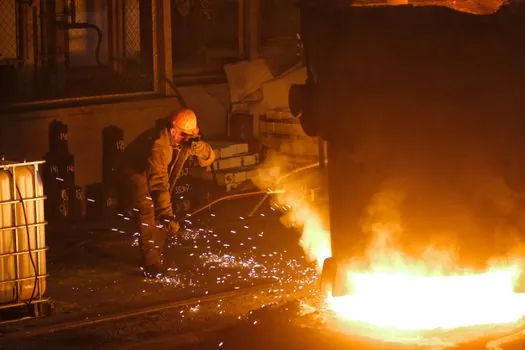
The default quench media for aluminum solution treatment is water, with polyalkylene glycol (PAG) polymer solutions used where slower cooling rates are required to reduce distortion in complex shapes, and all installations need adequate agitation to break the insulating vapor blanket that forms at the part surface at the moment of immersion [S1]. Some alloys, particularly certain 2xxx and 7xxx compositions, require elevated-temperature quench baths to control residual stress, which means the quench tank itself needs a heating (and sometimes a cooling) system, not just a circulation pump [S1].
Quench-delay tolerance scales with the square of the section thickness, which is why the OEM guidance splits cleanly: 5-7 s for thin sheets and extrusions, 15-20 s or longer for heavy castings and forgings [S3]. A drop bottom furnace is the only layout that reliably hits the 5-7 s window for loads above a few hundred kilograms, while a roller hearth line with an integrated spray or short-immersion quench can deliver comparable effective delays for smaller, individual workpieces that travel one per roll pocket. For plants weighing cycle time against capital, the engineering question is not "which furnace is better" but "what is the thinnest section in your mix, and what is the longest quench delay that section can survive."
Standards, Specification, and Sourcing Cues
Aluminum solution-treat furnaces are generally specified against CQI-9 for automotive applications and AMS 2770 / AMS 2771 for aerospace heat treating of aluminum alloys, with temperature uniformity of ±10°F (±6°C) or tighter as a baseline acceptance criterion [S1]. Atmosphere-controlled variants, used where surface oxidation or alloy-specific protection matters, draw on the same gas-atmosphere roller hearth and batch furnace engineering used for steel annealing, but with the 1400°F (760°C) refractory and insulation package appropriate to aluminum service temperatures [S5].
OEMs active in this space include Nutec Bickley, AFC-Holcroft, SECO/WARWICK, Can-Eng Furnaces, and CHE Furnaces, with drop bottom units commonly sourced for 5-100+ ton batch heat treating and roller hearth lines for continuous aluminum and low-temperature service [S1][S2][S4][S5][S6]. For plants with a long-term electrification roadmap, electric ribbon resistance or indirect gas radiant tube heating is the safer bet on the gas aluminum melting furnace side, because direct gas firing introduces products of combustion that can attack sensitive alloys, and the same constraint applies inside the solution-treat furnace [S3].
Decision Matrix: Which One to Specify
Pick a drop bottom furnace when: the thinnest section in your mix needs ≤10 s quench delay, your typical load is 1-100+ tons, your alloy mix includes thick-section aerospace or forging work, and your plant has the headroom for a pit or elevated platform with the quench tank directly below [S1][S3][S6]. Drop bottom also wins for plants running 2-5 large batch units in parallel, because each unit is an independent scheduling node and a single furnace can be down for maintenance without stopping the line [S1].
Pick a roller hearth furnace when: you run 1-50 t/h of thin extrusions, sheet, small castings, or forgings, your alloy mix is dominated by a single recipe or a small family of recipes, and your site constraints rule out a deep pit for a drop bottom layout [S4][S5]. Roller hearth also fits plants that need to integrate preheat, soak, and controlled cool in a single continuous footprint, with modular sections that can be added later as throughput grows [S4].
Hybrid option: a front-loading batch furnace (horizontal roller-rail or push/pull into a side quench tank) splits the difference, lower building height than a drop bottom, faster load handling than a manual batch, but at the cost of longer quench delays that exclude the thinnest sections [S1]. For a related decision where a single physical limit drives the spec, see full complement vs caged roller bearings, which uses the same one-parameter-first selection logic.
Two trackable signals for 2026 spec work: (1) electric and indirect-gas heated drop bottom furnaces are being specified more often for new aerospace aluminum lines, driven by tighter surface-chemistry requirements that exclude direct-fired combustion products [S3]; (2) lower-temperature roller hearth variants (≤1400°F / 760°C) with aluminum-specific refractory packages are now an established alternative to batch lines for high-volume automotive extrusion and sheet heat treating, not just a steel-annealing tool [S5].
Component reference pages worth checking: aluminum die casting machine.