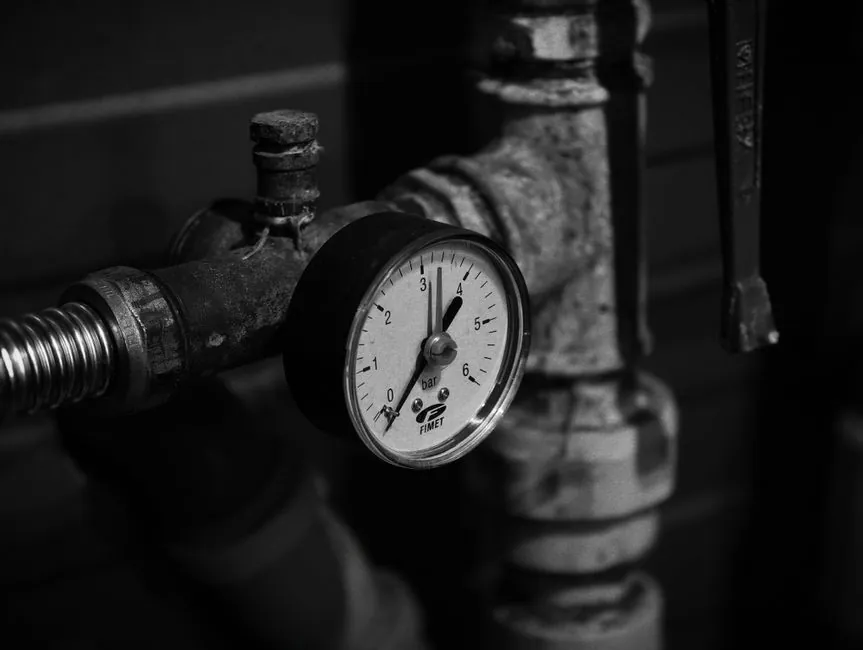
Dry air or nitrogen pressurizes a sealed low-pressure die casting furnace through 0.02–0.1 MPa, with 200–1,000 mbar identified as the usual low overpressure range [S2][S3][S4].
Dry air or nitrogen can pressurize the furnace to fill the die from below, with nitrogen providing an inert atmosphere.
Pressure Requirements and Fill Physics
The pressure differential across the melt must overcome the hydrostatic head plus frictional losses in the riser tube and die passages. For liquid aluminum at approximately 2,400 kg/m³, a 1.0 m lift requires about 24 kPa, or 0.024 MPa, before flow losses are added [S4].
Published process ranges include approximately 0.1 MPa, or 14.5 psi, for low-pressure die casting and 200–1,000 mbar for a pressurized low-pressure gravity die casting furnace [S2][S3]. Low-pressure die casting fills the cavity from below at velocities measured in centimetres per second, with the metal rising through the riser tube and displacing air ahead of it.
The overpressure is maintained until the casting has solidified or solidification in the gate nozzle is complete. Releasing pressure allows unsolidified metal in the stalk to drain back into the bath, leaving only a small sprue stub as scrap [S2][S3].
Dry Air: Economic Operation Within a Qualified Window
Dry compressed air is a qualified pressurizing medium because dry air or inert gas can be admitted directly into the sealed crucible to drive metal upward without a mechanical injection piston [S1][S7].
The choice of pressurizing gas should be qualified to the specific casting process. That economic advantage does not remove the need for alloy-specific trials, since air can oxidize the melt while a clean gas can improve purity and surface quality [S1].
Air is oxidizing, whereas nitrogen can provide an inert atmosphere. In those cases, the gas decision must follow the approved casting process rather than the lowest utility price alone [S4][S6].
Nitrogen: Lower Oxidation with Added Gas Cost
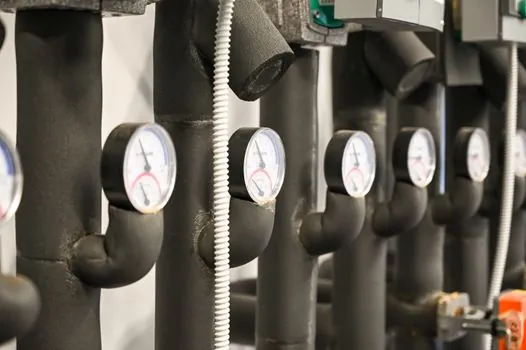
Nitrogen is an inert pressurizing gas that can displace the atmosphere above the melt and is explicitly identified as an alternative to dry air in LPDC furnace systems [S4][S7]. Because gas pressure acts on the whole bath, metal is drawn from below the surface, while floating dross and oxide remain at the bath surface rather than entering the riser tube [S4].
Nitrogen can be used when an inert furnace atmosphere is required. LPDC uses low-pressure air, typically about 0.1 MPa, and a low-pressure gravity die casting furnace generally operates with an overpressure of 200–1,000 mbar.
The trade is operating expense and supply complexity. A nameplate pressure rating alone is not enough: the furnace, seals, inlet valve, controls, and relief system must all remain compatible with the selected gas and the validated maximum pressure.
Gas Selection Against Four Decision Criteria
On oxidation control, nitrogen wins because it provides an inert atmosphere over the melt, while dry air remains acceptable only where oxidation has been qualified for the alloy and product [S1][S4][S7].
On process familiarity, the better choice is the gas already validated for that furnace and casting family. Pressure control, die venting, and directional solidification are important considerations in LPDC die design.
Alloys, Products, and Operating Limits
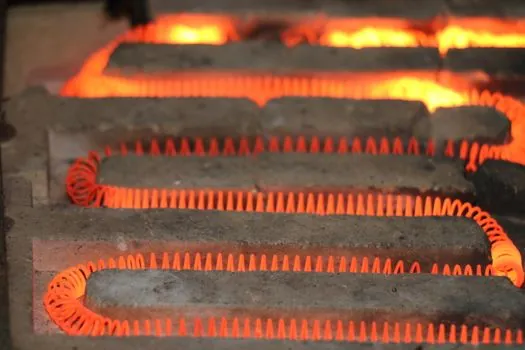
Low-pressure die casting is used mainly for light-metal castings, particularly aluminum alloys, and also for magnesium, with documented casting weights spanning approximately 1–70 kg. Typical products include aluminum wheels, crankcases, cylinder heads, pump casings, and chassis parts [S3].
Low-pressure die casting fills a permanent metal mould from below using gas pressure applied to the surface of a sealed melt bath. Unlike the violent, millisecond fill of a high-pressure machine, LPDC fills from below at velocities measured in centimetres per second, with the pressure required to lift the metal governed by the hydrostatic relation.
Pressure alone does not control casting quality. The permanent die must vent gases released during pouring, and thermal balance must promote solidification from extremities toward the riser to avoid shrinkage. Local air or water cooling may be required, and modern solidification simulation can be used to develop that control [S2].
Furnace, Control, and Maintenance Requirements
The dosing furnace forms part of a sealed pressure vessel, and the riser or stalk extends from its top plate into the melt. Before filling, the process includes sealing the crucible, removing impurities from the riser tube, measuring liquid level, performing a tightness test, preparing the die, and matching the die to the furnace [S1][S2].
Bath level must be monitored or corrected because each casting lowers the melt level and changes the filling-pressure correction. The die is normally equipped with pneumatic or hydraulic closing and core-pull units, water or compressed-air cooling, and temperature sensors, while the casting table supports a lower die half connected to the stalk and sprue [S3].
For an existing furnace, verify the rated pressure capability, seal condition, control-valve response, relief arrangement, gas dryer performance, and process limits before changing gases. Use dry air only with the approved gas-quality and dew-point limits, and require nitrogen conditions to remain within the qualified operating envelope. This approach is consistent with the broader distinction between low-pressure die casting machines and the sealed furnace and pressure controls that perform the actual filling operation [S2][S6].
Selection Rules by Application

The gas used for LPDC must be qualified to the specific alloy and casting process, and nitrogen or dry air may be used as the pressurizing gas. Nitrogen may be selected when an inert furnace atmosphere is required.
Do not choose a gas from a generic price comparison alone. A valid decision uses the same casting weight, fill time, pressure profile, hold duration, die configuration, alloy, and acceptance criteria. If the trial must first establish the operating window, compare trial results from both gases and record pressure stability, melt-level correction, oxide behavior, surface condition, internal soundness, and final mechanical-property requirements.
For a new installation, compare a nitrogen-ready furnace package with an on-site dry-air system using installed gas cost, consumption per cycle, maintenance labour, supply failure response, and the commercial impact of rejected castings. The decisive signal is not gas purity alone, but repeatable pressure control and validated metallurgical quality at the required production rate.