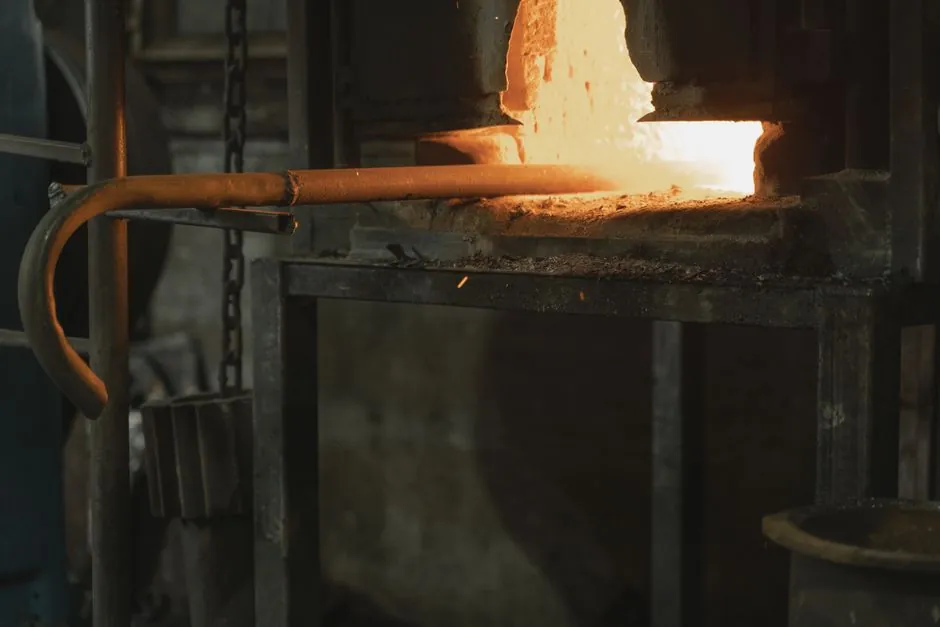
Furnace selection influences metal loss due to oxidation, metal quality, and maintenance requirements in die-casting operations [S1].
For low pressure die casting, the furnace must combine melting, holding, temperature control, and metal delivery, with capacity up to 1,500 kg and temperature capability up to 850°C in a cited commercial specification [S3].
What the Furnace Must Deliver
A low pressure die casting furnace is not only a melting vessel. It supports melting, holding, and controlled delivery of molten metal into casting dies, so the furnace selection must cover the complete metal-temperature and metal-quality envelope rather than heater capacity alone [S3].
For a complete machine selection, the furnace should be evaluated together with the low pressure die casting machine, because holding capacity, dosing requirements, and the expected number of shifts affect the economic comparison.
Energy and Operating Cost
Molten metal processing is energy intensive, and roughly 25% of die-cast product cost can be traced to some form of energy consumption in the cited US Department of Energy study [S1]. This makes furnace efficiency, insulation, standby losses, and the number of operating hours part of the capital-cost calculation rather than secondary operating details.
Natural gas is a major energy input for aluminum facilities using gas melting and holding furnaces, so the comparison must be made on delivered energy cost, not simply on electricity versus gas bills [S2]. The cited report treats melting and holding energy as separate process streams and identifies alloy, starting material, process flow, casting yield, scrap rate, cycle time, shift pattern, and machine size as variables affecting energy consumption [S1].
Electric resistance equipment can reduce combustion-related oxidation and dross, but a larger electrical load may require capacity charges, a transformer upgrade, or a site power review. Gas-fired equipment can reduce electrical demand, but burner combustion, flue-gas management, combustion safety, and local gas availability must be included in the comparison. The applicable utility tariff, furnace duty cycle, and measured annual throughput should determine the result, not a generic energy assumption.
Metal Quality and Oxidation Control
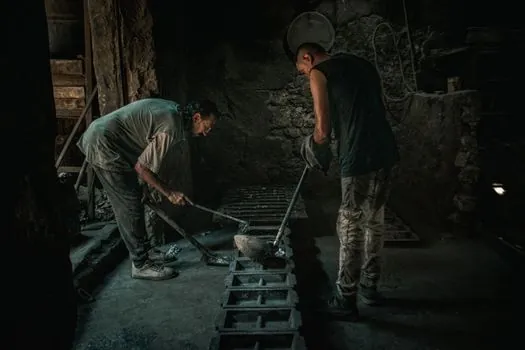
Furnace selection influences metal loss due to oxidation in die-casting operations [S1]. This is a direct process argument for electric resistance melting when scrap value, chemistry control, or surface quality are critical.
In a comparison of A356 aluminum melted in silicon-carbide crucibles, tensile strength, yield strength, and elongation were almost uniformly superior in the electrically melted samples regardless of mold type [S4]. The electric-melted test bars showed almost uniformly superior tensile strength, yield strength, and elongation [S4].
For an LPDC furnace, refractory design, crucible sealing, lid geometry, atmosphere control, transfer practice, and routine dross removal therefore affect the result as much as the nominal fuel label.
Electric Resistance Versus Gas-Fired: Decision Matrix
Electric resistance melting produced almost uniformly superior tensile strength, yield strength, and elongation than gas-fired melting in the cited A356 aluminum study [S4]. The A356 comparison provides a specific quality result, with gas-melted mean mechanical properties at 80% of electric-melted values under the stated test conditions [S4].
Controls, Safety, and Maintenance
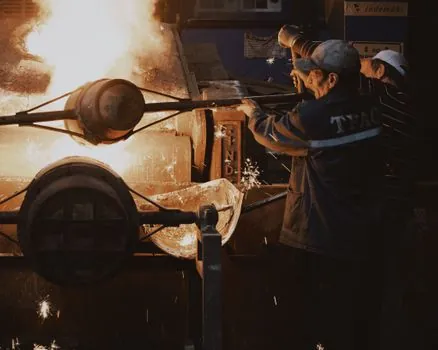
Modern furnace design depends on precise temperature monitoring and regulation, automated metal handling, energy efficiency, and reduction of operator exposure to molten metal [S5].
Electric resistance equipment shifts maintenance attention toward electrical connections, elements, controls, insulation condition, and cooling components. Gas-fired equipment adds burner alignment, combustion adjustment, ignition and flame supervision, combustion-air provisions, and flue-gas inspection. Neither heat source removes the need for refractory inspection, crucible or lining maintenance, temperature calibration, metal chemistry control, and dross management.
For a production machine, the furnace specification should also identify the applicable gas and electrical safety requirements, hazardous-area classification where applicable, local emissions permissions, and emergency procedures. The cited research does not establish a universal standard for the furnace comparison, so the equipment supplier and plant authority should define the project-specific code and site acceptance criteria.
Application Fit and Failure Modes
Electric resistance is most defensible for aluminum wheels, structural castings, and other applications where oxidation-related inclusions can cause scrap, rework, or property variation. The commercial LPDC furnace specification covers aluminum and non-ferrous applications, with capacity up to 1,500 kg and a temperature range up to 850°C [S3].
Gas-fired melting can remain practical for foundries with established gas infrastructure and a process tolerance for the additional oxidation and contamination risk. It is not the preferred choice when scrap loss, die cleanliness, or certified mechanical properties outweigh the convenience of fuel access. The A356 test provides a caution against assuming that equal pouring temperature and equal crucible material guarantee equivalent cast properties across the two heat sources [S4].
Failure modes differ on both sides. Electric systems can suffer element degradation, poor connections, control drift, and electrical overload. Gas systems can suffer burner instability, incomplete combustion, combustion-product leakage, flue-gas restrictions, and unsafe fuel-air conditions. Process failures can include excessive dross, oxide films, hydrogen porosity, temperature drift, refractory wear, and inconsistent metal delivery [S1][S4].
How to Specify the Furnace
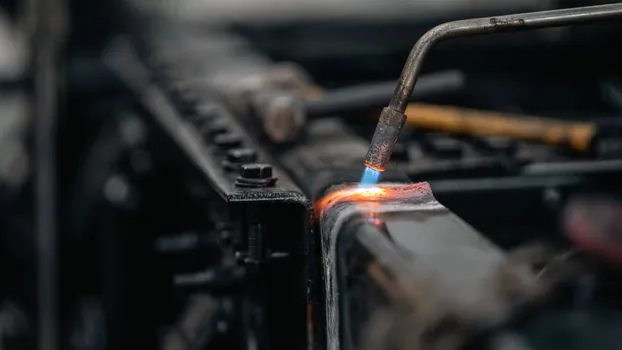
Specify the furnace by required aluminum throughput, holding capacity, allowable dross rate, target metal temperature, production hours, and electrical or gas service limits before comparing equipment prices. The cited commercial configuration provides concrete reference points of 415 V, up to 1,500 kg, up to 850°C, PLC control, high-density ceramic-fiber insulation, and crucible or tilting-chamber options [S3].
Request an energy model that separates melting from holding and includes alloy, starting charge form, scrap recovery, shifts per day, operating days per month, cycle time, and expected casting yield, because those are the variables identified by the US Department of Energy die-casting study [S1]. Include gas consumption and burner service for the gas option, and peak electrical demand, power quality, standby consumption, and control-system integration for the electric option.
Require process validation before acceptance: melt A356 or the production alloy, verify temperature repeatability, control metal chemistry, inspect dross and oxide behavior, and compare test-bar properties against the electric or gas baseline. A production trial is the practical check because the 80% mechanical-property result came from a controlled A356 comparison rather than a universal rating for every alloy or furnace [S4].
Track furnace input energy per kilogram of usable metal, dross and oxidation-related scrap, combustion or electrical maintenance hours, and measured casting-property variation over the first 3 operating months; those signals reveal whether the selected furnace is delivering the expected process and cost advantage.