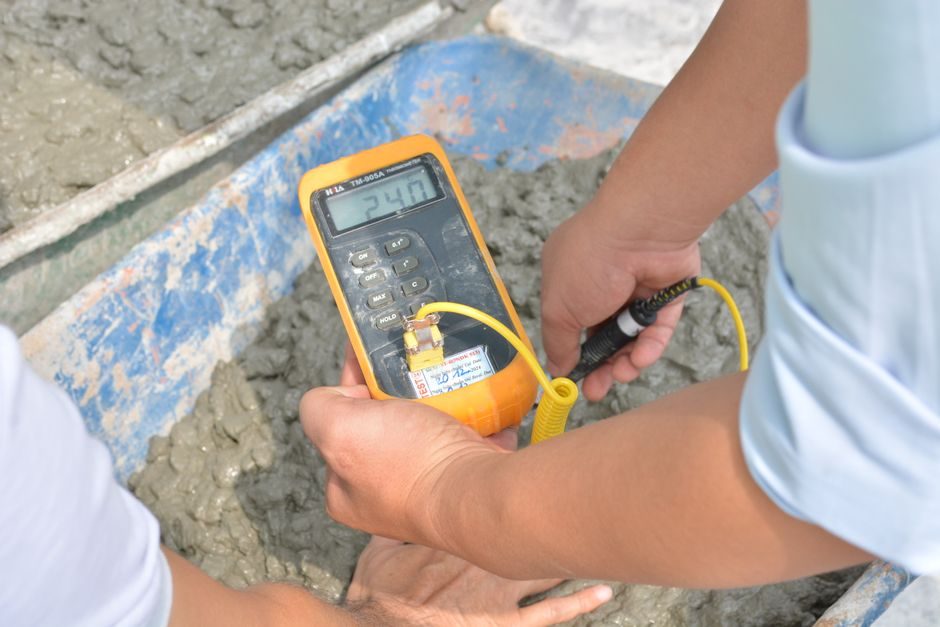
Dry-mix mortar selection for housing drives the final three failure modes on site — bond loss, shrinkage cracking, and water ingress — and each one maps back to a specific resin-modifier dose and aggregate grading on the bag [S1][S2].
WACKER Academy published two relevant 2026 seminar programmes on 2026-07-13 and 2026-07-14 covering "Special Applications of Dry-Mix Mortars" and "Dry-Mix Mortars with VINNAPAS® Dispersible Polymer Powders", with a stated prerequisite of basic chemistry knowledge and a two-day theory-plus-practice format [S1][S2]. On the supply side, Canadian silo specialist Maxi-Mix® published its 24/7/365 turnkey silo and on-site refilling system for standard and specialty mortars and grouts on 2026-07-22, while BHM (dry-mortar-plant.com) lists automatic packing plants, bulk storage silos, cement silos, and dust collectors on its 2026-08-01 product index [S3][S5]. The decision is therefore not "cement or polymer" but which class of factory-blended dry mortar — defined by binder, additive package, and intended substrate — fits the dwelling's exposure class.
What "Dry-Mix Mortar" Means on a Housing Site
Dry-mix mortar is a factory-blended, factory-batched combination of cementitious binder, graded sand, mineral additions, and chemical admixtures that the worker adds water to on site [S1]. WACKER frames the category by application rather than by chemistry, with the 2026-07-13 seminar grouping "special applications" by end-use rather than by binder type, and the 2026-07-14 session explicitly teaching how a dispersible polymer powder (DPP) re-disperses in the mix water and forms a continuous polymer film alongside the cement hydrate [S1][S2]. The reference foundation for the category — and the one that every specifier on a housing project reaches for first — is the dry mortar definition page, which fixes the cement:sand:admix blend ratios that govern bag-to-bag consistency.
Two upstream process choices set the ceiling on field performance: (a) the mixing intensity of the factory batch — and Chinese equipment suppliers such as the JHW1000 cylinder dry-mix mortar mixer (≤10.5 kW supporting power, 1 m³ working volume) show the type of horizontal ribbon/cylinder geometry that produces a homogeneous dry premix before bagging [S4]; and (b) the silo logistics on site, where a Maxi-Mix®-style sealed silo and pneumatic refill cuts the open-bag waste and water-dose variance that drive most housing-defect callbacks [S3].
The Four Functional Classes Used on a House
Residential dry-mix mortars split cleanly into four functional classes, each with a different dominant failure mode and a different spec line on the bag [S1][S2]:
(1) Thin-bed tile adhesives — C1 (normal) and C2 (improved) per EN 12004 — used for ceramic and porcelain wall and floor tiling. The C1/C2 split is the single most important code on a tile adhesive bag and is the dividing line between "basic" housing-bathroom duty and improved bond / open time for large-format or exterior-grade tile.
(3) Masonry mortars and thin-bed block-laying mortars — including lightweight LW mortars — supplied either in bags or by silo, where the silo-fed option (Maxi-Mix® class) is sized for continuous 24/7 housing-start consumption and cuts open-bag water-dose drift [S3].
(4) Screed, self-levelling, and grout mortars — including the rapid-set and grout-filling cements in the Maxi-Mix® product line — for the final floor flatness and the structural grouting of door frames, lintels, and bearing pockets [S3].
Selection Criteria Mapped to the Substrate

WACKER's 2026-07-13 special-applications session explicitly organises the product family by end-use, not by chemistry, because the housing specifier's real decision variables are substrate, exposure, and method of application [S1]. The first hard cut is between an absorbent substrate (AAC block, fired clay brick, lime-sand brick) and a non-absorbent or sealed substrate (extruded polystyrene, existing tile, dense concrete), because the open time and wetting-out behaviour of the mortar — and therefore the required polymer modification — are dominated by substrate suction.
The second cut is the exposure class: interior dry, interior wet (bathrooms, kitchens), and exterior ( façades, balconies, parapets). A bag stamped for "interior" use will not carry the water-resistance and freeze-thaw dose that an exterior façade render needs, and WACKER's 2026-07-14 programme trains the formulator to read those exposure-class boundaries directly from the DPP loading and grading curve [S2].
The third cut is the application method: hand-applied (hawk and trowel), machine-applied (continuous render pump), or silo-and-pump (closed-loop pneumatic). The Maxi-Mix® system on 2026-07-22 is built around the third option, with a turnkey silo and on-site refilling service that supplies "standard and specialty mortars and grouts" without on-site dry mixing [S3]. The fourth cut — and the one most often skipped — is the climate window at pour: above 5 °C and below 30 °C substrate temperature is the practical cement-hydration envelope; outside that band, the bag's nominal open time and pot life no longer hold, regardless of polymer modification.
Polymer Modification: Why DPP Dose Matters
Dispersible polymer powder re-disperses in the mix water and, on drying, forms a continuous polymer film that runs alongside the cement hydrate — that is the mechanism WACKER teaches in its 2026-07-14 two-day seminar on VINNAPAS® DPP in dry-mix mortars [S2]. The structural effect is measurable: higher DPP loading raises adhesion to smooth and non-absorbent substrates, increases flexural strength relative to compressive strength (so the mortar tolerates substrate movement), and reduces water uptake through the render skin.
For housing, three loadings bracket the practical choices [S2]: low-modification (≈2–5% DPP on binder mass) for renders on absorbent masonry where the substrate does most of the bond work; medium-modification (≈5–10%) for tile adhesives in the C1-improved / C2 band and for façade renders; and high-modification (>10%, often combined with a hydrophobic additive) for exterior tile adhesives, swimming-pool surrounds, and below-grade waterproofing renders. WACKER's academy note "Basic knowledge of chemistry" as the entry requirement is not boilerplate — reading the DPP dose-to-property map on a bag TDS is a chemistry task, not a procurement task [S2].
Equipment Path: Bag, Mixer, or Silo

For a single dwelling or a small infill, bagged product mixed with a paddle or a small batch mixer is the rational choice, and the JHW1000-class cylinder mixer at ≤10.5 kW and 1 m³ working volume defines the lower end of the equipment envelope a small contractor can run off single-phase or three-phase site power [S4]. For a housing estate of dozens of units, the silo route dominates: a sealed silo, a pneumatic refill, and a metered water-mix head on the discharge hose drive bag-handling labour to near zero and lock the water ratio out of operator hands [S3].
For a precast or panelised housing plant, the dry-mortar production line itself comes in scope: BHM's 2026-08-01 catalogue lists grinding machines, screw conveyors, bucket elevators, sand-drying machines, lacquer-paint mixers, dry-mortar mixers, full dry-mortar production lines, cement silos, automatic packing machines, dust collectors, stretch-pallet wrappers, bulk containers, and mobile dry-mortar storage tanks as a single integrated bill of materials [S5]. The dust collector is not optional — cement and silica dust at the bagging station are the dominant occupational-hygiene hazard on a dry-mortar line, and the collector's airflow rating sets the packing-machine feed rate.
Common Failure Modes and How to Spec Out of Them
Four failure modes account for the majority of housing dry-mortar callbacks. (a) Bond loss at the tile-substrate interface — the dominant cause is underspecifying the adhesive class (C1 specified where C2 is needed) or letting the open time exceed the skin-over window; the fix is class-correct adhesive plus a contact-area ≥80% wet-bed specification on large-format tile [S1]. (b) Shrack cracking on renders — driven by over-thick single-coat application, high water dose, or high-suction substrate; the fix is a two-coat render build-up with a DPP-modified base coat matched to a smoother top coat [S2]. (c) Efflorescence on masonry mortars — caused by water migration bringing free lime to the surface; the fix is a low-water-demand mortar with hydrophobic additive rather than a generic "general-purpose" bag.
(d) Grout and screed cracking around door frames and bearing pockets — caused by using a generic cement-sand mix where a low-shrink, polymer-modified grout is required; the fix is a purpose-made grout from the Maxi-Mix® specialty range, not a render mix shoveled into a pocket [S3]. Across all four modes, the recurring root cause is a generic bag specified where a functional-class bag was needed — the same defect pattern WACKER's 2026-07-13 special-applications syllabus is built to train out [S1].
Standards and Reference Documents
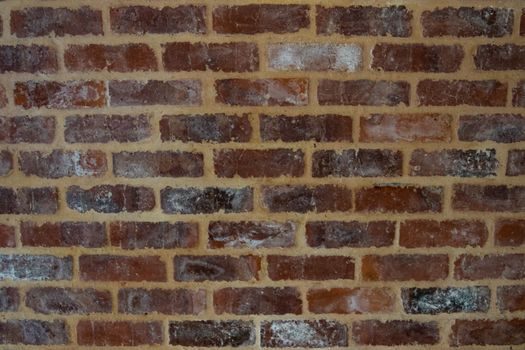
The product standards that govern residential dry-mortar specification are EN 12004 (tile adhesives, C1/C2 classification), EN 998-1 (rendering mortars, including thermal-insulating LW variants), and EN 13813 (screed mortars). DPP-modified systems are covered in EN 12004 by the C2/S1/S2 flexural-deformation sub-classes. Admixture-relevant reference is the WACKER 2026-07-14 syllabus itself, which is the publicly visible training envelope for the DPP formulator [S2]. The application-equipment envelope (silo, mixer, packing plant) is documented in the 2026-08-01 BHM catalogue, including dust-collector integration on the production line [S5].
For ready-mix or wet-mortar alternatives specified on the same housing contract, the boundary with ready-mix concrete is the maximum aggregate size and the water-binder ratio envelope — ready-mix concrete uses coarse aggregate, dry-mortar uses graded sand, and confusing the two at the ordering step is one of the most common procurement errors on a housing estate.
Decision Snapshot for the Specifier
For a typical single-family dwelling: interior wet areas → C2 tile adhesive (polymer-modified, low-dust), polymer-modified thin-bed block mortar, machine- or hand-applied lime-cement render with a DPP-modified top coat, and a rapid-set screed for the final floor flatness. For a multi-unit housing estate: same product classes, but specified through a Maxi-Mix®-class silo supply contract to lock water-dose and bag-handling labour out of operator hands, and with the full bag-to-silo logistics chain including dust-collected packing plant on the supply side [S3][S5]. The selection logic on a brick-and-block dwelling in a temperate climate starts with substrate suction and exposure class, and ends with the DPP dose on the bag — every other variable is downstream of those two.
The underlying component specifications are covered under dry type transformer.
For related coverage, see Instrumentation Cable Selection Guide: 2026 Spec Map for Signal, Control, and Fieldbus.