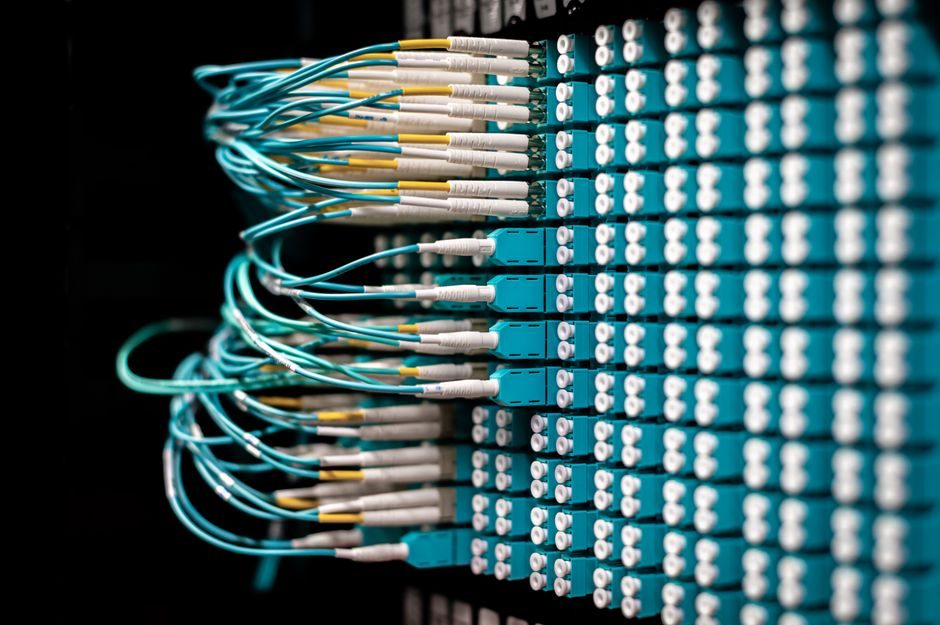
Specifying an instrumentation cable correctly means matching four variables — conductor cross-section, insulation polymer, shield topology, and armour or jacket — to the signal type, ambient temperature, and the routing path it will sit in. A 0.5 mm² tinned-copper twisted pair with overall aluminium-foil + drain wire + tinned-copper braid (the "OS" or "ISTS" pattern) is the de-facto baseline for 4-20 mA analogue loops, RTD leads, and low-speed digital fieldbus in 2026 [S2][S5].
The article below maps the selection decision tree as published across manufacturer datasheets, customs tariff listings, and engineering references for August 2026. It is written for instrumentation engineers, panel builders, and EPC procurement staff choosing between PVC, PE, XLPE, and LSZH constructions in cable tray, conduit, and direct-buried runs.
Conductor Size and Pair Count: Matching the Loop, Not the Catalogue
The smallest standard cross-section offered for multi-pair instrumentation cables in 2026 is 0.5 mm² (≈20 AWG); the most common upper bound is 2.5 mm² (≈13 AWG), with 0.75 mm² and 1.0 mm² dominating process-plant loops [S5]. The 12-pair × 2 × 0.5 mm² JVVP3-style cable remains a stock SKU for marshalling panels where multiple 4-20 mA channels share one overall jacket [S5].
Pair count drives both tray fill and shield effectiveness. A 2-pair cable is the right pick for a single differential RTD or a single HART point-to-point run; multi-pair (4, 8, 12, 24) is used to bundle several low-level signals into one pull to reduce gland count. Conductor material is virtually always copper — bare, tinned, or silver-plated — because aluminium is not specified for analogue signal cores in any of the 2026 manufacturer datasheets reviewed [S2][S5][S7].
Insulation and Jacket: PE, XLPE, PVC, LSZH, and FRLS
Polyethylene (PE) insulation remains the default for indoor, dry-location signal cables because of its low dielectric constant and good flexibility at sub-zero temperatures; global spec databases list 92 current PE-insulated control and instrumentation SKUs as of June 2026 [S2]. PVC is the workhorse for general-purpose indoor runs but is increasingly disallowed in tunnels, underground stations, and offshore modules where LSZH (Low Smoke Zero Halogen) jackets are mandated.
For higher conductor temperature ratings — 90 °C continuous instead of the PVC 70 °C ceiling — XLPE (cross-linked polyethylene) is specified, particularly in solar farms, switchgear interconnects, and hot-running trays. The "FRLS" (Flame Retardant Low Smoke) sheathed cable family and dedicated Fire Survival Cables (rated to 950 °C for 3 hours per IEC 60331) are now catalogue staples for refinery and metro projects, with Indian and Chinese manufacturers each publishing complete FRLS and FS lines [S3][S7]. Insulation choice also dictates gland compatibility — see the cable gland spec page for the matching armour-clamp and sealing-ring combinations.
Shield Construction: Foil, Braid, or Both, and Why It Matters
Shielding is the single most-misunderstood line on a procurement datasheet. For plant floors with mixed VFD and instrumentation runs, specify "OS + OB" — overall foil-plus-braid — to suppress both noise modes. [S5]
For multi-pair cables, "IS + OS" (individual screen per pair plus overall screen) is the correct call when pairs carry different low-level signals that must not cross-couple; individual aluminium/polyester foil with a drain wire per pair is the 2026 norm, with polyester tape and silver-printed options appearing in flex-circuit and flat-cable derivatives [S2]. A drain wire must be terminated at one end only (the field/instrument end), not both, to avoid ground loops that defeat the shield.
Armour, Jacket, and Routing Path
Cable routing dictates the mechanical build. Indoor tray and conduit: unarmoured PVC or LSZH jacket is sufficient. Outdoor tray exposed to UV: PE or LSZH jacket rated for UV resistance. Direct burial or outdoor industrial yard: steel-wire-armour (SWA) or steel-tape-armour (STA) with an inner PVC/LSZH bedding and outer jacket. The SWA acts as the mechanical protection AND the earth continuity conductor in many installations, removing the need for a separate earth run [S7].
Power cable separation distance is governed by EMC practice rather than a single standard: most 2026 spec sheets require 300 mm minimum from unshielded power, 150 mm with a continuous metal barrier, and full segregation in separate trays for VFD outputs above 5 kVA. Eaton's B-Line ventilated and non-ventilated channel cable-tray family (marine-grade aluminium, pre-galvanized, hot-dip galvanized, stainless steel) is one of the more commonly stocked containment systems for separating instrumentation from small-power runs in chemical and offshore projects [S6].
Standards, Ratings, and Sourcing Realities
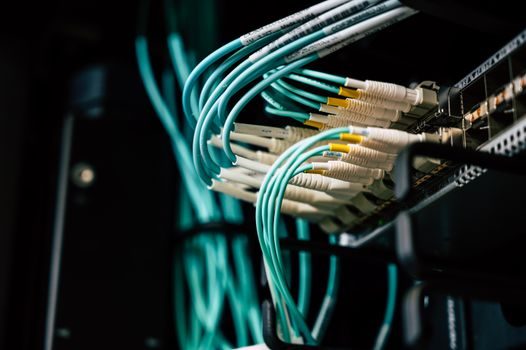
Three rating families show up on every 2026 instrumentation cable datasheet: (1) electrical — voltage grade 300/500 V for instrumentation, 600/1000 V for control, often listed per IEC 60228 for conductor and IEC 60332 for flame; (2) fire performance — IEC 60331 (fire survival), IEC 60332-3 (flame spread), IEC 61034 (smoke density), IEC 60754 (halogen acidity); (3) certification marks — UL, CSA, c(UL)us, CE, CCC, with CCC compulsory for any cable landed in China under HS heading 8544 [S1][S8].
On the import side, China Customs lists instrumentation cable under HS 8544 with an MFN duty of 0%, a general tariff of 20%, and a 13% VAT for 2026 imports, with a 20% additional tariff layer on U.S.-origin goods — a number worth checking against the current customs database before tendering landed-cost numbers [S8][S10]. CCC certification and CIQ inspection are the typical non-tariff barriers. For cross-section calculation logic on long DC-traced loops and nuclear-class installations, the Springer 2021 reference on instrumentation and control cable core cross-section calculation remains a useful procedural reference (2021-07) [S4].
Common Selection Mistakes in 2026
Three failure modes recur in post-commissioning loop-noise investigations: (a) running 4-20 mA signal pairs in the same multi-core as 24 VDC coil outputs — should be a dedicated control cable instead; (b) terminating a shield at both ends, creating a 50/60 Hz ground loop; (c) using a 0.5 mm² pair for a 24 V loop longer than ~200 m, where voltage drop exceeds the transmitter's compliance budget. [S3]
Other recurring errors: ordering LSZH where FR- PVC is acceptable (wasted budget), omitting a drain wire (the foil shield has no DC continuity path to ground), and pairing an unarmoured cable with a SWA-rated gland. A selection rule of thumb: if the cable leaves the building, goes below grade, or sits on an offshore deck, default to SWA + LSZH outer jacket; if it stays inside an IP-rated panel or control room, unarmoured LSZH or PVC is enough.
Who Should Not Use a Generic "Instrumentation Cable" SKU
A stock 2-pair × 0.5 mm² OS PVC cable is NOT the right pick for: thermocouple extension runs (specify compensating cable with the correct ISA type — JX, KX, EX — per thermocouple alloy, not copper); high-temperature boiler probes above 90 °C (use XLPE or silicone); Zone 1/2 hazardous areas (use ATEX/IECEx-certified cable with appropriate glands, not a generic CE-marked SKU); and any run longer than 50 m on a 24 VDC loop powering more than two field devices (recalculate voltage drop or step up to 4-wire / higher gauge) [S7].
For buyers evaluating instrumentation cable suppliers across India, China, and Europe, the dataset shows overlapping capabilities: Indian manufacturers lead on FRLS and Fire Survival SKUs, Chinese vendors dominate the JVVP3 0.5 mm² multi-pair commodity segment, and European suppliers focus on certified fire-performance and EMC-tested constructions. Sourcing from an linear guide of approved-vendor list (AVL) rules plus HS-code tariff verification is the more robust procurement gate than headline price per metre [S8][S9].
Shortlist Logic for August 2026
Pick your variant by the routing-environment matrix: indoor tray, dry, no fire-rating mandate → PVC/OS multi-pair 0.5-1.0 mm². Indoor, occupied or tunnel → LSZH/OS or FRLS. Outdoor tray or chemical yard → SWA + LSZH. Direct burial → SWA + PE bedded. Thermocouple loops → type-specific compensating cable, not generic instrumentation. Fieldbus (PROFIBUS PA, Foundation Fieldbus, RS-485) → manufacturer-specific cable types "A" or "B" with defined impedance (100 Ω or 150 Ω) and characteristic capacitance, not a generic analogue pair [S3][S5][S7].
One trackable signal worth watching into late 2026: the broadening of CCC-required cable families under HS 8544 and the parallel expansion of LSZH mandates in Indian metro and refinery tenders — both are reshaping acceptable SKU lists for cross-border tenders. For deeper dives into specific field-instrument pairings, the micro-ohmmeter price and cost guide 2026 covers the loop-resistance verification side that runs after the cable is landed.