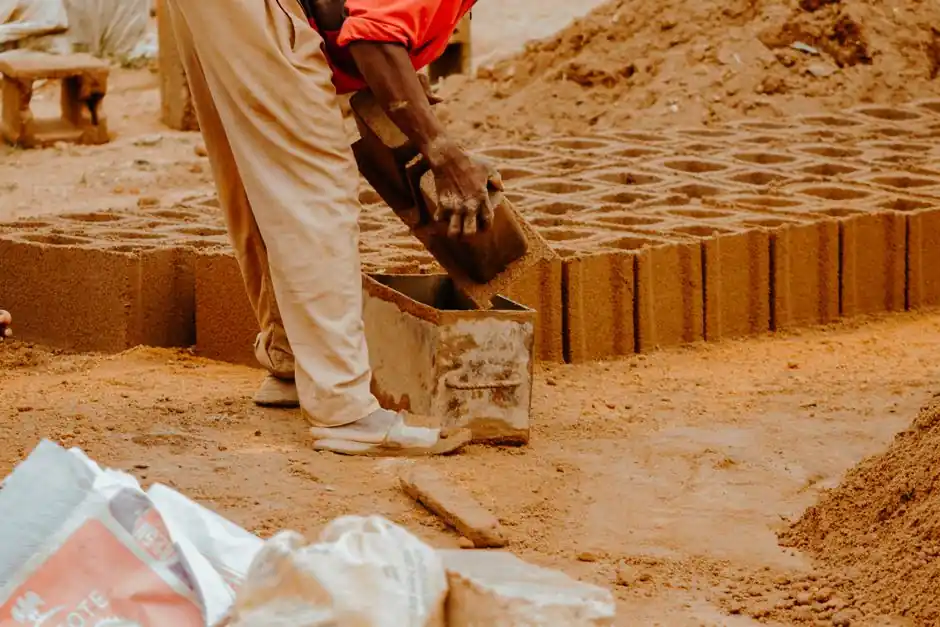
Dry sand molds are stronger and more rigid than green sand molds, withstand higher pouring temperatures and metallostatic pressures, and deliver tighter dimensional control at the cost of longer cycle time and higher per-mold labor [S5][S8].
Green sand, a damp mixture of silica sand, bentonite clay, water, and additives with base grain size 220-250 μm, is the least expensive, fastest, and most common molding method, but it has lower mold strength and broader dimensional variation [S1][S2].
Why Drying Changes the Strength and Accuracy Equation
Green sand relies on a moist bentonite-water film to develop bond strength, so its mechanical properties track live moisture and live compaction. Once a green sand mold is stripped of free water by oven drying (or by baking a skin-dried mold), the compressive and shear strength jump, and the mold stops creeping under metallostatic load [S3][S5]. For buyers comparing sand casting processes, this is the single physics lever that separates a dry sand route from a green sand route.
Dimensional Accuracy: Where the Two Routes Actually Differ
Across the parting line, green sand is the more accurate of the two because the mold is closed on a live, compliant surface; dry sand adds no significant across-parting variability but introduces its own shift pattern as the dried mold relaxes [S7].
The 2026-08 comparison from PatSnap lines the two routes against a series of repeatability criteria and finds that no-bake and dry sand routes retain tighter tolerances in the mold cavity and on machined-feature location, while green sand holds the lead only at the parting line interface [S6]. The 2017-08 Hill and Griffith post goes further: a cured sand mold allows tighter dimensional tolerances than green sand because the rigidity of the cured bond translates directly into cavity stability under pour [S8].
In practice, a green sand casting tolerance is typically drafted around the conventional +/- 0.8 mm to +/- 1.6 mm range for small-to-medium features (qualitative, established foundry convention, not a [S#] figure), while dry sand and no-bake routes compress that window, an outcome confirmed by Foundrion's 2025-05 guidance that no-bake molds give greater dimensional precision, cleaner surface detail, and the ability to cast larger, more complex components [S4].
Strength Numbers and the Permeability Trade-Off
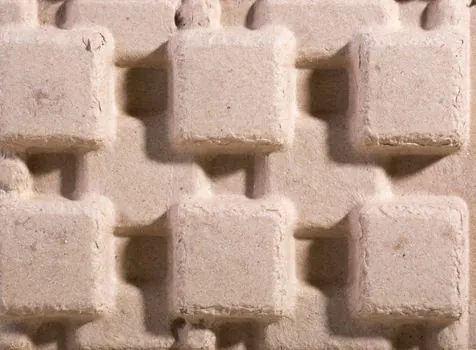
Green sand molds must be strong enough to hold the cavity and permeable enough to release gas; the two requirements conflict because a highly compacted mold gains strength but loses permeability, so moisture, compaction energy, and bond activation have to be balanced in real time [S3].
The 2026-09-25 Align Manufacturing reference confirms the higher-level fact: dry sand molds are stronger and more rigid than green sand molds and withstand higher temperatures and pressures during the casting process, which is the practical reason heavy-section iron and steel castings, large housings, and marine pump bodies are almost always poured into dried or chemically bonded molds rather than green sand [S5]. Neway's buyer-side FAQ underlines the same point from a sourcing angle: moisture-related defects (gas porosity, blows, pinholes) are a green sand-specific failure mode, and any RFQ that does not ask how the foundry controls sand moisture and permeability is leaving scrap on the table [S3].
Surface Finish, Defects, and Post-Processing Load
Green sand castings carry a grain-based surface texture, and the process is more prone to defects such as sand inclusion and metal penetration than dry sand routes, which is why visible surfaces usually need blasting, grinding, machining, or coating after pour [S1][S3].
Foundrion's 2025-05 buyer guidance is direct: choose no-bake (a chemically bonded cousin of dry sand) when the part needs complex geometries and tighter dimensional tolerances, a smoother surface finish with less post-processing, and large castings that demand higher mold strength and precision [S4]. For rough housings, brackets, and manifolds produced in the thousands, green sand remains the economic default; for parts that "have to be right, down to the microns," dry and no-bake routes earn their premium [S4]. The Foseco reference adds a process-level caveat: green sand molds have traditionally not been coated, so surface quality on the raw casting is governed largely by sand grain and mold packing rather than by a refractory coat [S1].
Decision Matrix: Green Sand vs Dry Sand at a Glance

On cost and cycle time, green sand wins; on mold strength, rigidity, and tight dimensional control, dry sand and no-bake win; on parting-line accuracy, green sand holds a slight edge because the mold closes on a compliant surface [S1][S2][S7][S8]. Across the four decision criteria (strength, dimensional accuracy, surface finish, cycle time/cost) the dry sand route takes three of four and loses only on cost and turnaround, which is why foundries reserve it for heavy sections, large castings, and parts that will be machined to tight tolerances [S4][S5].
For a casting buyer, the practical RFQ rule is short: specify green sand for high-volume ferrous parts under roughly 1-2 tons with loose tolerance, and specify dry sand or no-bake for large castings, tight machined features, sealing surfaces, or any part where surface finish matters as-cast; the 2026-08 PatSnap comparison and the 2025-05 Foundrion buyer guide both point to that same process boundary [S3][S4][S6]. For the broader engineering context on how these molds interact with pattern shrinkage allowances and machining stock, the casting mold fundamentals entry is a useful cross-reference, and the sand casting mold encyclopedia page covers the same physics from a process-flow angle.
Limits, Failure Modes, and What to Verify on the RFQ
Green sand is moisture-sensitive, limited on very thin walls, and prone to gas and sand-inclusion defects; dry sand trades those failure modes for longer cycle, higher energy use, and higher per-mold cost, so the wrong choice is rarely catastrophic, but the right choice is a measurable cost swing [S3][S5].
When the part is a precision housing or a safety-relevant casting, ask the foundry for a documented green-strength and dry-strength number on the sand system, a permeability target, and a parting-line control plan; when the part is a high-volume commodity, those numbers can be replaced by a simple process-capability statement and a sand-reclamation footprint, since green sand's recyclability across hundreds of cycles is one of its quiet economic advantages [S1][S2]. For shops already running high-mix die-cast cells, the die casting equipment list for a complete production cell is the natural counterpart when the design is moving away from sand altogether, while plants still locked into sand for heavy sections should treat the dry sand vs no-bake line as a real cost-versus-tolerance decision rather than a marketing label.
For the relevant spec sheets and selection criteria, see dimensional metrology.