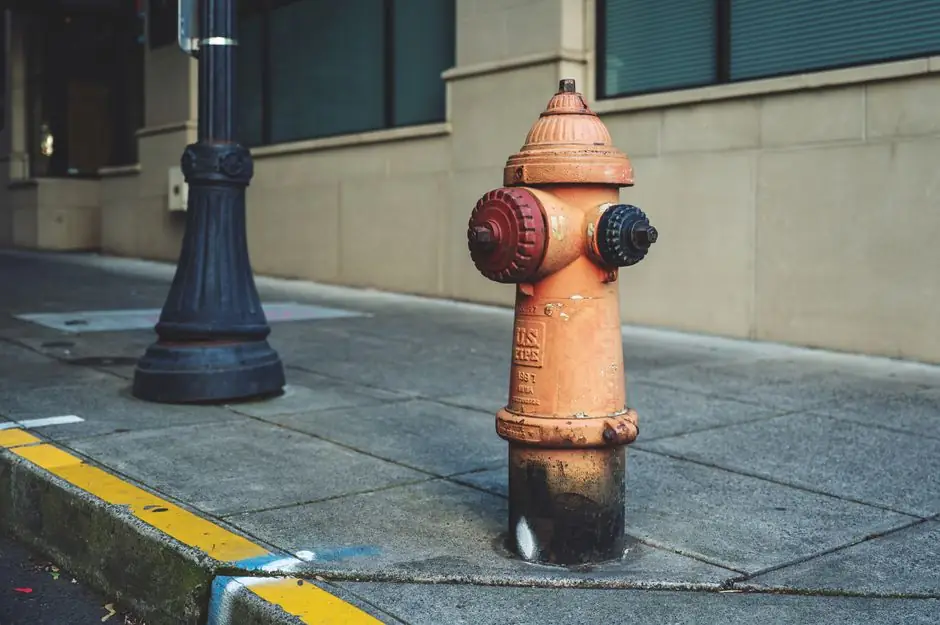
Ductile iron is a suitable material for fire-hydrant barrels, bonnets, and valves because it offers higher strength and toughness, better corrosion resistance, and suitability for high-pressure service [S2] [S3].
Grey cast iron remains a valid lower-cost choice for controlled, low-stress service, but its flake-graphite structure is more brittle, less resistant to corrosion and generally unsuited to critical high-pressure hydrant assemblies [S3][S4].
Material Mechanism and Service Limits
For fire-protection service, the material difference is not simply corrosion performance. Ductile iron combines tensile capability, toughness and resistance to impact and vibration loading, all of which support operational reliability where a hydrant may be struck by a vehicle or exposed to freezing conditions [S2][S4]. Grey cast iron is harder and handles surface wear well, but that hardness also makes it more fragile under severe loading [S4].
A procurement specification must still require the pressure class, test pressure, temperature limit and approvals applicable to the complete hydrant.
Decision Criteria by Component
Ductile iron should normally be specified for the hydrant barrel, bonnet, nozzle caps and operating nut because these parts are exposed to impact, bending loads and weather. Grey cast iron can be considered for internal or less exposed components only after checking fracture consequences, corrosion exposure and the governing product standard. [S4]
The comparison is straightforward across four criteria: ductile iron offers greater fracture toughness and higher pressure capability, while grey cast iron offers lower initial cost, good wear resistance and better vibration damping [S3][S4]. Ductile iron also presents additional manufacturing steps, so its purchase premium must be evaluated against reduced repair exposure and service life rather than treated as a penalty by itself [S3][S6].
For the complete product, a fire hydrant assembled with ductile-iron barrel and valve castings gives the most consistent material basis. Mixed-material assemblies may be technically possible, but the designer should verify that stem threads, gland packing, fasteners, coating and exposed nozzle components remain compatible with the selected casting.
Pressure, Temperature and Impact Exposure
Ductile iron is the stronger choice for municipal fire-water networks where hydrants may be connected to pumped systems or exposed to pressure transients. Those figures support material screening, not substitution for the manufacturer’s certified working rating.
Impact resistance is the decisive advantage in traffic areas, airports, loading yards and industrial sites. A cast-iron hydrant can fail through brittle cracking after a collision, while ductile iron is less prone to fracture and can deform before failure [S4]. At exposed plant locations, vibration from pumps, compressors or nearby traffic also favors the ductile-iron option because it can tolerate impact and vibration loads more effectively [S2].
Grey cast iron is better suited to a stationary, sheltered component with low loading, limited replacement cost and no credible impact exposure. Its surface-wear resistance is valuable in selected mechanisms, but corrosion and brittle cracking make it a weak default for an exposed barrel or critical shutoff valve [S4].
Corrosion, Coating and Maintenance
Outdoor hydrant service requires an internal lining and an external coating system appropriate to the buried and above-ground environment. One municipal water-main specification requires an approximately 1 mil asphaltic exterior coating and cement-mortar lining conforming to ANSI/AWWA C104/A21.4 for normal service [S1]. Its ductile-iron pipe is specified as Class 50 at 6 inches and larger and Class 51 at 4 inches, using Grade 60-42-10 [S1].
Ductile iron has better corrosion resistance than grey cast iron, including resistance to oxidation in outdoor environments [S2][S4]. That advantage does not remove coating requirements. The coating must remain continuous, smooth, strongly adherent, neither brittle when cold nor sticky under sun exposure, and the internal lining must protect the pressure-carrying component from the conveyed water and soil conditions [S1].
The coating decision should distinguish above-ground barrel surfaces from buried barrel and flange surfaces. For a buried hydrant, the referenced guidance on underground hydrant coating requirements by exposure provides a useful companion because the same casting may face different corrosion exposure above and below grade.
Cost, Maintenance and Lifecycle Selection
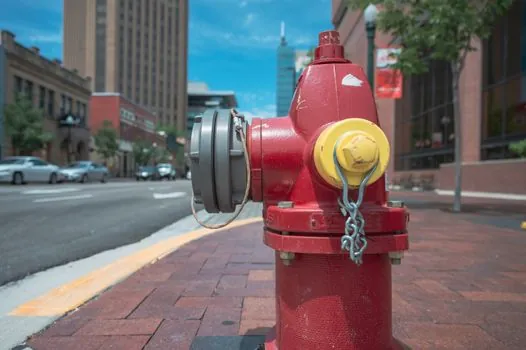
Grey cast iron can win on acquisition cost when the installation is low stress and easy to access, while ductile iron generally carries a higher purchase price because of its nodular-graphite production process [S3][S6]. That difference should be evaluated against exposure, inspection access, repair frequency and the consequence of a failed hydrant, rather than against purchase price alone.
Ductile iron normally produces the lower lifecycle burden for critical outdoor service because it resists cracking, deformation and corrosion, reducing maintenance and replacement exposure [S3]. The practical result is straightforward: specify ductile iron when failure consequence is high, impact or vibration is credible, or the hydrant is difficult to inspect and service. Specify grey cast iron only for controlled low-stress applications where those consequences are minor.
For municipal water work, the broader network specification reinforces that preference. The City of Liberty requires Class 50 ductile iron for 6-inch and larger water mains and Class 51 ductile iron for 4-inch pipes, with ASTM A536 and Grade 60-42-10 [S1]. Duke University construction standards likewise require 4-inch-and-larger water piping to be ductile iron [S7].
Procurement Requirements and Traceable Verification
Require the hydrant body and valve materials to be declared separately, because a ductile-iron barrel does not prove that every internal component is ductile iron. Ductile-iron pipe and fittings under the cited municipal specification must conform to ASTM A536, with pipe Grade 60-42-10 and fittings Grade 70-50-05; the fittings carry a 350 psi pressure rating and must be marked with the rating plus “DI” or “DUCTILE” [S1].
Verify applicable AWWA, ANSI and ASTM designations on the drawing, not merely the words “cast iron” in a submittal. The City of Liberty specification cites ANSI A21.51, AWWA C151 and ASTM A536 for 4-inch and 6-inch-and-larger pipe, ANSI A21.10/AWWA C110 and ANSI A21.53/AWWA C153 for fittings, and ANSI A21.11/AWWA C111 for push-on joints [S1].
The procurement record should state the body grade, valve pressure class, operating-temperature basis, coating and lining requirements, joint standard, manufacturer, model, certification markings and test documentation. Ductile iron is normally the technically defensible selection for an exposed hydrant, with grey cast iron retained only where the risk assessment supports it.