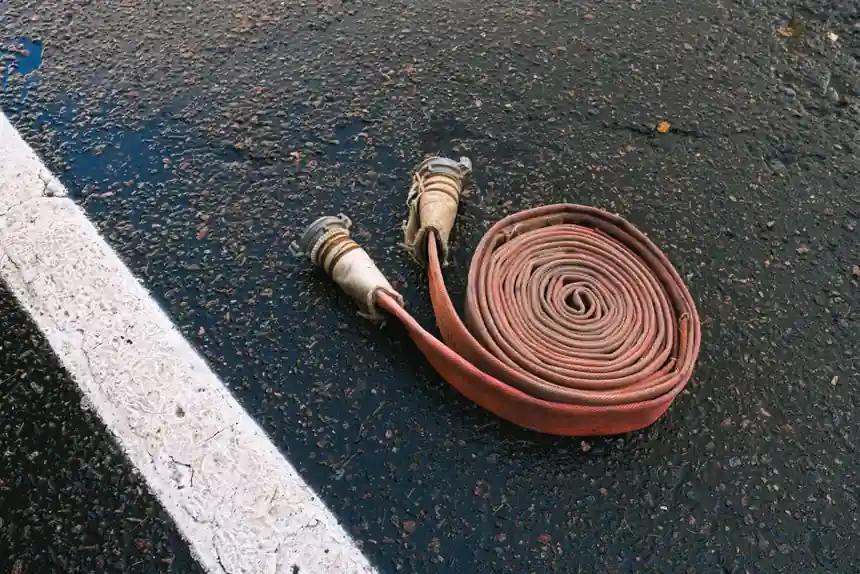
The cited coating review states that all BIMEX fire system components are coated to meet or exceed AWWA C550 standards for fusion-bonded epoxy (FBE) protection [S2].
The specification must separate the hydrant body, operating nut, bonnet, buried lead, joints and above-ground coating because each interface has a different corrosion exposure and service function.
Define the Buried Coating System
Fusion-bonded epoxy, or FBE, is the practical reference system for underground hydrants and valves when the project requires an epoxy barrier rather than decorative paint. The cited review identifies AWWA C550 as the standard that BIMEX fire system components meet or exceed for fusion-bonded epoxy protection [S2].
This sequence matters because a nominal powder weight or coating thickness does not prove that every steel surface is covered. Coating continuity, bond strength and barrier performance are separate acceptance criteria.
Specify the finished hydrant coating for internal and external corrosion protection, then require the project record to identify substrate preparation, coating type, nominal thickness, minimum thickness, curing conditions, surface temperature and application method. If the body is cast iron or ductile iron, the coating line still has to state whether the requirement applies to the barrel, bonnet, operating assembly, stem, nuts or the complete assembly.
The fire hydrant has several dissimilar parts, and treating them as one painted object creates avoidable ambiguities at threads, flanges and wetted surfaces. A purchase specification should identify each part and its required coating or protective treatment.
Compare Epoxy, Enamel and Polyethylene Options
FBE gives a fused, bonded barrier on preheated steel and is normally specified for valve and hydrant bodies where controlled factory application is available [S2]. By comparison, a three-coat alkyd and silicone-alkyd system is an exterior finish for the portion above the traffic flange in the Tomball specification, not a substitute for underground corrosion protection [S1].
This comparison is about function, not paint color. The red finish improves recognition, while FBE, polyethylene or a wrapped barrier supplies the corrosion-resistant layer. Specifiers should also distinguish the fire hydrant body from the hydrant lead, because the lead may be ductile iron, steel or PVC under the cited municipal and installation guidance [S1][S4].
Write Testable Acceptance Criteria
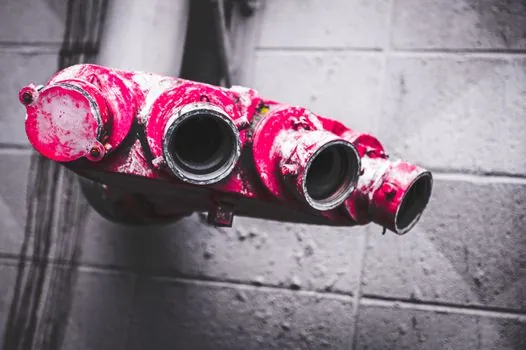
A buried hydrant coating is underspecified unless the procurement document defines measurable acceptance tests.
Define whether holidays must be absent entirely or whether a repair procedure allows limited defects, and require the repaired area to meet the original DFT and adhesion requirements.
For installation records, require photographs or coating documentation for the hydrant body and the lead-to-valve connection. That paperwork should also capture the exact coating standard, thickness and product designation so field crews can identify the installed assembly.
Match Corrosion Risk to the Installation
Soil contact, trapped moisture, chlorides and dissimilar-metal connections drive the selection of corrosion protection. A buried assembly also carries mechanical risks that a coating film cannot solve, including joint movement, wrench damage and coating damage during backfilling. [S3]
The same installation sequence requires pipe to be laid on at least 6 inches of clean sand, pea gravel or quarry fines, with all pipe exposed for pre-pour inspection [S4].
For mains, the cited selection guide describes 3LPE as a thick polymeric barrier for buried hydrant pipe and distinguishes it from internal epoxy lining intended to reduce tuberculation and valve clogging [S3]. The cited guide recommends seamless steel pipe for high-pressure headers and ERW pipe for distribution, while emphasizing FM/UL certification as a critical step in meeting international safety standards and passing site inspections [S3]. These are selection criteria for mains, not automatic approvals for every hydrant body.
The FM Global technical report identifies uniform corrosion, galvanic corrosion, pitting, crevice corrosion, selective leaching, erosion corrosion, environmentally induced corrosion, intergranular corrosion and microbiologically influenced corrosion among the mechanisms that can damage fire protection piping [S5]. It also identifies pipe weld corrosion, corrosive water chemistry, residual water in dry systems, stagnant water and periodic introduction of oxygenated water as contributors to leakage [S5].
Separate Installation and Operating Controls
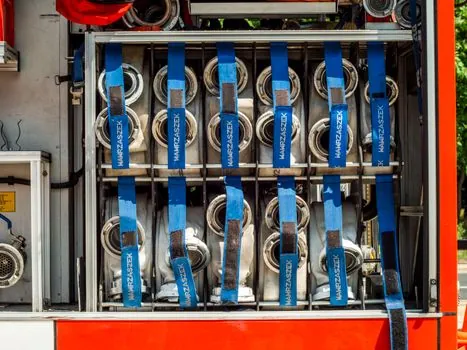
Coating inspection occurs before the underground assembly disappears. The cited private hydrant standard requires pre-pour, hydrostatic and flush inspections, with inspections scheduled at least 24 hours in advance and the approved underground plan available on site [S4]. Before concrete placement, thrust-block excavations must be complete but thrust blocks cannot be poured, while all pipe must remain exposed for visual inspection [S4].
Hydrostatic testing follows thrust-block placement and curing. The cited requirement is 200 psi, or 50 psi above maximum static pressure if that value is greater, for at least 2 hours [S4]. Center loading with clean sand must restrain uplift while keeping joints exposed, which preserves visibility of leakage and joint movement [S4]. Flushing must remove debris before connection to overhead piping, using at least two 2.5-inch hoses or one 4-inch hose or 4-inch pipe unless the inspector approves another arrangement [S4].
Operational controls protect the coating after commissioning. Valve operation, stem lubrication and bonnet inspection can expose an otherwise sound coating at a moving interface. A fire hydrant valve should be checked for free operation, while buried coatings must be protected against mechanical damage during excavation, paving and backfill.
Set Ownership and Repair Requirements
The coating warranty should cover the hydrant or valve body, not only visible paint, and must identify exclusions such as mechanical damage, improper storage, incompatible backfill chemicals or installation damage [S2]. Require the supplier to document coating type and test results at shipment, then assign responsibility for damage found during installation.
For field repair, the specification should name the approved repair material, surface preparation method, overlap dimensions, curing requirement and post-repair inspection. A repair system compatible with FBE is not interchangeable with an enamel touch-up. Record each repair by hydrant serial number or engineering drawing number, matching the Tomball submittal approach [S1].
Factory coating does not remove the need for buried-pipe protection. The installation standard treats wrapping, taping, asphaltic sealant and corrosion-retarding materials as part of the underground assembly [S4]. It also calls for a contractor’s material and test certificate for underground piping before final fire approval [S4].
Select Through Exposure and Ownership
Use factory FBE as the baseline for buried hydrant bodies when AWWA C550 compliance is required and the manufacturer can document 300 µm minimum DFT, Sa 2½ preparation, adhesion and holiday inspection [S2]. Use the three-coat alkyd and silicone-alkyd system only for the exposed portion above the traffic flange, where the cited specification calls for 6–9 mils total DFT [S1]. Use polyethylene or wrapped corrosion barriers for the associated buried mains, joints and ferrous connections according to the pipe material and installation method [S3][S4].
The specification is procurement-ready when it identifies the coating standard, substrate, application process, minimum DFT, inspection method, repair procedure, installed component and responsible party. Two trackable records provide the next verification point: coating test documentation at delivery and the signed underground material and test certificate before final acceptance [S2][S4].