
A frost-protected fire hydrant should have its inlet and drainage point below the local frost line, with protected supply piping buried at least 6 inches deeper.
Burial depth is site-specific: documented frost depths range from 12 inches to more than 72 inches, while one Wyoming guidance range is 45–60 inches [S2][S6].
Separate Hydrant Bury Depth From Main Pipe Cover
The hydrant’s critical depth is governed by the elevation of its lowest water-holding or drainage component, not simply by the visible riser height. A self-draining hydrant must discharge residual water below the depth where ground freezing can occur [S4].
Fire-main cover serves a different function. Where frost is not a factor, 2.5 feet of cover is cited as protection against mechanical damage [S1]. That figure should not be substituted for a frost-line calculation because the governing constraints are different: mechanical protection versus freezing of the water-containing assembly.
For a fire hydrant specification, separate the requirements for main-line cover, branch-pipe depth, hydrant inlet elevation, drain discharge, and above-grade operating height. Combining them into one nominal depth can produce an installation that meets one criterion while failing another.
Use Site Data Instead of a National Cover Rule
Regional frost-line information must be verified at the installation address. Published guidance places frost depth from roughly 12 inches to over 6 feet [S6], while an average Wyoming range is 45–60 inches below ground level [S2]. Those values demonstrate why a universal “2-foot hydrant” rule is inadequate.
When selecting a frost-proof hydrant location, ensure the hydrant is below the local frost line [S4].
Such values are useful only when they correspond to the project location. For fire hydrant procurement, require the supplier to confirm the selected model’s drain and inlet elevations against the engineered frost-line depth.
Compare the Main Installation Methods
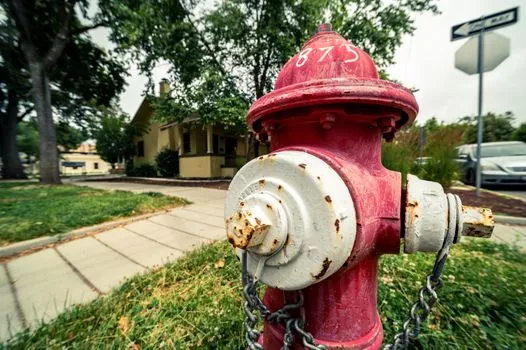
Three installation arrangements cover most frost-protected applications: a conventional underground fire hydrant, a self-draining yard hydrant, and a hydrant installed in a heated or protected enclosure. The key comparison is not cost or appearance, but winter operability, drainage behavior, and installation depth. [S4]
Self-draining systems are suited to farms, parks, campgrounds, remote facilities, and other locations where year-round hose access is required [S4]. Conventional hydrants remain appropriate where winter flow cannot be interrupted, provided the water-filled assembly is protected against freezing.
Size the Riser and Drain for the Ground Condition
A deeper inlet is not a substitute for a properly sized riser.
Soil conditions affect that path. Sandy soil drains more readily, while rocky soil requires greater excavation effort but can provide a stable base [S4].
Specify the riser length so the operating handle remains at a usable height after the required burial depth is reached. In one discussion, a poster wanted the hydrant handle about 3 feet above ground rather than 2 feet [S5]. These dimensions are installation checks, not universal product standards.
Protect the Connected Piping and Maintain Drainage
The supply branch, riser, and drain must be arranged so residual water has a continuous route away from the assembly after closure. The gravel supports drainage, but it does not replace proper trenching, backfill compaction, or connection protection.
Vehicle loads and accidental impacts also affect shallow installations. Field practice has used two elbows and a service connection arrangement to create a point that can deflect if struck, rather than forcing the hydrant to transfer the full load directly into the main [S5]. This is a practical installation concept, but engineered restraint should govern public fire-protection work.
The drain on the frost-proof hydrant is at the bottom [S5]. Inspect the drain path, gravel bed, ground settlement, and riser alignment after the first operating cycle and at defined maintenance intervals. Repeated operation without water or drainage can reveal valve, linkage, or drain-valve faults before an emergency exposes them.
Use Local Design Authority for Public Fire Protection
Municipal fire-protection installations require the authority having jurisdiction to approve the hydrant assembly, burial arrangement, drainage, access, and testing. The available research supports a design method, but it does not provide a universal public-network burial depth. Regional frost data, utility standards, fire-flow requirements, soil conditions, and traffic loading must be reconciled by the project designer. [S5]
The controlling installation document should show the surveyed ground line, design frost line, minimum inlet elevation, required pipe cover, drain outlet, above-grade height, and source of each dimension. Keep at least three records: the frost-depth basis, the manufacturer’s model and burial rating, and the as-installed measurement. That closes the gap between a catalog order and a field-verified installation.
For procurement, treat the frost line as the starting dimension, add the applicable 6-inch piping buffer where the cited plumbing rule governs [S4], and verify that the selected hydrant’s lowest inlet or drain outlet remains below that level. A 45-inch Wyoming frost depth and a 72-inch winter design condition produce materially different hydrant lengths and drainage details [S2][S6].