
Flush-type hydrants can reduce above-ground obstruction in constrained areas, but a post hydrant generally provides the more practical hose connection and operating access.
The governing comparison is not exterior footprint alone: it is required fire flow, working clearance, hose coupling access, flushing performance, drainage, freeze protection, and approval by the authority having jurisdiction.
Flush-Type vs Post-Type: Decision Criteria
A flush-type hydrant is intended to sit below grade with its outlet or cover near ground level, while a post-type hydrant projects above grade for direct hose connection and maintenance. The distinction matters when the available clearance is less than the space normally expected around a conventional hydrant. [S1]
For a fire-protection application, do not select a flush hydrant solely because it occupies less visible space. Confirm that the assembly provides the required fire flow, permits the fire department to connect and operate the outlet, and remains accessible after parking, landscaping, snow, debris, or construction.
A compact comparison is straightforward: post hydrants favor above-grade hose access and recognizable operation; flush hydrants favor restricted-site fit and reduced vertical obstruction. Flushing posts are a different category. They are commonly used for dead-end mains where fire protection is not required, with listed examples covering 2 in and 4 in non-fire-rated configurations and flow rates from 380 to 1,340 gpm depending on model [S4].
Clearance and Access Drive the Selection
Local requirements can consume the space that appears available on a site drawing. Columbine Water and Sanitation District requires at least 3 ft of clearance on all sides and states that hydrants must remain easily accessible for emergency hose and equipment connection and district maintenance [S1].
Florida's 2009 code amendment cited in the research establishes a 3 ft clear space around the hydrant circumference, while also calling for 7 ft 6 in in front and to the sides and 4 ft at the rear; reduction is permitted only with approval of the fire official [S5]. These are jurisdiction-specific requirements, not universal dimensions. The project designer must use the adopted local code and the AHJ's interpretation.
A surface-mounted cover in a parking aisle, landscape bed, or narrow walkway can create trip, access, drainage, and vehicle-damage problems even when the hydrant barrel itself is below grade.
Where space cannot satisfy the required working area, the practical options are to relocate the hydrant, redesign the landscape or hardscape, obtain an approved variance, or use another approved arrangement. Selecting a smaller-looking outlet without resolving the required hose approach is not an equivalent solution.
Fire-Fighting Performance vs Flushing Function
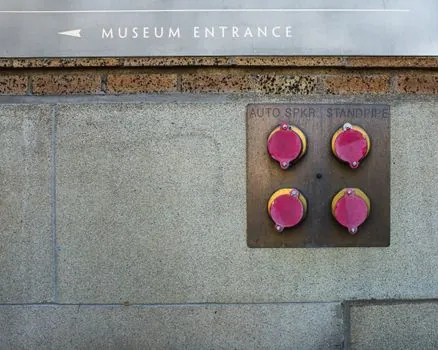
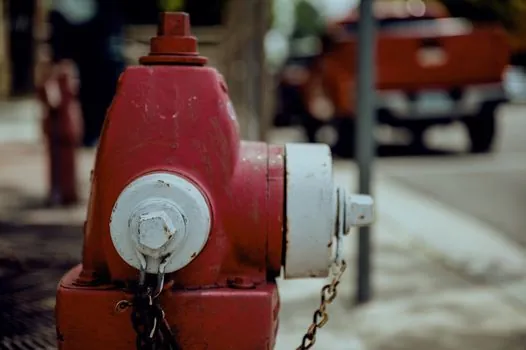
A post-type hydrant is normally the stronger choice where fire suppression is the primary function because its exposed outlets provide a direct connection point and make the device easier to identify.
These placement limits cannot be solved by changing hydrant body style. Both flush and post designs must still be located to satisfy the applicable fire-flow and hose-access strategy.
Flushing-only assemblies have a different scope. They are intended to remove sediment, refresh distribution water, maintain chlorine residual, and reduce discoloration after high-demand events [S2][S4]. They are not substitutes for a fire hydrant unless the AHJ and applicable fire-code design specifically accept the assembly for the required fire-protection service.
This makes the application decision clear: specify a post-type hydrant for active fire-service use when access and recognition control. Specify a flush-type hydrant when below-grade integration is essential, the specified outlet meets required performance, and the AHJ accepts its access and operation arrangement. Specify a flushing post only where fire protection is not required and the purpose is network maintenance.
Limited-Site Use Cases That Work
Flush-type hydrants are most defensible beside narrow paved areas, constrained rights-of-way, landscaped zones, loading areas, or pedestrian routes where a conventional post would create an unacceptable obstruction.
Flushing stations are more suitable at dead ends of water mains where the objective is scheduled or automatic water exchange rather than fire suppression. The referenced product family includes self-draining, non-freezing 2 in and 4 in hydrants and blow-offs for dead-end mains where fire protection is not required [S4].
Automatic flushing devices can also be attached to hydrants in low-use areas to maintain chlorination levels [S6]. That arrangement supports network hygiene, but it does not remove the obligation to keep the hydrant accessible and operational for fire response.
For a constrained commercial site, evaluate these use cases separately: a fire-service hydrant requiring suppression performance; a non-rated flushing post for dead-end water quality; and an automatic flushing device for scheduled maintenance. Combining all three into one selection can produce the wrong outlet, flow, drainage arrangement, and approval path.
Failure Modes and Maintenance Constraints
Vertical burial is only one failure mode. A flush installation can lose operating access when the cover settles, soil enters the outlet chamber, vegetation covers the access point, snow buries the device, or a parked vehicle blocks the connection route. The outlet arrangement must also permit discharge water to leave the chamber without undermining the pavement or flooding the site. [S2]
Freezing is a separate criterion. A listed self-draining, non-freezing design is cited for flushing hydrants and blow-offs in the referenced product information [S4]. For a fire hydrant, local frost depth and the approved configuration govern the installation; buried inlet and drainage details should be coordinated with the utility and AHJ rather than copied from a flushing-post drawing.
Post-type hydrants also have failure modes. Vehicle impact, corrosion, damaged caps, inaccessible outlets, and seasonal snow can prevent prompt connection. If the location is exposed to traffic, specify an approved protection arrangement. The cited Florida code permits hydrants subject to vehicular damage to be protected when they are outside a public right-of-way [S5].
Routine flushing exposes the system to practical water-quality effects. Los Lunas describes a semi-annual whole-system flushing policy and notes that nearby customers may see temporary discoloration, with faucets run for 1 or 2 minutes or until the discoloration clears [S2]. The utility should therefore coordinate the discharge point, notification, duration, and sampling with the water operator.
Procurement and Approval Checklist
Before ordering either configuration, obtain a written basis of design from the AHJ and utility. The package should identify the fire-flow demand, pressure, allowable footprint, working clearance, hose outlet size, main size, frost line, drainage route, cover material, traffic exposure, and whether the assembly is fire-rated. [S4]
Then compare the options against four practical criteria. First, required performance: the flush assembly must meet the specified fire flow and outlet arrangement, while a post hydrant can provide direct above-grade connection. Second, access: the applicable 3 ft minimum clearance in the cited examples must remain usable around the device and connection path [S1][S5]. Third, maintenance: both types must permit inspection, lubrication or repair, discharge, and sediment removal. Fourth, site integration: flush types reduce vertical obstruction but add cover, chamber, drainage, and access risks; post types retain high visibility and direct hose access but consume physical space.
Product selection should also distinguish nominal size from certification and rating. The referenced flushing-post family includes 2 in and 4 in assemblies, 380–1,340 gpm model-dependent flow, self-draining and non-freezing construction, and an Eclipse #2 configuration with NSF/ANSI 372 certification and outlets up to 2½ in NST [S4]. These data apply to the cited products, not automatically to every flush-type or post-type hydrant offered in the market.
For a related maintenance decision, fire hydrant bonnet bolt torque for reassembly addresses the fastener-control step when a conventional hydrant is opened after service.
The next trackable approval is a dimensioned site plan showing the hydrant, cover or post envelope, required clear zone, hose approach, nearby parking, landscaping, utilities, and discharge route, followed by written AHJ acceptance of the selected configuration.