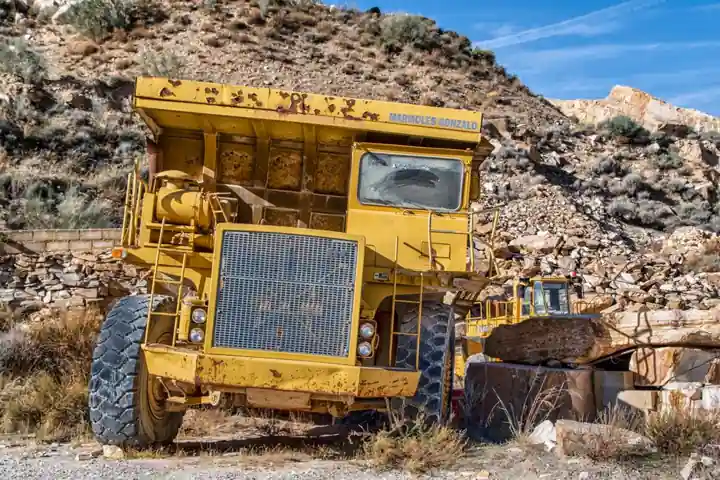
Dump-truck haul cost per ton-mile is governed by loaded miles, payload, fuel consumption, driver hours, cycle time, and maintenance rather than a single purchase-price figure.
This cost model applies to construction aggregate, earthwork, mine haulage, and bulk-material moves where one ton-mile means one ton transported one mile.
Defining the Cost Unit Before Pricing a Haul
A ton-mile is one ton of payload carried for one mile. The numerator for the operating calculation is loaded haul miles, while the denominator is delivered tons multiplied by one-way distance, or the loaded distance when the route is symmetric. This distinction matters because a loader can add 15 to 60 seconds per cycle, trucks can queue behind the loading face, and the return leg may consume fuel without carrying the same payload.
The calculation is: cost per ton-mile equals total haul cost divided by delivered ton-miles. Total haul cost includes fuel, driver wages and benefits, tires, maintenance, depreciation or lease, permits, road costs, and a defined overhead allocation. The unit is dollars per ton-mile, or $/ton-mi. For a 30-ton truck travelling 10 loaded miles on a cycle of 12 miles, the route produces 300 ton-miles per load before any idling or waiting allowance is included.
Payload utilization must be measured, not assumed. A truck rated for 30 tons may move less material because of moisture, bulking, body configuration, road restrictions, or loading tolerance. A route with a 90% average payload factor produces only 270 ton-miles from that theoretical load. The same principle applies to dump truck selection: rated capacity does not replace route-specific loading records.
The Cost Drivers That Move the Haul Rate
Fuel is a variable cost linked to engine size, loaded versus empty mass, speed, grade, traffic, and idle time. Driver cost is semi-variable because paid hours continue while a truck waits at the loading face, travels empty, or handles a delayed ticket. Maintenance is driven by payload severity, route gradient, road surface, tire specification, and cycles per hour.
Volume tier affects acquisition and mobilization cost. A small contractor can spread a used truck over fewer annual miles, while a fleet operation can support dedicated dispatch, preventive maintenance, telematics, and a larger spare-parts inventory. The resulting fuel and maintenance package is often more efficient, but a fleet discount does not automatically offset extra deadhead miles. For one-off moves, mobilization can exceed the transport cost itself, especially when the job is remote.
Certification and equipment configuration also affect price. High-flotation tires cost more but may reduce damage at soft sites; sidewall height and tire pressure determine usable payload; body liners extend wear life in abrasive aggregate; and specialized bodies add tare weight. A mining-class mining dump truck is justified only when the route, payload, and annual tonnage justify its capital and operating burden.
Comparing Short Haul, Long Haul, and Cycle Alternatives
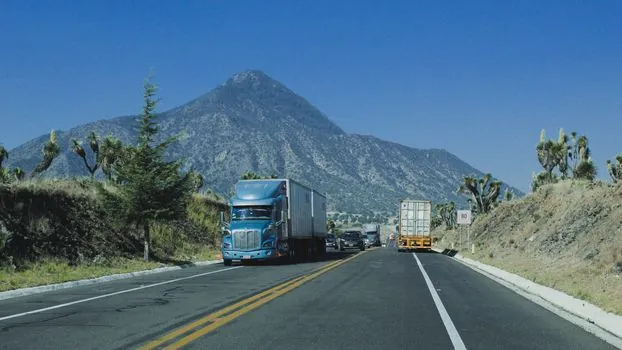
Short hauls have a high share of fixed time per delivered ton. Loading, spotting, acceleration, and queuing can dominate a 2-mile move, so adding trucks may shift the bottleneck to the loader instead of lowering unit cost. Long hauls spread fixed trip time across more miles, but fuel use rises with distance and deadhead remains unrecovered.
The comparison is straightforward: a 20-ton truck at 4 loaded miles produces 80 ton-miles per trip, while a 30-ton truck at the same distance produces 120. At 5 cycles per hour, gross capacity is 400 versus 600 ton-miles per hour before load-time or utilization deductions. The higher-capacity option is not cheaper per trip if it requires a longer or more expensive loading cycle, but it is normally more efficient when payload utilization, road limits, and material density permit the full rated load.
Rail or conveyor alternatives become more competitive as distance and annual volume rise because they remove much of the repeated truck cycle. A dump truck haul-cost model should therefore test at least three scenarios: efficient high-tonnage direct haul, lower-utilization break-bulk or transfer movement, and long-haul truck movement with empty repositioning. Each scenario needs the same route miles, loaded payload, cycle hours, and demand assumption.
Who Should Use This Model and Who Should Not
The model is for owners, estimators, quarry managers, contractors, and procurement teams comparing a defined haul operation. It supports budget pricing when the company can measure payload, loaded distance, fuel use, wait time, and tire or repair cost over a defined operating period. It also supports bid preparation because the calculation exposes assumptions hidden inside an all-in hourly rate. [S1]
The model is not a substitute for route-specific geotechnical or haul-road design. A mine plan with long haul grades, tight clearances, and controlled traffic requires a production plan and approved vehicle combination. The broad component definitions for an aerial work truck are unrelated to bulk haul economics, and substituting one truck category for another will distort payload, cycle-time, and cost assumptions.
For individual trips, allocating every corporate overhead category may obscure the decision. For annual fleet planning, excluding overhead will understate the economic cost of replacing equipment. The practical approach is to report both cash operating cost per ton-mile and fully allocated cost per ton-mile, with the included cost categories stated beside each number.
Failure Modes in Ton-Mile Costing
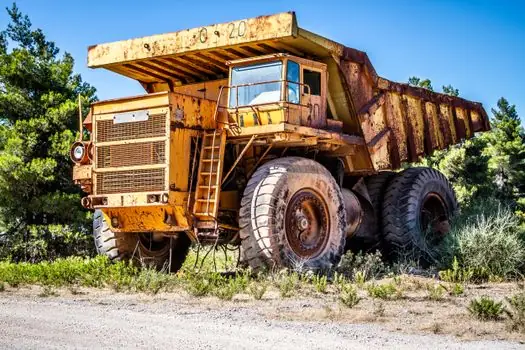
The most common error is using rated payload with low actual utilization. The second is omitting empty return and deadhead mileage from total distance while calculating fuel per loaded mile. The third is treating a loaded cycle as uninterrupted, which suppresses loader queues, traffic holds, scale delays, weather closures, and dump-site waiting.
Tire damage can invalidate a tire-cost estimate. Liner wear can invalidate a maintenance estimate. Unrecorded payload overweighting can invalidate both fuel and tire assumptions. For abrasive service, the comparison between liner configurations and wear rates is detailed in Dump Truck Liner Cost vs Abrasion Resistance. That component analysis matters because body wear is a recurring operating cost per ton-mile, not an incidental repair item.
Scale errors also matter at the load face and disposal point. Tickets should reconcile dispatched tonnes with scale tickets and surveyed route distance. A mismatch between load tickets and destination receipts indicates a data-quality issue that should be resolved before the rate is indexed or used in a contract.
Standards, Records, and a Defensible Total Cost
The calculation needs auditable inputs: engine and chassis hours, fuel litres, loaded and empty kilometres, payload tonnes, route grade, surface type, tyre pressure, body condition, and cycle-event timestamps. Use one distance unit consistently, because short-haul fleet systems often report kilometres while project budgets use miles or short tons. A tonne is 1,000 kg, and a US short ton is 907.1847 kg, so mixing metric and short-ton units changes the denominator. [S4]
Cost allocation should separate variable and fixed elements. Fuel and consumable wear are often treated as variable per distance; tyres can be distance- or load-sensitive; driver wages follow paid hours; depreciation follows elapsed time and useful life; and dispatch or administrative overhead requires an explicit allocation basis. No industry standard in the supplied research prescribes a universal dump-truck cost-per-ton-mile formula, so the rate remains a project calculation rather than a standardized market price.
Total cost of ownership must include installation and mobilization, operator time, fuel, planned maintenance, unscheduled downtime, tyres, permits, road impact, residual value, and the cost of idle equipment. A cheaper truck can produce a higher ton-mile cost if it spends more time in the queue, carries a lower payload, or incurs greater unplanned downtime. The mining dump truck comparison should therefore use delivered ton-miles per paid hour and per dollar of total fleet cost, not purchase price alone.
Track the next route audit against three records: average payload by truck class, loaded plus empty kilometres per shift, and paid hours per delivered tonne. A sustained increase in empty kilometres or a fall in payload utilization identifies where the rate is moving, while tire and liner consumption per tonne show whether equipment wear is being controlled.