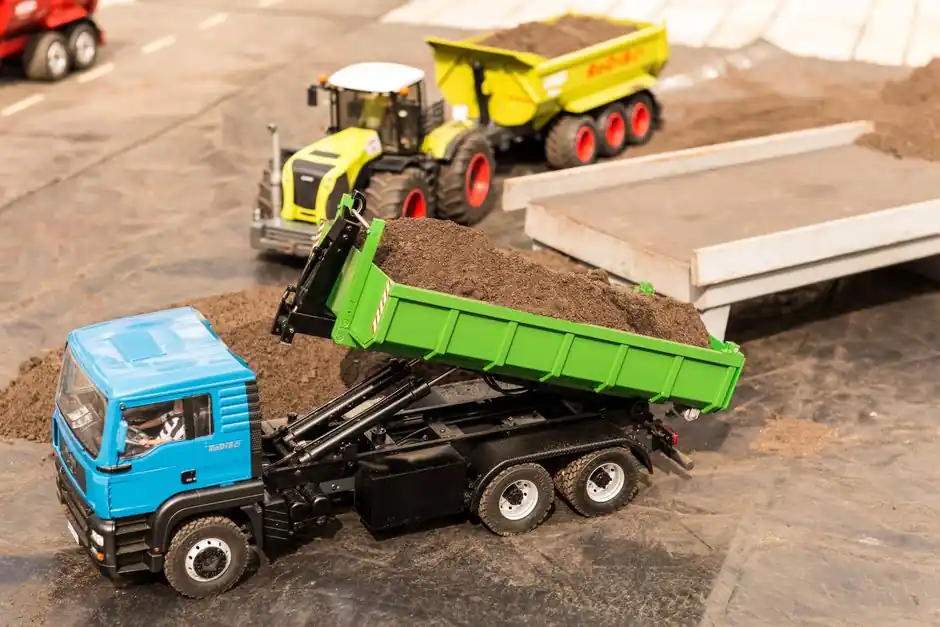
For moderate impact and abrasive wear, liner strategy should balance wear life, impact resistance, payload, weldability, and repair speed.
The practical comparison is UHMWPE for abrasive bulk cargo, modified plastics for moderate impact, and steel wear plate or liners for severe impact and heat.
What Determines Dump Truck Liner Replacement Cost
A 2012 owner discussion placed dump-trailer liner expenditure at approximately $3,000–$4,000, with available thicknesses allowing the buyer to trade initial cost against durability [S7]. That figure is a dated market observation, not a universal quotation, but it establishes the main commercial variables: material, panel thickness, body geometry, attachment method, and replacement labor [S7].
For an existing truck, replacement cost must also include removing retained wear material, preparing the damaged bed, closing gaps, fitting new panels, and completing the attachment work. A welding discussion emphasized that even a small gap anywhere in a 9 ft long dump body can admit dirt and rock [S5]. The same discussion treated a welded repair as a credible alternative to a plastic dump-bed liner, showing that liner choice should be judged against realistic damage patterns rather than material names alone [S5].
For operating fleets, calculate cost per tonne hauled or per operating hour, not only purchase price. A more expensive liner can reduce the number of bed repairs if it remains serviceable under the actual load, impact, and temperature conditions [S1][S6]. The dump truck body liner system should be evaluated as a wear-control package consisting of the liner, fastening system, prepared steel surface, and planned replacement access.
UHMWPE, Modified Plastic, and Steel Compared
Plastic bed liners, typically made from UHMWPE, protect dump-truck beds and are designed to withstand demanding operating conditions [S4]. For a more focused material comparison, see Select UHMWPE Dump Truck Liners for Abrasive Rock.
The comparison is not a simple ranking. Plastic bed liners are typically made from UHMWPE, while ABS is described as one of the toughest plastics used across various industries [S3][S4].
Matching Liner Grade to Payload and Impact
A liner selection guide for moderate impact and abrasive wear calls for balancing wear life, impact resistance, payload, weldability, repair speed, and liner strategy rather than maximizing one property [S1]. For moderate impact and abrasive wear, liner strategy should balance wear life, impact resistance, payload, weldability, and repair speed [S1].
Use three screening questions before choosing a grade. First, identify whether the load is sliding rock, granular material, debris, or mixed cargo. Second, establish whether the principal failure mode is surface wear, perforation, cracking, pull-out of fasteners, or deformation. Third, record the impact conditions and temperature range. UHMWPE is generally the practical answer for abrasive rock, but it is not automatically the correct answer for a bed that repeatedly receives heavy impacts [S1][S4].
Available liner thicknesses provide a direct cost-versus-life adjustment, and the cited owner estimate of about $3,000–$4,000 was explicitly associated with liner selection and thickness choice [S7]. The mining dump truck application generally raises the consequence of liner failure because abrasive ore and rock can damage both the liner and the underlying body. Specify the grade against the route, payload, and material, then validate the attachment detail under loaded conditions.
Cost Model for Replacement and Service Life
Replacement cost has four measurable components: liner material, fabrication and panel count, removal and installation labor, and downtime. Dump-truck liners can provide long-term cost savings by protecting the bed from abrasion, corrosion, and impact and reducing maintenance [S6]. The $3,000–$4,000 historical owner estimate is a useful screening benchmark for a dump-trailer liner, but it should not be transferred directly to a mining body without adjusting for size, steel thickness, access, and fabrication complexity [S7].
For each candidate, calculate annualized cost as purchase cost divided by service years, then add annual repair labor and planned liner replacement. Also calculate cost per tonne hauled when annual payload is known.
Installation method affects the economics. Plastic bed liners can provide an exact, secure fit, and gaps in a dump body can admit dirt and rock [S4][S5]. Obtain a quoted scope that states liner grade, thickness, panel dimensions, attachment method, surface preparation, shop or field installation, and removal of the failed liner. Compare like-for-like scopes before treating a quoted price as evidence that one material is cheaper.
Operational Limits and Failure Modes
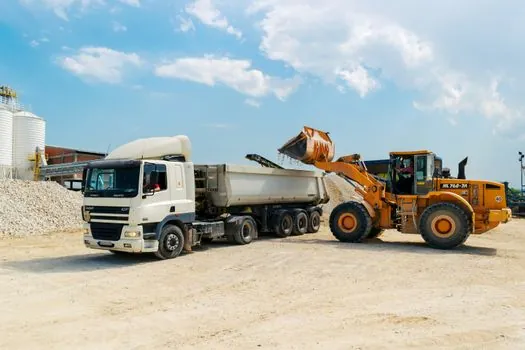
UHMWPE liners protect against abrasion and corrosion and accommodate thermal expansion and contraction without transmitting that movement into cracks or warping of the steel bed [S4]. However, polymer selection does not eliminate impact failure, attachment failure, gap formation, or cutting by sharp-edged material. The material must be kept clear of direct hot loads or conditions outside its qualified operating range [S1].
Plastic liners can reduce direct contact between abrasive cargo and the truck bed, lowering wear on the bed and the frequency of structural repair [S3][S4]. They do not stop all corrosion or impact damage. Steel backing surfaces, attachment points, and exposed edges still require inspection, particularly where moisture, mud, and trapped fines accumulate [S5][S6].
Field repair is most credible where the damaged area can be cut out and replaced with a mechanically retained or welded steel patch [S5]. Polymer panel repair can be constrained by polymer welding procedure, access, fit, and the extent of damage. Document whether the supplier permits field replacement of damaged sections and whether replacement panels retain the same fit and wear surface; an imprecise patch can create a new wear or impact hotspot [S4].
Sourcing and Acceptance Checks
Request the exact material grade and thickness with the replacement quotation, rather than accepting the broad description plastic liner. Confirm the intended cargo, maximum payload, impact exposure, temperature range, and attachment method with the supplier. A supplier recommendation for a particular polymer should include the operating assumptions used to support it [S1][S2].
For acceptance, inspect the fitted liner for full bearing against the bed, complete closure of panel joints and perimeter gaps, secure fasteners or welds, smooth transition at joints, and freedom of body movement [S4][S5]. Record liner grade, thickness, supplier, installation date, fitted bed location, and cargo type in the maintenance file. That record allows the next replacement decision to distinguish material wear from impact damage, attachment loosening, poor fit, or an unsuitable grade.
For procurement, compare three conforming quotations using the same bed geometry and cargo case: UHMWPE for abrasion-dominant service, impact-modified polymer for moderate impact, and steel for impact- or heat-dominant service [S1][S2][S3]. If the fleet is already established as an abrasive-rock operation, track liner thickness loss, panel replacement date, attachment repairs, and downtime; those four measures support a defensible upgrade or downgrade decision [S4][S7].