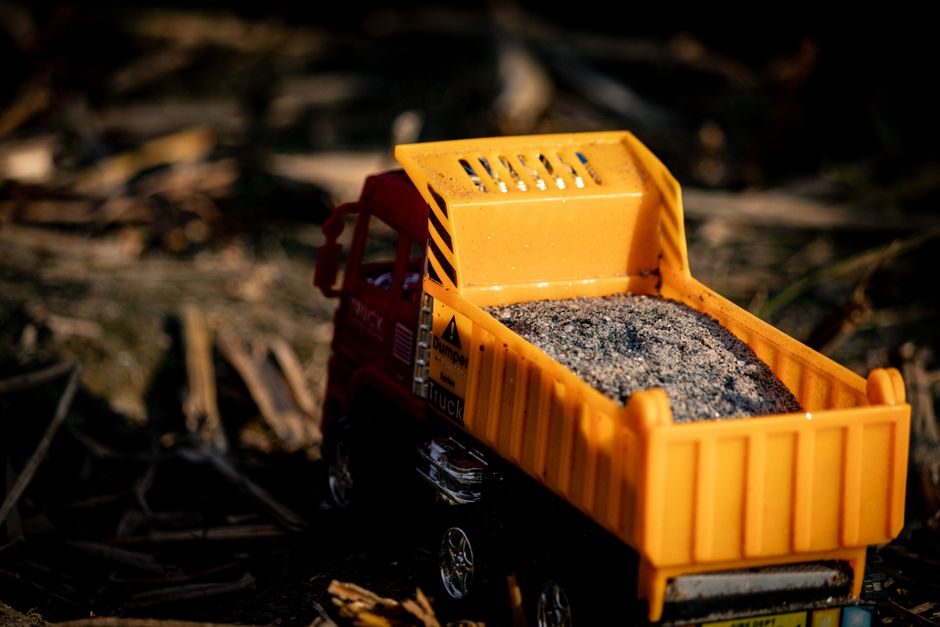
A spec-driven dump-truck buy in 2026 starts with four gates: payload class, chassis type (rigid vs articulated), dump body geometry, and engine/transmission match to the haul cycle. Caterpillar's 777 rigid mining truck, listed as diesel-powered, all-terrain, mining-and-quarrying chassis on DirectIndustry, illustrates the rigid-frame end of the spectrum at the 100-ton payload class [S1].
The broader dump truck family splits into three working envelopes: light/medium on-highway units for construction aggregates, heavy on/off-highway rigs, and ultra-class mining dump truck machines for open-pit haul. Selection collapses fast when the buyer locks payload and duty first, then filters by chassis and body.
Payload Class and Chassis Architecture
Rated payload drives the entire spec sheet. Light-duty units typically run 5-20 t GVW with single-axle rear drive; medium-duty sits in the 20-40 t band; construction on/off-highway rigid frames commonly carry 40-100 t; ultra-class mining trucks exceed 100 t and pair rigid frames with mechanical or AC-drive powertrains [S1]. The chassis itself is either rigid (a single bolted/welded frame, two axles) or articulated (a hinge joint, oscillated frame, two short wheelbases) — articulated geometry is preferred on soft ground and steep ramps, rigid geometry is preferred on prepared haul roads where stability at speed matters.
Caterpillar's 777 listing is tagged rigid chassis / diesel / mining-and-quarrying / all-terrain, which is shorthand for a purpose-built mining frame, not a civil-spec dump body [S1]. The frame on a dump truck is a separate engineered assembly: weldable high-strength low-alloy steel plate, designed for torsional stiffness over the wheelbase and a yield margin sized to the loaded impact cycle [S5]. Buyers comparing two units in the same payload band should weigh curb weight, axle load distribution, and frame steel grade before they look at engine brand.
Dump Body Geometry, Tipper Kinematics and Material Compatibility
Body choice is a hard gate, not a styling option. Three tipper kinematics dominate: front-telescopic ram (single cylinder under the body floor, common on medium on-highway), underbody scissors hoist (cleaner floor for aggregates, common on construction tippers), and external twin-ram front-eyebrow hoist (heavier loads, simpler hydraulics) [S6]. For aggregate haul, a flat floor with sloped front reduces carry-back; for sticky ore or clay, a heated floor or polished interior is sometimes specified to break adhesion.
Body steel thickness sits in the 6-12 mm Hardox-style range for most heavy on-highway units, scaling to 25-40 mm quenched-and-tempered plate on rigid mining bodies. A Lishun-group manufacturer page lists five flatbed dump-truck models plus a separate mining-dump series, signalling that body length, side height and floor gauge are configurable per job rather than fixed SKUs. Buyers should pin plate grade, side-wall height and tailgate type (air-operated, swing, or rock-ejector) on the PO — these three items drive 70% of body-related rework on the jobsite.
Engine, Driveline and Haul-Cycle Match
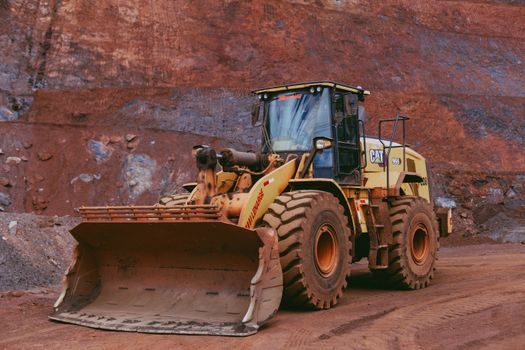
Engine power and transmission gearing are sized to a target haul cycle: empty-up, loaded-down gradient, target top speed on level, and required rimpull at the loader face. Diesel is the default; electrification is being trialed in underground and short-haul pit duty, but ultra-class surface mining remains diesel-mechanical or diesel-electric (AC drive). For on-highway construction, the same engine block is typically de-rated and matched to an automated manual or torque-converter automatic. [S1]
Buyers comparing engines should pull fuel curves at rated payload, not brochure peak power. The right comparison is kW per tonne of payload at the working rimpull point. Payload-to-power ratios around 4-6 kW/t are typical for construction rigid frames; mining ultra-class trucks run lower ratios because rolling resistance and grade absorb more of the energy budget [S1]. Mating the wrong transmission to the cycle — a close-ratio road box on a steep-pit ramp — kills tyre life and burns fuel with no upside.
Selection Criteria Comparison Across the Three Main Classes
A side-by-side read across light/medium on-highway, heavy construction on/off-highway, and rigid mining dump trucks lines up cleanly on four buyer-facing criteria: [S2]
- Payload: 5-20 t (light/medium on-highway), 20-40 t (heavy construction), 40-100 t+ (rigid mining) [S1].
- Frame: lighter LHS/HSLA welded frame, heavier reinforced ladder frame, thickest Q&T plate frame with cross members sized for full-payload impact [S5].
- Body / tipper: front-ram or underbody scissors, twin-ram front hoist or scissors, heavy sloped mining body with rock-ejector or ejector blade [S6].
- Duty match: short urban/regional cycles, mixed construction haul cycles, continuous open-pit cycles on prepared roads [S1].
Filtering to a single class is usually forced by the loader pass count and the haul road gradient; the rest of the spec then falls out of a configuration tool or a manufacturer's standard model list, as seen in Lishun's five-model flatbed series plus dedicated mining line. When the buyer wants a long-tail custom build, lead time and welding-procedure qualification (not brochure features) end up being the gating constraint.
Use Cases, Limits and Failure Modes
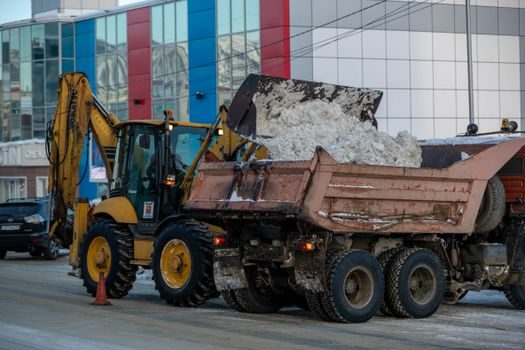
Dump trucks are not interchangeable across duty. A rigid mining dump truck is over-specified and over-priced for aggregate delivery to a city ready-mix plant, where a concrete mixer truck or a smaller on-highway tipper is the right tool. Conversely, an on-highway tipper pushed into a 5 km steep-pit cycle fails on brakes, tyres and frame fatigue within a season. The most common spec errors we see: under-rated payload (overloading to make schedule), wrong body steel for abrasive ore, and mismatched tyre ply rating for the loaded speed envelope. [S3]
Operationally, three failure modes drive downtime: hydraulic hoist failure (contaminated fluid, ram seal wear), frame cracking around the hinge area on articulated units, and body-floor wear through at the front high-stress zone. Each is traceable to a spec gate that the buyer should have locked: hydraulic fluid ISO cleanliness target, frame steel grade and weld-procedure qualification, and body floor plate thickness at the impact zone. The 777-class rigid unit on DirectIndustry is positioned for all-terrain mining, which is precisely the envelope where these three failure modes are most expensive if under-specified [S1].
Sourcing, Standards and Buyer Verification
Specifying a dump truck in 2026 still rides on a short list of buyer-side verifications: payload rating at the second axle, frame steel grade and welding standard, brake system compliance for the operating jurisdiction, and tipper-cylinder pressure rating. Manufacturer pages like Lishun's are useful for model-line breadth — five flatbed variants plus a mining-dump series — but the actual spec needs to come from the data sheet, not the landing page. For toy/RC-scale reference products on the same keyword, Made-in-China lists customization around size, engine type and loading capability, which mirrors the same selection axes as full-size machines in compressed form [S4].
For North American aggregate and conveyor-truck buyers, vendors such as CAD of Spokane publish service-fleet rather than product data, useful as a benchmark for cycle time and zero-waste placement goals rather than for truck spec [S3]. When the spec is right and the duty class is right, a dump truck is one of the lowest-risk capital lines on a site; when the duty class is wrong, no amount of hydraulics or engine tuning recovers the operating cost. Cross-checking the chosen model against the mining dump truck class page, and against an adjacent heavy-mob application such as the concrete mixer truck when the duty is mixed, keeps the selection honest. For buyers also weighing drivetrain choices, the servo drive selection criteria 2026: six spec gates piece covers the electric-drive gate in case an electrified pit-truck trial is on the table.